2 months ago
85
2 months ago
85
In the winter of 1993, during the siege of Sarajevo, people burned books and furniture to keep warm. Water froze in pipes. Electricity vanished for the duration of the war. Children slept in coats and hats, their breath visible in dark rooms. Cold itself became a weapon of war.
I remember, when I was reporting from the Bosnian capital, seeing doctors operating by candlelight or wearing camping headlamps. I remember old people chopping wood in the park in the centre of the city until there were no trees left, then dragging it home on sledges. I remember the ground being too frozen to bury the many dead on the football pitch, which later became a cemetery. I remember a terrible, frozen day when I went to an old people’s home near a frontline and counted dead body after dead body, all frozen in their sleep.
Three decades later, I am watching another winter war – this time in Ukraine. It is a human-made catastrophe. Russia is now systematically targeting the country’s energy infrastructure.
Since last mid-autumn, attacks on power and heating systems across eastern, central and southern Ukraine – including Kyiv, Odesa and Kharkiv – have forced daily electricity outages. Until December, power cuts followed a grim rhythm: four hours on, four hours off, all day and night. Twelve hours of light and warmth, 12 hours of darkness and cold.
According to Ukraine’s minister of economy, Oleksii Sobolev, the total damage to its energy infrastructure from these attacks over the past three months will cost an estimated $1bn to address. But no statistic can capture what it means to live in a city where winter has been deliberately turned into a tool of terror.
On 9 January 2026, a massive strike on Kyiv’s energy grid left 6,000 residential buildings – about half of the city’s housing supply – without heating. On 20 January, another attack cut power from more than 5,600 buildings, many of them the same ones. On 24 January, the same neighbourhoods were hit again: 6,000 buildings lost heating, with 3,200 buildings still without as night fell.
This is happening as temperatures in Kyiv fall to between –15C (5F) and –18C, dropping to –20C at night. During a Zoom call I had last week with the human rights lawyer and Nobel peace prize winner Oleksandra Matviichuk, she sat wrapped in a parka and scarves, refusing to complain. “It’s not your fault,” she said when I apologised, embarrassed that my colleagues at The Reckoning Project are suffering so valiantly.
Another Reckoning Project colleague, Maksimas Milta, lives in Podil, one of Kyiv’s oldest neighbourhoods. In one week in January, he was without electricity for 98 hours out of 168. The following week, 99 hours without power. Yet he went to work every day, refusing to complain. This is not a temporary disruption. It is a siege by other means.
One day, people will recall these terrible stories. On 21 January, Oleksii Brekht, the former acting CEO of Ukraine’s electricity transmission operator, was killed while working at a damaged substation. In the city of Dnipro, divers from the emergency services are entering the freezing Dnipro River, working for hours in sub-zero temperatures to repair heating pipelines. This is heroism, but it is also desperation: people are freezing to death. They have to do something.
Ukrainians have begun calling this reality “kholodomor” – death by cold – an echo of Holodomor, the human-made famine Stalin used to crush Ukraine in the 1930s. Then, hunger was the weapon. Now, it is winter.
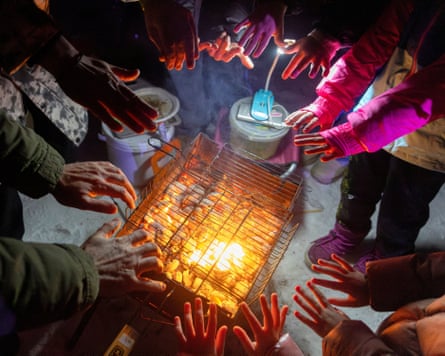
Inside apartments, people heat bricks on gas stoves and use them as makeshift radiators. Families pitch hiking tents in their living rooms, sheltering inside them in thermal clothes and sleeping bags. Schools in Kyiv have extended holidays until February; elsewhere, children are back online because classrooms are too cold.
One of the cruellest stories from the winter cold is that of military veterans with bionic prosthetics. Without electricity, they cannot recharge their limbs.
And yet, amid this suffering engineered by Vladimir Putin, something extraordinary persists. People keep going, refusing to be broken by Moscow.
Someday, people will tell these stories, too: how supermarkets now allow stray dogs and cats inside to keep warm; how young people, refusing to lose their youth, organise generator-powered raves in courtyards, dancing in the dark as an act of defiance. This defiance is Ukraine’s trademark – an act of fierce rebellion against Russia.
I remember this all from my Sarajevo days. The refusal to be broken. The refusal to lose humour, despite nearly four years of siege. The bars that were heated with open gas pipes that flamed dangerously as you sat down and ordered a black market whisky. The laughter at an underground party in a bomb shelter. The strength it took to burn your PhD thesis that took six years to write, to heat a room so that your family could survive.
Let’s be honest. The purpose of Putin’s attacks is not only physical destruction. It is psychological warfare. The Kremlin hopes civilians will break – but what they really want is for them to turn on their own government.
During the Bosnian war, the international community failed to stop the siege and 100,000 people died who might have been alive today. We said “never again”, and then we looked away.
In Ukraine, winter is a weapon as deadly as the drones that buzz through the frozen night skies, seeking prey. And the world must finally call it what it is: a war crime.
-
Janine di Giovanni is a war correspondent and the executive director of The Reckoning Project, a war crimes unit in Ukraine, Sudan and Gaza
-
Do you have an opinion on the issues raised in this article? If you would like to submit a response of up to 300 words by email to be considered for publication in our letters section, please click here.