3 months ago
66
3 months ago
66

From tender coming of age stories to images that question the meaning of home, Ed Alcock’s photography blurs the personal with the political
Let that sink in … Repeating pattern, from the series Hobbledehoy Photograph: Ed Alcock/MYOPTue 16 Dec 2025 08.00 CET
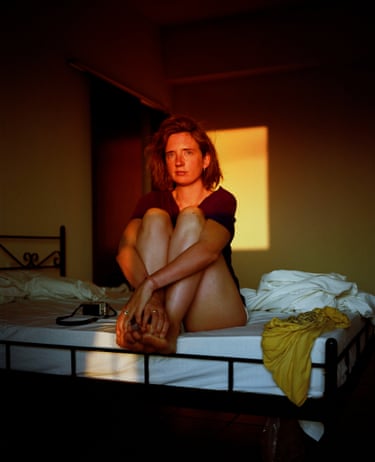
Yellow square, from the series Hobbledehoy, 2013
Ed Alcock explores the delicate boundary between documentary and personal photography. A winner of the 2025 Prix Niépce Gens d’Images, his series investigate family secrets, the memory of the British working class, and collective vulnerabilities. An exhibition at the Bibliothèque nationale de France in Paris runs until 29 March 2026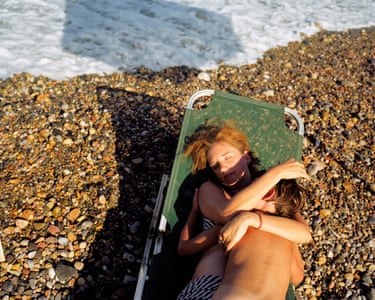
Shoreline, from the series Hobbledehoy, 2013
In the series Hobbledehoy, a term taken from Old English referring to the beginnings of adolescence, Ed Alcock photographs his wife and son during their holidays, over a period of three years. Two types of images intertwine: some, in warm tones, show the mother and child on a Mediterranean beach, while others, in greenish tones, reveal a garden and abandoned toys, symbols of the transition from one stage of life to another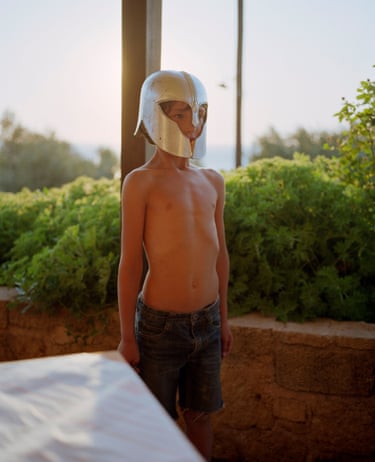
Child warrior, from the series Hobbledehoy, 2013
Watching his son grow, the photographer recalls the words his father used to sing to him: ‘He was neither man, nor boy, he was but a Hobbledehoy’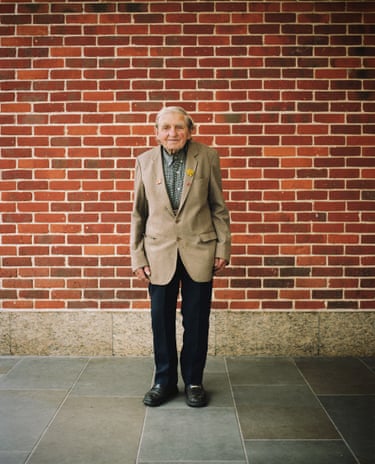
The old man with the daffodil, from the series Love Lane, 2014
At the time of his paternal grandfather’s death, Ed Alcock returned to the small rural town where he he’d spent his childhood holidays with him. He documents life in this eastern English community, but soon the focus he places primarily on young adults and retirees raises questions. He gradually realises that this approach reflects a painful episode from his youth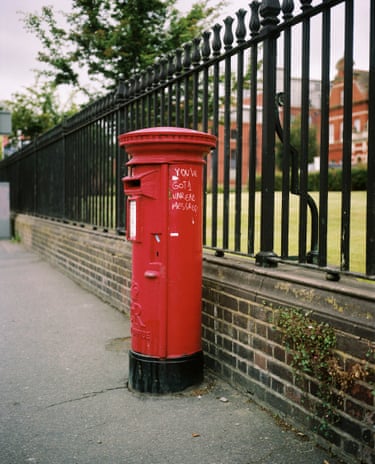
You have one unread message, from the series Love Lane, 2014
Ed Alcock is a Franco-British photographer who lives and works in Paris. He was born in Norwich and has been a contributing photographer to the Guardian for more than 25 years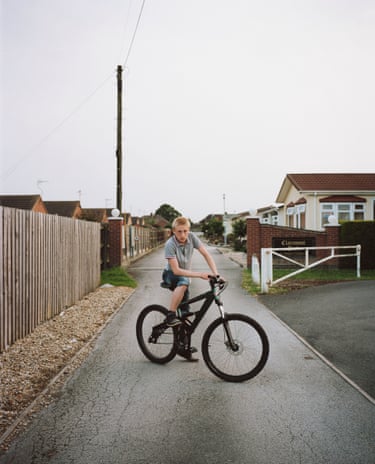
Bike boy, from the series Love Lane, 2014
The show was curated by Héloïse Conésa, head of the photography department at the Bibliothèque nationale de France. The exhibition presents five of the most emblematic series: Hobbledehoy, Love Lane, The Wait, Home, Sweet Home and Buried Treasure
Masked boy, from the series The Wait, 2015
The Wait continues the story begun in Love Lane. Built around the central figure of a young man in a mask, caught in the mist, revolve various characters and signs that explore intimate memory, the feeling of belonging – or exclusion – and family ties![Pip, pennies and sunshine, from the series Buried Treasure, 2025Buried Treasure [link to Pip and Pennies in POY] is a documentary project that was born from the revelation that a foundational family story — that of a supposed fatal mining accident — had been invented. Blending different visual languages, the work explores how stories are passed down, how they fade, and the fragility of collective memory in post-industrial Britain.{{{Nourished by family stories, Buried Treasure explores the mining village of Horden, the maternal birthplace of the author, which he discovers for the first time. Through his photographs, family archives, charcoal drawings, text exchanges with his mother, and personal documents, the project examines memory, family myths, and the erased traces of a working-class history long idealized}}}](https://i.guim.co.uk/img/media/59ee23d99e3cc4c59cf1c6038b72c00048bb1455/0_0_6919_8649/master/6919.jpg?width=375&dpr=1&s=none&crop=none)
Pip, pennies and sunshine, from the series Buried Treasure, 2025
Buried Treasure explores the mining village of Horden in north-east England. It was there that, several decades earlier, Kendon, the photographer’s great-uncle, reportedly died at the age of 17 in a coal mining accident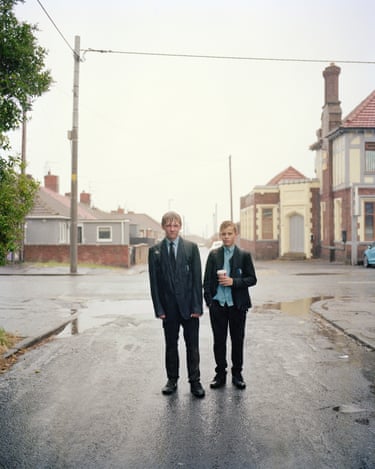
Jacc and Morgan, in the rain, from the series Buried Treasure, 2025
Ed Alcock meets the residents of Horden who, initially wary, learn of his local roots and ultimately welcome him warmly as he makes portraits, city views, reproductions of family archives and charcoal drawings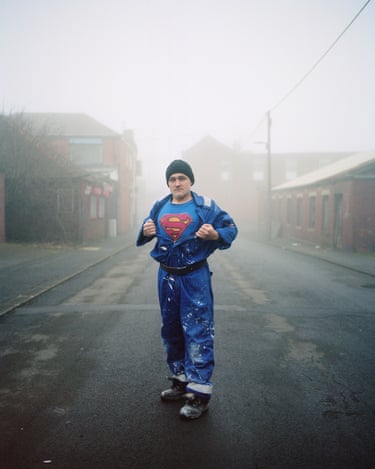
Andrei, man of steel, from the series Buried Treasure, 2025
Two images from Buried Treasure were chosen for the Taylor Wessing prize exhibition at the National Portrait Gallery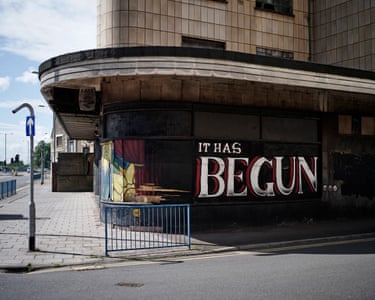
It has begun … from the series Home, Sweet Home, 2020
Between 2016 and 2020, after the Brexit vote, Alcock created portraits of his fellow countrymen from all walks of life: opponents or supporters of leaving the EU, wealthy landowners, workers, fishermen, employees, the unemployed, as well as those too young to vote who felt their future had been stolen. He places these photographs alongside urban views and collages combining English landscapes or objects with old school textbooks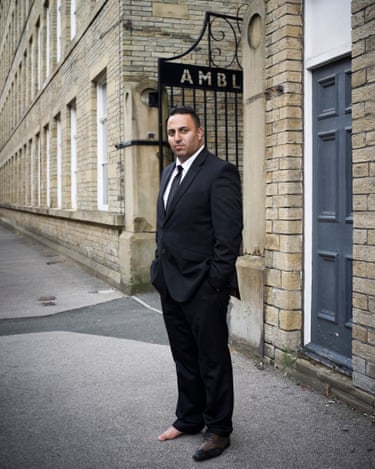
Mohammed Naz, from the series Home, Sweet Home, 2020
‘There are a lot of fascists in this town. That’s why a Labour stronghold like Bradford voted for Brexit.’ So says Mohammed Naz, 33, a security guard and the grandson of immigrants from Kashmir. The offices where he works are located in a former textile mill where his father and grandfather worked before him. He has no shoe on one foot, because he has gout
Tom, from the series Home, Sweet Home, 2020
Tom voted remain during the referendum, while his father voted leave. The two men are furious with one another, and are no longer talking. A second exhibition will be at the Jeu de Paume in Paris from 19 June until 15 November 2026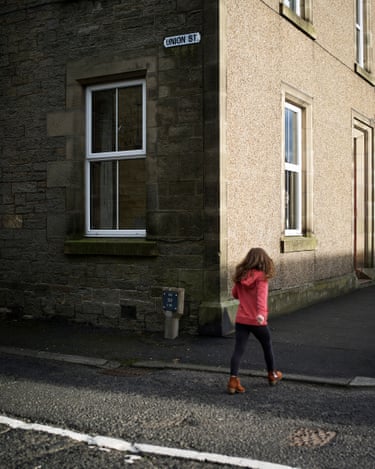
Union Street, from the series Home, Sweet Home, 2020
In a Guardian piece from 2009, Jon Henley wrote: ‘British photographer Ed Alcock obtained French nationality in 2018. He examines the United Kingdom’s decision to leave the European Union from a unique perspective, questioning the meaning of belonging to a nation and the place one calls “home”. As Europe removes one of the yellow stars from its flag, he casts a tender, ironic, yet disillusioned eye on his country and fellow citizens, wishing them godspeed’Explore more on these topics