1 month ago
70
1 month ago
70
The off-screen drama surrounding Christopher Nolan’s blockbuster version of the Odyssey stepped up a gear overnight, as the novelist Joyce Carol Oates sought to defend the film-maker from an attack by classicist Emily Wilson.
Writing on X, Oates took issue with the style as well as the rhetoric of Wilson’s essay published earlier this week in the London Review of Books, in which the academic, who published a landmark translation of Homer’s epic poem in 2017, wrote that Nolan’s film lacked “psychological, emotional, political and ethical depth” and had “nothing convincing to say”.
“Rather than disagreeing with interpretations of Homer in a collegial manner,” said Oates, “this person, who has benefited enormously from Nolan’s film, speaks in the crude language of Maga folks attacking someone with ideas that differ from hers.
“One would expect a translator, of all people, beholden to a text, in service to a text, to be just a wee bit more thoughtful and respectful of others who are acting in good faith just as (she would claim) she is.”
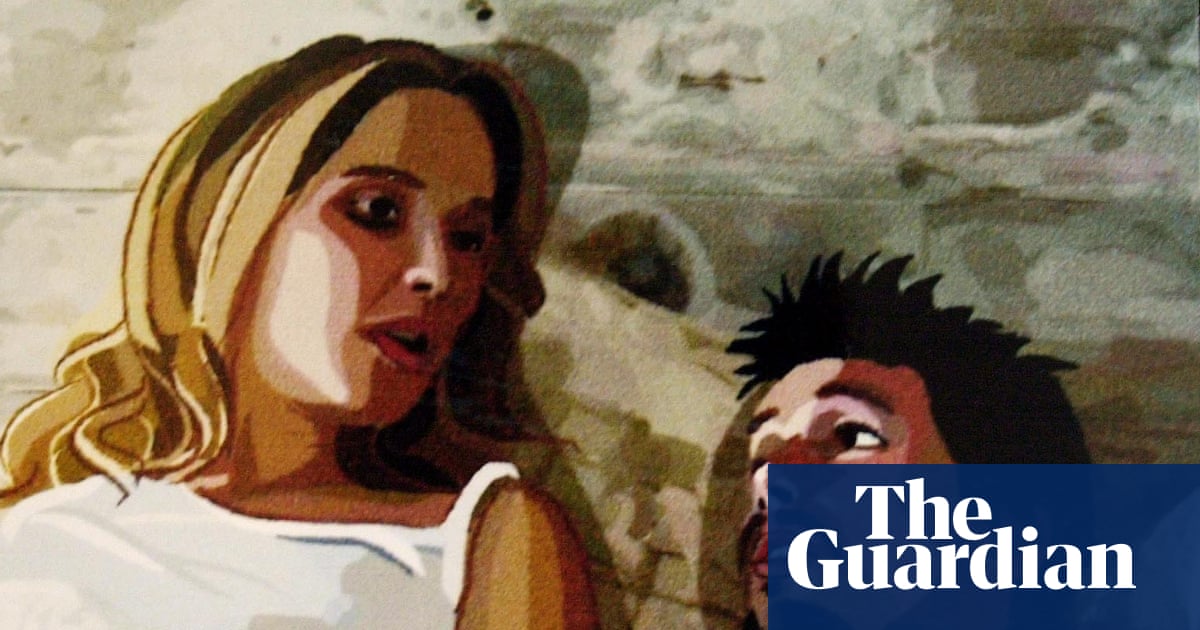
Oates’s comments come in the wake of her own implied criticism of the film last week, when she compared it to a 1997 Hallmark Channel version and found it wanting. The author tweeted that the TV movie made by Andrei Konchalovsky boasted a “much more interesting interpretation than Nolan” of the sexual dynamic between Circe and Odysseus.
She also praised its portrayal of Odysseus (“So manly, so fully human”), its hades interlude (“mesmerising”) and its comparative expansiveness (“which perhaps Nolan had not seen”).
Nolan’s film has been widely applauded by critics, perhaps partly explaining why the pitch of Wilson’s objections shocked many. “I had hoped that Nolan’s affinity with these Homeric themes might push him to new creative heights, and enable him to conjure more believable characters,” she wrote.
“But The Odyssey features his usual combination of grandiosity and superficiality … the film’s vision is too confused, its characters too underdeveloped, to deliver what it half-promises in terms of big ideas – although it is very good at conveying big bangs and big giants.”
She added: “The writing is abysmal. None of the characters has a convincing motivation for their actions or words. There are no sex scenes, and all the food looks horrible.”
The classicist’s verdict was perhaps the most eagerly anticipated, as her translation had been praised by Nolan in an interview with Empire. The director told the magazine he had used the opening line of her version – “Tell me about a complicated man” – as a key reference point when constructing the character played by Odysseus.
Wilson finding Nolan’s rendition of the character as relatively one-dimensional is likely to have taken the team behind the film aback. In publicity for the movie, Universal has stressed that Nolan had been linked to an adaptation long before Wilson’s translation was published, and disputed claims he had been “inspired” by it.
Sales of Wilson’s translation, and those by others, have seen a significant uptick over the past month, with UK bookseller TGJones reporting a 1,560% rise in searches for the Iliad this month.
However, no royalties from the film would have been paid to any writer other than Nolan himself. The Odyssey, which cost around $250m to make and about $100m to promote, has currently taken $683m at the global box office, hard on the heels of Nolan’s previous film, Oppenheimer, which made $975m.
That movie, a biopic of the man behind the atomic bomb, swept the 2023 Oscars, winning seven awards. His follow-up is widely predicted to follow suit next March.
The Guardian has contacted Wilson for comment.