3 months ago
73
3 months ago
73
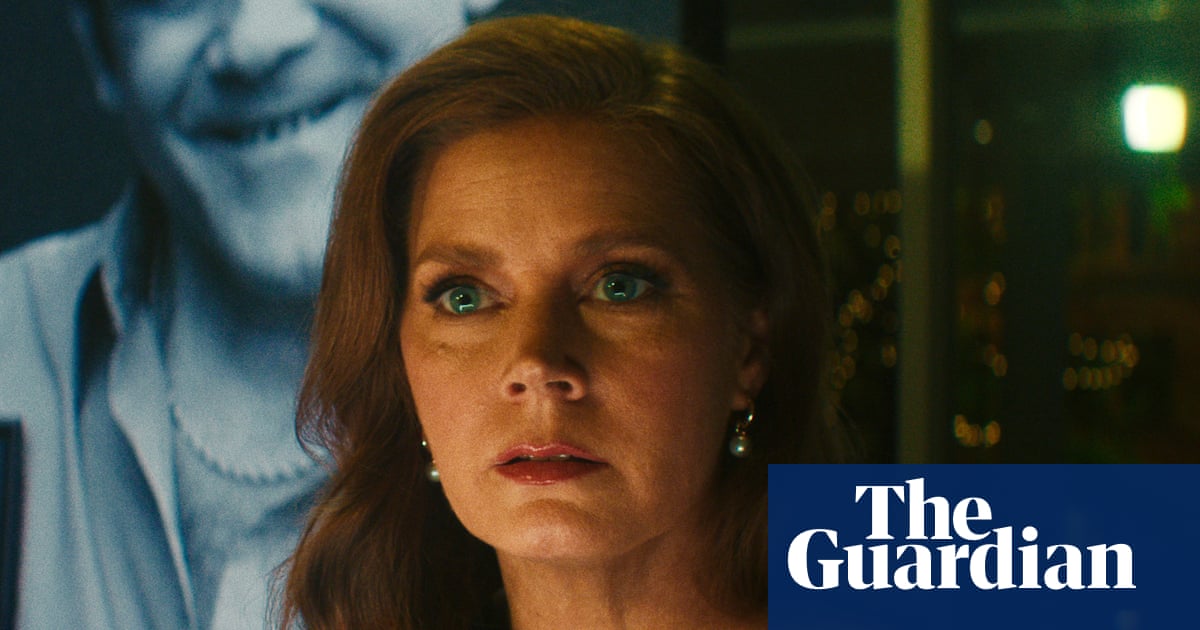
In the opening scene of Oliver Laxe’s existential mystery thriller Sirāt, a crowd of partygoers stack up a sound system for a rave in the southern Moroccan desert, where the paths of the film’s protagonists cross for the first time. Crucially, Laxe explains, the revellers were no ordinary extras. Most of them were committed, lifelong ravers who had travelled to the makeshift festival from across Europe. One of the DJs who played, Sebastian Vaughan AKA 69db, was a core member of Spiral Tribe, the pioneering British “free party” collective of the 1990s.
“In film, reality is usually made to adapt to the rules of cinema,” the French-born Spanish director tells me when we meet in Berlin. “But we do the opposite: we adapt cinema to reality.” When negotiating with the ravers how to best represent them in the film, he recalls, “they told us that the music cannot stop for three days. And we were really pleased with this idea”.
Sirāt promises to be one of the arthouse crossover hits of the year. After winning the Jury prize at Cannes last May, it will be released in UK cinemas in February and has a good chance of grabbing an Oscar or two in March, where it is shortlisted in five categories, including best international feature film. On the surface, Laxe’s film is a road movie about a modest family unit – patriarch Luis, his son Esteban and their dog Pipa – searching for a missing daughter, Mar. Their search is complicated when radio reports announce the outbreak of an armed conflict with the unnamed neighbouring country and the army arrives to break up the desert festival.
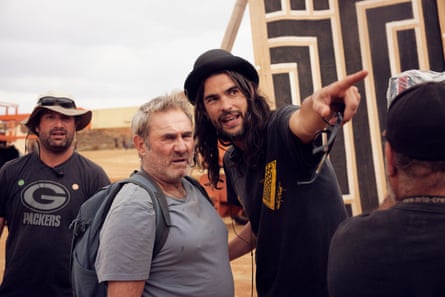
But over the almost two hours of the film, the search-mission plot gradually fades into the background. Far from being just an accidental backdrop, rave culture and its deeper metaphysical meaning emerges as Sirāt’s main subject.
Many previous films have tried to explore dance music culture, with varying degrees of success: British coming-of-age drama Beats, Mia Hansen-Løve’s French touch tale Eden, or Warsaw-set docu-fiction All These Sleepless Nights. What sets Sirāt apart is that Laxe sees raving, and the ego dissolution associated with it, as a confrontation with mortality. “If you die on a dancefloor, it’s considered a mythological death,” says the director, who observes Sufism and personally studies gestalt psychotherapy.
The unusual way Laxe’s film portrays the death of certain characters has been key to its growing cult status. But he insists that his intention is far from cruel. Rather, his depiction alludes to the spiritual practice of shedding worldly attachments or the false self to achieve true liberation. “This is the same in all the core of all the cultures, where the hero transcends the idea of his own death,” the director says, referencing the work of scholar Joseph Campbell. “He knows that his death is not the end of anything, it’s the door to eternity. It’s like a triumphant death.” His film is his own take on the hero’s journey, a universal narrative archetype.
The poetry of Rumi was another one of Laxe’s many inspirations. The 13th-century Sufi mystic roused others to dance “when you’re broken open” and “in your blood”, which informed the film’s portrayal of raving and psychedelics use as an ecstatic rite amid life’s suffering. “As a film-maker, I would like to evoke transcendence,” he explains, “even the worst disasters, tragedies, obstacles, the worst thing that can happen to you – it’s a gift, in a way. It has to be like this. It’s painful at some point, but I think there is serenity.”
Laxe intentionally cast non-professional actors with disabilities – Tonin Janvier (“Tonin”) has a prosthetic leg, Richard Bellamy (“Bigui”) has a missing hand, others have visible scars – to externalise the emotional imperfections of those searching for solace on the dancefloor.
Raves, he says, are unique in that they allow for uninhibited, even extreme forms of expression. “You can scream, you can cry, you can fall on the floor,” he said. “At some point, you see yourself and you see the construction of your ego, you see how fake you are, your personality, that’s not your essence. In this moment, the beat, the kick, the music comes. It’s like it’s pushing you up. It’s like you are celebrating your wounds when you land.”
In the film, none of Laxe’s spiritual musings would have come together without Sirāt’s score. For this, the director tapped one of electronic music’s most respected underground producers, Berlin-based David Letellier, AKA Kangding Ray.
A veteran musician with legendary experimentalist label Raster-Noton and regular DJ at techno temples Berghain and Tresor, Letellier says he’s seen contemporary electronic music leave behind its roots in DIY and queer subcultures to be “co-opted by big corporations” and transformed into a lifestyle product through social media. What is now often taken for granted, he says, is “the solidarity, the resistance, the anti-authoritarian, anti-system ethos that was once its base”.
Laxe contacted Letellier after coming across his 2014 track Amber Decay, and spent five days with the producer in Berlin listening to everything from Steve Reich to Detroit techno. During the making of Sirāt’s score, Letellier withdrew behind a vast wall of modular synths in his studio and spent days matching sounds to the pain, despair, and anger depicted on-screen.
He told me his work for Sirāt was less like a composer assembling notes and more like that of a sculptor. “I take sounds and I carve them and I polish them or cut them or destroy them or explode them,” he said. The end result is a soundtrack that appears to disintegrate over the course of the film, from visceral electronics into dark, skeletal ambient noise.
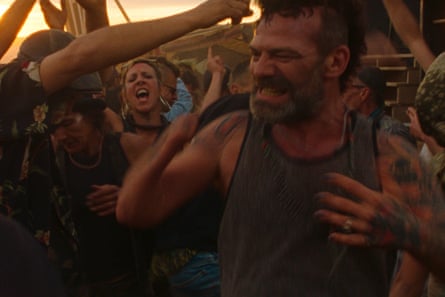
In the second half of the movie, the father character Luis grapples with a sudden devastation in his life. As a low techno heartbeat drones on in the background, he stares around in a state of surrender and lifts his hands in the air. In a moment of crisis, he finds solace in the act of dancing. “The body has memory of the pain, of your pain, the child’s pain, the trauma of a child,” Laxe says, “but also the pain of your lineage, your family, and the pain of the world.”