3 weeks ago
63
3 weeks ago
63
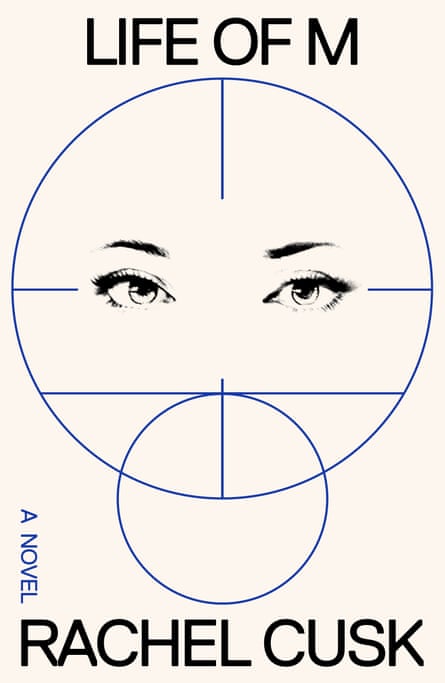
In Rachel Cusk’s new novel, Life of M, the famous actor protagonist participates in an event at a book store after hours. The actor, M, is joined by “a writer of some renown” and a fashion model who possesses “some vague self-absorption”. A brand sponsored the affair. I spent literal hours trying to find the real-world equivalent of the opaque fictional passage. I scrolled through the backlogs of influencers I know to appear bookish in their content, who might have fallen prey to Dior’s Ulysses tote bag drop or Miu Miu’s “literary club”. I even stooped so low as to DM a Natalie Portman fan account, asking for leads.
As has been widely reported, M’s character is based on Portman. One journalist was credited with the scoop, but she simply finished her advance copy sooner than the rest of us; it’s clear from page three, when Cusk describes M’s breakout film as having “immediately brought her childhood to an end” (obviously Léon: The Professional; Portman was 11 when she was cast) and a later film about obsessive, wild ballerinas (Black Swan). But the rumor that Portman is unhappy with her portrayal – an impression that cannot immediately be gleaned from the book itself, especially depending on interpretation of its final lines – has trickled down to the raggiest of tabloids.
Cusk’s “literary scandal”, so dubbed by Page Six, adds Life of M to the canon of biogossip, AKA novels that stoke intense speculation over the person they’re really about – and if the source material is all but confirmed by the author, then how much is exactly as it happened? How close have we, the readers, been allowed to get?

Nearly a century ago, Virginia Woolf had high society ablaze with Orlando, her time- and gender-bending romantic experiment. The Daily Mail treated it as nothing but straight gossip from the heart of the Bloomsbury Group, confirmation of Woolf’s affair with Vita Sackville-West. As if anyone actually in the scene didn’t already know that was going on (and had ended by the time of publication).
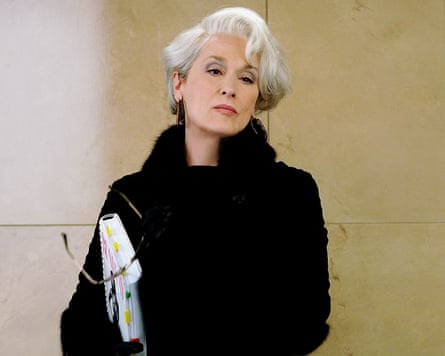
Women’s Wear Daily reported in 2002 that The Devil Wears Prada by Lauren Weisberger, who was a former assistant to Vogue’s Anna Wintour, sold to Doubleday for around $250,000. When Wintour heard, she allegedly replied, “I cannot remember who that girl is.” Though Weisberger maintained in the press that her ice-cold magazine editor Miranda Priestly was not based on Anna, the court of public opinion, not to mention Hollywood, decided otherwise. After years of side-stepping questions about the book and 2006 film adaptation, Wintour finally decided to get in on the joke in time for the film’s sequel earlier this year.
In 2018, Lisa Halliday’s debut novel Asymmetry was a literary event for it offered what the New Yorker called the “voyeuristic thrill” of imagining what it would be like to date Philip Roth – which Halliday did, for a time – or at least a man who greatly resembles him. There were just enough tasteful details (baseball, back pain, anxiety) to point a reader’s imagination to the esteemed American author; the magazine likened the prose to “one of Rachel Cusk’s cool-voiced narrators”.
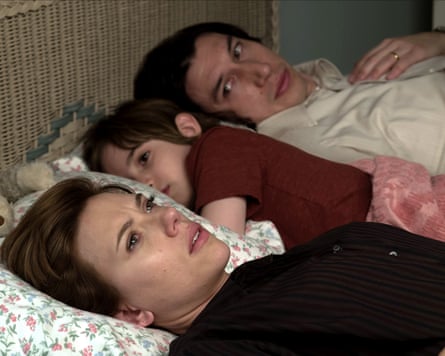
The biogossip micro-genre functions like all gossip does: it’s the most fun when you’re on the outside. Not so far away to not know the players, but not close enough to feel real hurt or deep sympathy or dubiousness because they’re more than caricatures to you. Though if you’re a Jennifer Jason Leigh superfan, Noah Baumbach’s Marriage Story would have been a hard watch (the film is thought to be about the director’s eight-year marriage to the actor, though Baumbach has said it’s “not autobiographical; it’s personal”).
Biogossip tends to set the scene and to establish familiarity. The voyeuristic thrill of The Devil Wears Prada is, well, to read about people who wear Prada. And Armani, and Oscar de la Renta and Bottega Veneta – spelled wrong in the first edition, by the way! The Vogue-like magazine may present as Runway, with a Condé Nast-ish parent company renamed Elias-Clark, but all the delicious free-market proper nouns that complete the fantasy of working in high fashion remain. Even the Diet Coke mentions serve a purpose (beyond an opportunity for coherent product placement in the sequel film): to communicate that the narrative exists in our recognizable world.
Cusk sits on the other side of the looking glass. She strips away all those signifiers of class and taste, to instead present a sketch of something you thought you knew, but actually, the harder you inspect, it’s really quite hard to say. This is typical of her style and preoccupations; she’ll eventually exhaust the alphabet with her first-initial-only muses of novels like Second Place, long-listed for the Booker, and Parade, winner of the 2024 Goldsmiths Prize. But M is different because M is mega-famous.
Cusk once proposed that character doesn’t exist anymore, and it’s because we have begun to live out a collective homogenous experience. Yet M can’t do things like go to a restaurant normally, and that’s because of how we treat her. The subject pronoun “we” is employed throughout the novel, and this is where biogossip shifts into a meta register. We fancy ourselves individuals, but we are slavish to the same principles of parasociality: “Like the ugly tower we see everything from where we are, except ourselves,” Cusk writes. “Fame is perhaps this tower, an ultimate entrapment in the self that is also a deliverance from it.” Who wouldn’t feel some way about being in proximity to Natalie Portman? Cusk gets us to admit that we crave juicy details. But because Cusk refuses to provide them, we don’t feel like we’re allowed to get close to M at all.
Even without the pulpiness and dead-giveaway cover art of, say, The Wig, The Bitch & The Meltdown, a satirical novel by former America’s Next Top Model right-hand man Jay Manuel, the allure of the mere suggestion of biogossip can do the near impossible and propel a work of literary fiction beyond a newspaper’s book review section and squarely onto the homepages of gossip blogs. I have to wonder if that was part of Cusk’s calculus from the jump. She’s been a tabloid fascination before, ripped to shreds by the British press for her books about motherhood and marriage. After publishing A Life’s Work, her 2001 memoir about, among other things, the struggle to maintain a sense of self when caring for a newborn, she was accused of child-hating, doom-mongering and epitomizing the crisis of contemporary feminism. “I’ve coped artistically by believing the criticisms weren’t right,” Cusk said. “They upset me, but they didn’t challenge my understanding of how to write, nor of how morality functions in literature.”
Gossip tests the morals, teeters on a line. It’s not the concept of fame that Cusk critiques on moral grounds but our behavior in the face of it. My rabid sleuthing for the inspiration behind the “rather turgid and awkward” bookstore event in Life of M is, I’ll freely admit, a disgusting waste of the precious hours that comprise my own life. Perhaps that realization means I passed a test of Cusk’s own.