2 months ago
67
2 months ago
67
Are we barreling toward AI catastrophe? Is AI an existential threat, or an epochal opportunity? Those are the questions top of mind for a new documentary at Sundance, which features leading AI experts, critics and entrepreneurs, including Sam Altman, the OpenAI CEO, with views on the near-to-midterm future ranging from doom to utopia.
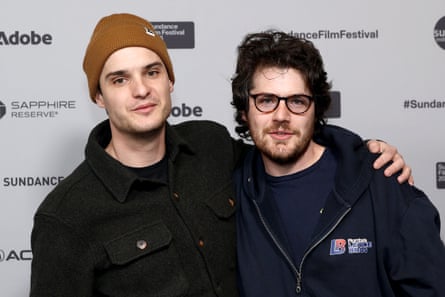
The AI Doc: Or How I Became an Apocaloptimist, directed by Daniel Roher and Charlie Tyrell and produced by Daniel Kwan (one half of The Daniels, the Oscar-winning duo behind Everything Everywhere All At Once), delves into the contentious topic of AI through Roher’s own anxiety. The Canadian film-maker, who won an Oscar in 2023 for the documentary Navalny, first became interested in the topic while experimenting with tools released by OpenAI, the company behind the chatbot ChatGPT. The sophistication of the public tools – the ability to produce whole paragraphs in seconds, or produce illustrations – both thrilled and unnerved him. AI was already radically shaping the filmmaking industry, and proclamations on the promise and peril of AI were everywhere, with little way for people outside the tech industry to evaluate them. As an artist, he wondered, how was he to make sense of it all?
Roher’s anxiety only increased when he and his wife, fellow film-maker Caroline Lindy, learned that they were expecting their first child. “It felt like the whole world was rushing into something without thinking,” he says in the film, as his excitement for parenthood collided with dread over the unknown variable of AI, which in just a few short years went from proprietary experiment to public good.
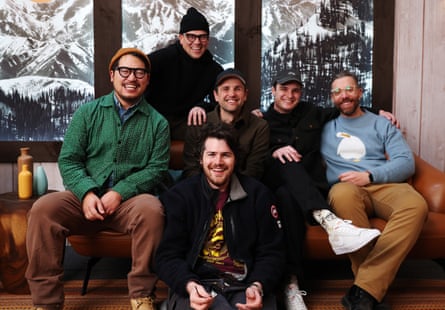
The AI Doc thus arises out of Roher’s most pressing question: is it safe to bring a child into this world? Alongside Kwan, Roher convened a series of experts to both explain the mechanics of the tech – and clarify some nebulous, alienating terms – and search for an answer. (It is both comforting and a little disturbing, for example, that no one seems to have a clear answer to the question “what is AI?”). In individual sit-down interviews, leading machine learning researchers including Yoshua Bengio, Ilya Sutskever and DeepMind co-founder Shane Legg all agree that there are aspects of AI models that humans cannot and will never be able to understand. Standard AI models are trained on “more data than anyone could ever read in several lifetimes”, as one machine learning expert puts it. And the pace of machine learning exceeds that of precedent – or film. “Any example you put in this movie will look absolutely clumsy by the time the movie comes out,” Tristan Harris, co-founder of the Center for Humane Technology and a prominent voice in the apocalyptic 2020 Netflix documentary The Social Dilemma, tells Roher.
The film first hears from a series of doomerists, or people concerned AI – and in particular Artificial General Intelligence (AGI), a still-theoretical form of AI whose capabilities exceed those of humans – could lead to the extermination of humanity, including Harris, his Center for Humane Technology co-founder Aza Raskin, Ajeya Cotra, an AI risk adviser, and Eli Yudkowsky, an AI alignment pioneer. Such figures warn that humans could very easily lose control of super-intelligent AI models, with little to no recourse. Yudkowsky’s 2025 book is bluntly titled If Anyone Builds It, Everyone Dies.
AI companies, they say, are unprepared for the consequences of reaching AGI, which could “become superhuman maybe in this decade”, says Dan Hendrycks, director of the Center for AI Safety. Should humans no longer be the most intelligent beings on Earth, they warn, it is possible that AGI would view the species as irrelevant. Connor Leahy, co-founder of EleutherAI, compared the potential future relationship of super-intelligent AGI and humans to that of humans and ants: “We don’t hate ants. But if we want to build a highway” over an anthill – “well, sucks for the ant.”
Several in the doomer camp, many of whom do not have children, react discouragingly to Roher’s question about parenthood. “I know people who work on AI risk who don’t expect their child to make it to high school,” says Harris, in a line that drew gasps from a preview audience in Park City.
On the other side are optimistic figures such as Peter Diamandis, founder of the XPRIZE Foundation trying to extend human life, who claims that “children born today are about to enter a period of glorious transformation”; Guillaume Verdon, a leader of the “effective accelerationism” movement in Silicon Valley; Peter Lee, the president of Microsoft Research; and Daniela Amodei, the co-founder and president of OpenAI rival Anthropic. So-called “accelerationists” see AI as a potential cure to a myriad of seemingly intractable issues afflicting humanity: cancer, food and water shortages for an ever-growing population, insufficient renewable energy and perhaps most pressing, climate emergency. Without AI, they argue, countless future lives would be lost to drought, famine, disease and natural catastrophes.
Development of AI, however, relies on computing power, which requires vast amounts of energy. A final group of interviewees, critics and observers largely outside the tech world – including Karen Hao, a journalist and author of the book Empire of AI: Dreams and Nightmares in Sam Altman’s OpenAI, and Liv Boeree, Win-Win podcast hos – connect AI to the tangible, physical world, such as the data centers sucking up water in the American west, leaving residents with sky-high electricity bills and drained reservoirs. The current narratives around AI, according to Emily M Bender, a computational linguistics professor, exclude and dehumanize the people it is already impacting, and will continue to disrupt.
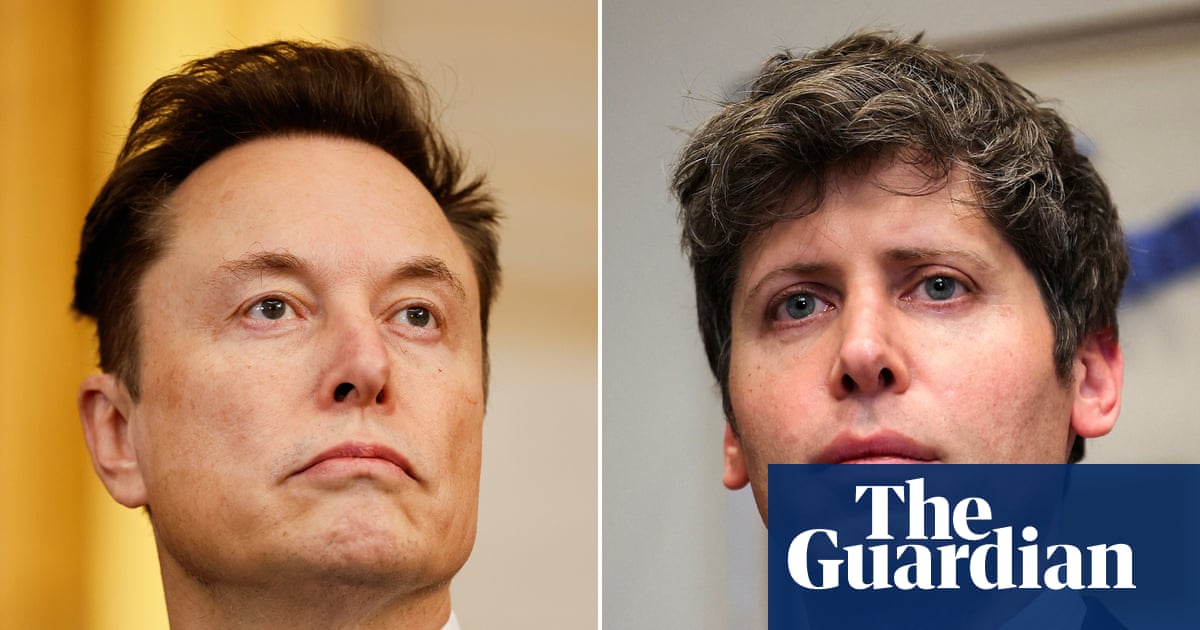
Roher eventually arrives at the five most powerful people – all men – currently leading the AI arms race: Altman; Elon Musk, the xAI CEO; Dario Amodei, the Anthropic CEO; Demis Hassabis of DeepMind and Meta’s Mark Zuckerberg. Altman, Amodei and Hassabis sit for interviews that more or less defend their companies’ respective positions. According to the film, Zuckerberg declined to participate; Musk agreed but then got too busy.
Altman, who at the time of the interview was expecting his first child, insists that he’s “not scared for a kid to grow up in a world with AI”. He and his husband Oliver Mulherin welcomed their son via a surrogate in February 2025, an event Altman later said “neurochemically hacked” his brain, leading people in his life to think that he would “make better decisions” for OpenAI and ChatGPT when it comes to “humanity as a whole”. The 40-year-old CEO went on to say that both his and Roher’s child would likely “never be smarter than AI” which “does unsettle me a little bit, but it is reality”.
At one point, Roher asks Altman if it is indeed impossible to reassure him that everything in regards to AI is going to be OK. “That is impossible,” Altman affirms, though he does say that OpenAI’s lead in the AI arms race allows it to spend more time on safety testing.
The AI Doc ultimately lands somewhere in between doomerism and optimism – apocaloptimism, as they call it, searching for “a path between the promise and the peril”. That path should include, according to numerous film subjects: significant, sustained, paradigm-shifting international coordination, akin the mid-century frameworks and agreements introduced to moderate the development of atomic weapons – more corporate transparency for AI companies, an independent regulatory body to police AI developers, legal liability for the companies’ products, such as ChatGPT, mandatory disclosure of genAI use for media and a willingness to keep adapting the rules for rapidly shifting tech.
Whether or not the US government and companies, let alone the world, can do it remains an open question, with differing opinions on first steps. But if there is one thing the many subjects all agree on, it’s that there’s no going back to a time before AI. As Anthropic co-founder and CEO Amodei puts it: “This train isn’t going to stop.”
-
The AI Doc: Or How I Became an Apocaloptimist is screening at the Sundance film festival and will be released on 27 March