3 months ago
62
3 months ago
62
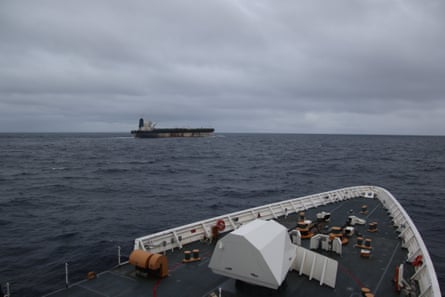
Decrepit oil tankers in Iran’s sanctions-busting shadow fleet are a “ticking time bomb”, with a catastrophic environmental disaster only a “matter of time”, maritime intelligence analysts have warned.
Such an oil spill could be far bigger than the 1989 Exxon Valdez disaster that released 37,000 tonnes of crude oil into the sea, they said.
Pole Star Global assessed 29 Iranian vessels that went dark by switching off their satellite identification systems after the US first seized a Venezuelan tanker in December. Half were older than the 20-year recommended safe service life, the analysts said, and because they operate in the shadows, they are believed to be poorly maintained and could fail to meet international safety standards.
More than 50 incidents involving shadow tankers from across the world have been reported in recent years, from collisions to oil spills. Nine oil slicks, from Thailand to Italy to Mexico, were attributed to Russian dark fleet vessels between 2021 to 2024. But the Iranian shadow fleet has been little scrutinised.
The new analysis placed seven of the 29 vessels in an “extreme risk” category, being over 25 years old, while three were more than 30 years old. Five vessels were both ageing and in the “very large crude carrier” class, able to hold about 300,000 tonnes of oil.
Shadow fleet tankers were usually uninsured, the analysts said, meaning that the cost of cleaning up a spill would fall on the country where the disaster occurred. That cost could be between $860m and $1.6bn, according to a recent estimate.
The total dark fleet of oil tankers is estimated to number many hundreds of vessels, with some assessments suggesting they comprise 17% of the global tanker fleet. Russia has the largest shadow fleet and two ageing Russian tankers caused a major spill in the Black Sea in December 2024 after one sank and other ran aground.
Saleem Khan, head of data and analytics at Pole Star Global, said Iran’s shadow fleet had some of the oldest oil tankers seen in any of the fleets, with some far beyond the safe lifecycle for such vessels.
“It’s like a ticking time bomb,” he said, adding that it was a “matter of time” before one of these ran aground and broke up, or an explosion led to a major oil spill. “They’re carrying oil, oftentimes pressurised, and there’s a ton of machinery on board that has to operate perfectly for there not to be an issue, such as a fire or explosion,” Khan said.
“The big thing is just the scale of how big a disaster this could be – this could be multiples of the Exxon Valdez. But it’s a very, very lucrative trade for all these participants. So they have a vested interest in keeping it going.”
Mark Spalding, president at the Ocean Foundation, said: “Iran’s shadow fleet represents a significant and growing environmental threat. The question is not whether a major incident will occur, but when and which coastal communities and marine ecosystems will pay the price for a shipping system designed to evade accountability,” he said.
“We are deeply concerned that the environmental dimension of shadow fleet operations has received insufficient attention,” Spalding said.
The Iranian government did not respond to a request for comment.
Shadow fleet vessels use deceptive practices such as false flags, false ownership and blocked or spoofed AIS satellite tracking in order to ship sanctioned goods. The trade in sanctioned oil is estimated to be worth many billions of dollars a year, with President Emmanuel Macron saying in October that Russia’s shadow fleet trade was worth €30bn a year and was funding 30-40% of the war in Ukraine.
The US has been most active against shadow fleet tankers, seizing Russian and Venezuelan-linked vessels in recent months. France, Germany, Estonia and others have physically intercepted ships from the dark fleet. The UK has not, despite the Channel being a bottleneck for shipping, which is forced to pass through national territorial waters.
However, the UK threatened to seize a Russia-linked shadow fleet tanker last week. The US chased the Russia-linked Marinera tanker from the Caribbean to the north Atlantic in January, seizing it between Scotland and Iceland with British help.
The Pole Star Global analysis of Iran’s shadow fleet tankers concluded: “The combination of advanced vessel age, lack of western insurance, and reduced maintenance standards under sanctions creates an elevated risk of catastrophic environmental damage.”
A single incident involving one of the larger tankers would, the report said, lead to toxic oil slicks covering thousands of square miles, mass mortality of marine life, contamination of 500-1,000 miles or more of coastline, and a severe impact on human health and livelihoods.
The report recommended enhanced satellite monitoring systems to track the vessels and stronger port inspections, including refusing entry to vessels that cannot demonstrate their safety. It also backed sanctions on the beneficial owners of high-risk vessels. But Khan said: “There’s definitely no coordinated international effort.”
The International Maritime Organization is responsible for setting the regulatory framework that is enforced by member states. “Ships that do not comply with IMO safety and environmental regulations or that operate without transparency put seafarers, the marine environment and global trade at risk,” a spokesperson said.
The IMO’s legal committee is reviewing existing international maritime rules and agreements to see how they can be used more effectively to stop illegal activities and is developing clear guidance on how ships should be registered, focusing on better background checks, greater transparency and stronger cooperation between countries to prevent fake registries and false flags.
A government spokesperson said: “The UK is committed to disrupting and deterring shadow fleet vessels. We continue to take robust action including requesting proof of insurance and sanctioning suspected shadow fleet vessels transiting the English Channel. Since October 2024, the UK has challenged around 600 suspected shadow fleet vessels using this system.”