3 months ago
65
3 months ago
65
The UK and US have sunk to new lows in a global index of corruption, amid a “worrying trend” of democratic institutions being eroded by political donations, cash for access and state targeting of campaigners and journalists.
Experts and businesspeople rated 182 countries based on their perception of corruption levels in the public sector to compile a league table that was bookended by Denmark at the top with the lowest levels of corruption and South Sudan at the bottom.
The Corruption Perceptions Index, organised by the campaign group Transparency International, identified an overall global deterioration, as 31 countries improved their score, while 50 declined.
In particular, the report identified backsliding in established democracies, warning that events during Donald Trump’s presidency and the revelations contained in the Epstein files could fuel further deterioration.
Britain has been gradually slipping down the rankings since 2015, falling from the seventh-placed country to 20th in 2025, with a score of 70 out of 100, down from 71 in last year’s report.
Explaining the slight decline, Transparency International highlighted concerns linked to the two major political parties that contested the 2024 general election.
It said record spending on election campaigning had “supercharged” a reliance on wealthy backers, with the Conservatives accepting £15m from a single donor in less than 12 months.
This is understood to be a reference to contributions from the businessman Frank Hester, which prompted calls for the Tories to give the money back after the Guardian revealed that the party’s largest donor had made racist and sexist remarks.
It also pointed to reports the world’s richest person, Elon Musk, had considered making a $100m (£73m) donation to Reform UK.
Labour also came under the spotlight, after it emerged that its largest donor, Waheed Alli, had received a privileged pass to No 10. The report also highlighted criticism of political appointments for party donors.
The UK is likely to remain “mired in scandal” this year, Transparency International warned, because of revelations about the relationship between the Labour grandee and former ambassador to the US, Peter Mandelson, and the convicted child sex offender Jeffrey Epstein.
“This persistent decline is not a temporary blip – it risks becoming a defining feature of our political culture,” said Daniel Bruce, the chief executive of Transparency International UK.
“The UK government must demonstrate that it is serious about restoring integrity. That means taking bold action to remove big money from politics, delivering genuinely open government, and ending the cronyism that undermines public trust in our institutions.”
The government has announced plans to strengthen standards in public life, including a mechanism to remove disgraced peers and a review of the existing framework governing lobbying.
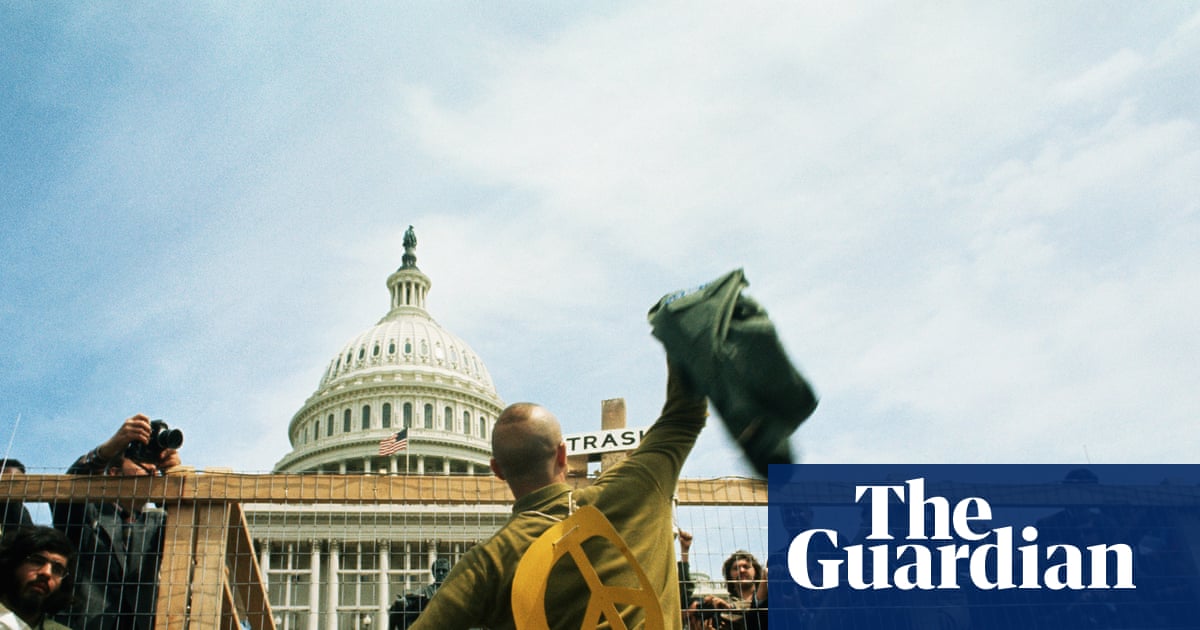
The US fell from 28th place to 29th, overtaken by Lithuania, recording its lowest ever score of 64. The US could be in line for further decline, judging by the report’s assessment of recent events.
Transparency International said that while the surveys from which the data for the report was taken were performed during 2025, they did not factor in all of the events that had taken place during that year, the first of Trump’s second presidency.
It pointed to “the use of public office to target and restrict independent voices such as NGOs and journalists, the normalisation of conflicted and transactional politics, the politicisation of prosecutorial decision-making, and actions that undermine judicial independence”.
Only seven countries scored 80 or higher, with Denmark taking top spot for the eighth year in a row, followed by Finland, Singapore, New Zealand, Norway, Sweden and Switzerland.
South Sudan ranked joint lowest alongside Somalia, just below Venezuela, Yemen and Libya.
Transparency International lamented the “worrying trend” of declining scores, particularly in democracies where institutions have previously been stronger.
“The global order is under strain from rivalry between major powers, and dangerous disregard for international norms,” it said.
“Armed conflicts and the climate crisis are having a deadly impact. Societies are also becoming more polarised.
“To meet these challenges, the world needs principled leaders and strong, independent institutions that act with integrity to protect the public interest. Yet, too often, we are seeing a failure of good governance and accountable leadership.”
Transparency International launched its Corruption Perception Index in 1995 but historical placings are dates from 2012, when it changed the methodology.
A government spokesperson said: “This government is committed to tackling corruption and protecting working people’s hard-earned money.
“Our anti-corruption strategy targets corrupt actors directly, cutting off their influence and strengthening the systems that protect our democracy.
“This strategy brings more corrupt individuals in the UK to justice and includes £15m of new funding for an expanded domestic corruption unit.”