3 months ago
67
3 months ago
67
The UK has settled out of court by paying a “substantial sum” to a Guantánamo Bay detainee who was suing the government for its alleged complicity in his rendition and torture, according to the inmate’s legal team.
Lawyers for Abu Zubaydah have accused the British intelligence services of providing questions to his CIA interrogators to put to him while they were torturing him at a string of CIA “black sites” around the world where he was held between 2002 and 2006.
They claim that the case has relevant lessons for the UK today, highlighting the legal and moral risks involved in cooperation with the US at a time it is violating international law.
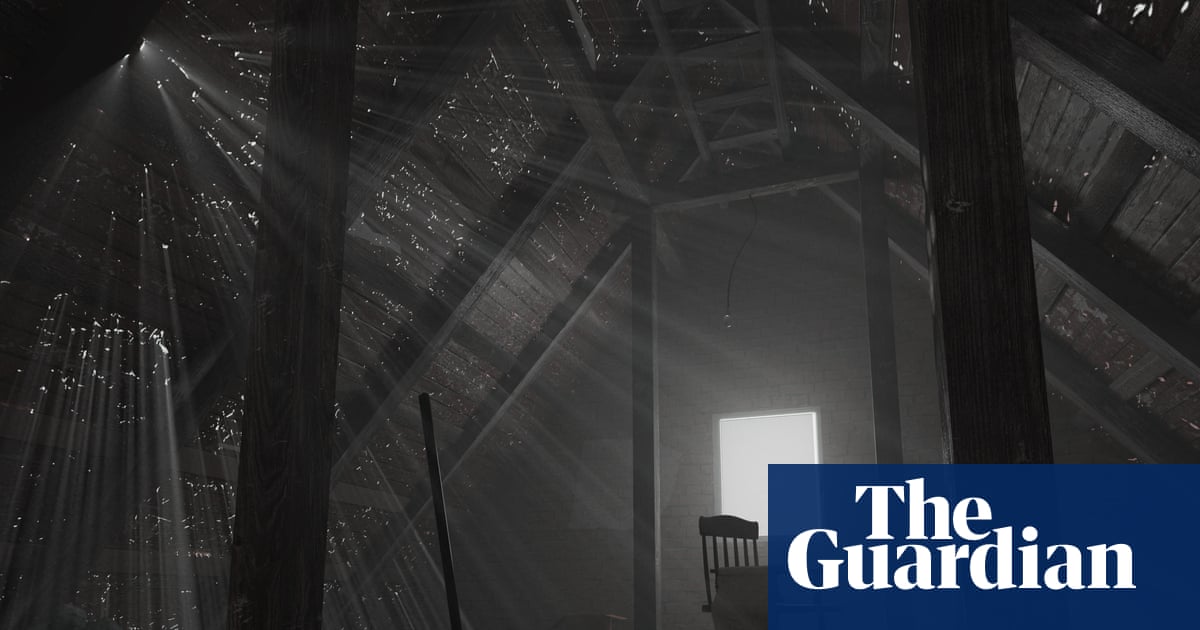
Abu Zubaydah, whose full name is Zayn al-Abidin Muhammad Husayn, is a stateless Palestinian who grew up in Saudi Arabia. He was one of the first detainees in the US “war on terror” to be tortured, and was subjected to a full range of what the Bush administration at the time termed “enhanced interrogation techniques”, in secret prisons in Thailand, Lithuania, Poland, Afghanistan, Morocco, and then the US base at Guantánamo Bay, on Cuba’s southern coast.
Now 54, he has been held in Guantánamo Bay without charge ever since, becoming one of its “forever prisoners”.
Abu Zubaydah was first seized in a sweep of suspected militants in Pakistan in March 2002. The US initially claimed he was a high-ranking member of al-Qaida, but has since dropped that claim, and now no longer alleges that he was even a member of the organisation.
Evidence of British complicity surfaced in two UK parliamentary reports in 2018, which revealed that MI5 and MI6 had fed questions to the CIA to ask Abu Zubaydah, in the knowledge that he was being tortured.
The amount of financial settlement was not disclosed as part of the agreement with Abu Zubaydah, but his legal team described it as “substantial”.
“It is important, symbolically and practically, that UK pays for its role in our client’s torture,” said Helen Duffy, his international counsel. “The settlement provides a measure of redress and implicit recognition of our client’s intolerable suffering at the hands of the CIA, enabled by the United Kingdom.”
The UK supreme court opened the way for Abu Zuybaydah to bring a civil claim against the UK government in a ruling in December 2023, rejecting government claims that his treatment came under the jurisdiction of the countries in which he was held.
In its ruling, the court said his “involuntary presence in any of the six countries cannot constitute a meaningful connection with that country”.
The court also said the alleged wrongs “were committed by UK intelligence services who were acting in their official capacity in the purported exercise of powers conferred under the law of England and Wales”.
According to a US Senate investigation into the CIA’s use of torture and other inquiries into the use of torture, Abu Zubaydah was waterboarded 83 times in a single month, locked for more than 11 days in a coffin-sized box and left to lie in his own urine and faeces, stripped naked and beaten, suspended from hooks just above the floor, and kept awake for seven consecutive days and doused with cold water whenever he lost consciousness.
In recent years, Abu Zubaydah has published a series of his own drawings depicting his treatment at black sites.
The UK’s Foreign, Commonwealth and Development Office was approached for comment on the reported settlement. According to Abu Zubaydah’s lawyers, the UK made no statement admitting liability to accompany the payment.
Duffy called on the government to acknowledge and apologise for its role in Abu Zubaydah’s torture, and actively seek his release, and the freedom of other prisoners still held without charge in Guantánamo Bay.
“This case is deeply relevant today, as states rise roughshod over international law and the world looks to other states to respond,” Duffy said. “There are critical lessons about the cost of cooperating with the US or other allies flouting international norms.”