2 months ago
48
2 months ago
48
A depleted – but far from defeated Ukraine – looks to 2026 with few good military options, even though a critical €90bn (£79bn) loan from the EU has been agreed. The financing will help Kyiv to continue defending at its current intensity until late 2027, but it will not lead to a transformation of its battlefield prospects.
On land, the pattern of the last two years should, in the first instance, continue. Russia has held the initiative since 2024, but only gaining territory incrementally, largely because it constantly throws people into the “meat grinder” of the frontline. During 2025, Russian advances amounted to 176 sq miles a month to the end of November, but at an estimated cost of 382,000 killed and wounded.
The White House has argued, in the latest run of peace negotiations, that Ukraine is fated to lose the remaining 22% of Donetsk province, including the fortress cities of Kramatorsk and Sloviansk. At the current rate of Russian advance that would take at least a year (and arguably more given the predominately urban environment) and another 400,000 or more Russians killed, disabled, or hurt – a cost Kyiv is willing to try to inflict.
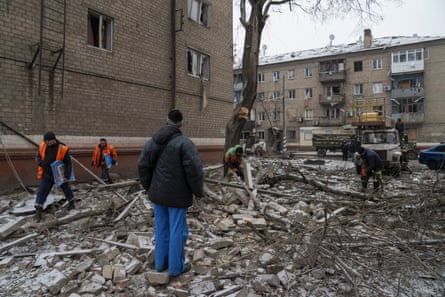
Nevertheless, there remain questions about Ukraine’s strategy and medium-term frontline resilience amid a slight improvement in Russian tactics. Three times in the past six months, Ukraine’s front has given way, east of Dobropillia in Donetsk in August, north of Kupiansk in Kharkiv province late summer, early autumn, and again east of Huliaipole in Zaporizhzhia in November.
Each time exhausted defenders could not stave off an influx of Russian infiltrators, sneaking past Ukraine’s drone defence in tiny groups. In Kupiansk, the Russians used underground gas pipelines in their attacks. However, the Dobropillia incursion was snuffed out after two months; in Kupiansk, the pipelines were cut or their exits appear to have been and in December, the Russians pushed back.
Meanwhile, the losses in Zaporizhzhia province were not dramatic (about 6 miles), although they were a reminder that Ukraine’s drone-led defence – easily able to inflict casualties up to 10 miles behind the frontline – cannot make up for where frontline infantry numbers are short, or troops are tired. East of Huliaipole, the 109th Territorial Brigade had held the area for three years.
The economist Janis Kluge estimates that Russia is still signing up roughly 30,000 military recruits a month, enough to replenish current losses but not obviously enough to turn the tide decisively.
Ukraine’s rate of recruitment is lower – a claim of 27,000 a month is undercut by other reports suggesting the true figure is a third that. But the country’s casualty rate is likely to be smaller still. It could be 10,000 a month if a one-day report from Volodymyr Zelenskyy in August is anything to go by, with many more wounded than killed.
Nevertheless, some Ukrainians worry that Kyiv’s heavy use of counterattacks over the past two years, first into Russia’s Kursk region in August 2024, and subsequently to blunt Russian progress in and around the still contested mining town of Pokrovsk, using a dedicated group of assault units, has created a strategic weakness. The Kursk incursion, while briefly raising Ukrainian morale, achieved little in the medium term, other than to slow Russian advances elsewhere.
Critics say the so-called Syrskyi regiments, named after the commander in chief, Oleksandr Syrskyi, because they are under his direct responsibility, have incurred heavy losses to the point where there are insufficient Ukrainian reserves left available, just enough to deal with crises in the frontline. After Kursk, Ukraine appears to have no capacity to surprise on land.

Bohdan Krotevych, a former chief of staff in Ukraine’s Azov brigade and one of the country’s best known war veterans, is one of the few public critics. “Ukraine needs to shift into a mode of dynamic defence for at least six months. The priority should be the creation of reserves.” On this thinking, the diplomatic task of the president is simply to buy time to allow a regeneration to take place, although losses of territory do not help Ukraine’s political narrative.
The near deadlock on land has led to an alternative effort to win by economic means. While Russia has stepped up bombing of Ukraine’s energy infrastructure and residents of the country’s cities endure electricity outages, Kyiv is still able to get power to the front, its defences not obviously impaired. And despite the regularity of Russian drone and missile attacks, civilian morale appears not to have been significantly affected.
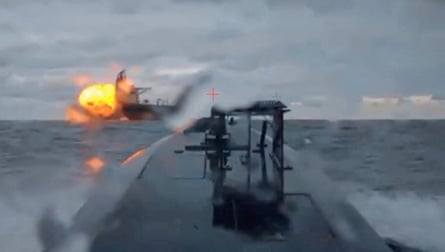
In return, Ukraine has bombed several Russian oil refineries (although others remain out of reach) and been targeting Moscow’s shadow fleet of tankers in increasingly daring drone attacks, which it hopes will impose costs in terms of increased insurance, expensive delays and ships not daring to travel. Oil tax revenues are the single most important source of income for the Kremlin and dropped by 34% in November.
One hope for Kyiv is that Russia will somehow break over the next two years, although there are few immediate signs of resistance within the country after the failure of Yevgeny Prigozhin’s march towards Moscow. Russia’s economy is still growing, if not as fast as it was, with a figure of 0.6% forecast for 2025, according to the IMF.
It is on the political front that events may move the quickest, specifically within the White House depending on how Donald Trump responds after his failed efforts so far to bring about a ceasefire. A risk remains that an angry US president would cut intelligence to Kyiv if Zelenskyy continues to refuse to concede territory, although it would be a real surprise if the US stopped selling arms to Ukraine. There is also the hope, perhaps, that Trump’s pro-Kremlin drift would be undercut by poor results for the Republicans in the US midterm elections.
Ukraine’s most realistic prospect is to try to hold Russia to, at worst, the current near standstill in the hope that something eventually will emerge. Kyiv’s problem, though, is that as long as Vladimir Putin thinks he can get something from negotiations with Trump, he is under no immediate pressure to stop the fighting.