1 month ago
64
1 month ago
64
An undercover police unit that spied on tens of thousands of political activists had to be shut down amid severe criticisms and recriminations, the spycops public inquiry has heard.
Jon Boutcher, a senior police officer who took over responsibility for the Special Demonstration Squad (SDS) unit, concluded within months that it had to be wound up because it was conducting unjustified surveillance and was badly run.
He said most of the political groups being infiltrated “posed no threat to public order, let alone democracy”. They included pro-Palestinian supporters and leftwing groups.
In contrast, very few undercover officers were being directed to infiltrate terrorist groups, he said. “At that time, society faced an increasing and enduring threat from international terrorism from which people were losing their lives, while almost no undercover capability existed to infiltrate those dangerous terrorist groups.”
Boutcher, who was a detective chief superintendent in Scotland Yard’s counter-terrorist division at the time and is now the chief constable of the Police Service of Northern Ireland, said the unit had to be closed down “pretty quickly”.
The SDS had once been lauded as a “jewel in the crown” of Scotland Yard by its supporters within senior ranks.
In searing criticism from an officer who has been involved in leading covert policing for years, Boutcher said the “abusive and inappropriate behaviour” of the SDS undercover officers had damaged members of the public.
The officers routinely formed intimate relationships with women they were spying on without telling them their real identities. Boutcher said the “sexual abuse of many vulnerable women by some SDS operatives” caused “incalculable and intolerable harm”.
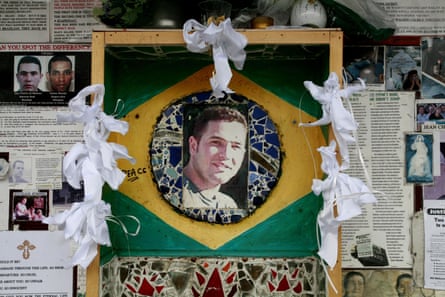
He said the SDS should never have spied on grieving families, such as the relatives of Jean Charles de Menezes, the innocent man shot dead by police on the London Underground in 2005. Nor should they have collected highly intrusive information about protesters, such as their friendships and living arrangements.
The inquiry is examining the conduct of 139 undercover officers in the SDS and another covert unit who infiltrated mainly leftwing organisations between 1968 and at least 2010. They assumed fake identities and pretended to be political activists in deployments that usually lasted four years.
This week the inquiry heard how, in its final days, there was a “toxic” atmosphere between the unit and the more senior Scotland Yard ranks.
Boutcher, with the agreement of his superiors, disbanded the SDS in what he called “quite a groundbreaking” decision as it had been running covert operations for 40 years.
He said the SDS mounted “almost like a rearguard action” to justify its existence in what he characterised as a “very much siege mentality in many ways”.
He said he suspected the SDS was gathering an “extremely limited” amount of useful information, and asked the unit to draw up a list of its successes in the previous five years. During that time, the undercover officers had spied on environment groups, the Socialist Workers party and campaigns against racism and the arms trade.
The purported triumphs that were put forward by the SDS were “embellished and exaggerated”, almost “akin to fairytales”, Boutcher said.
He also said he was concerned that public money allocated to the unit was not properly accounted for.
The officers were claiming “vast amounts of overtime”, he said. When drastic cuts to these payments were proposed, many of them threatened to resign, the inquiry heard.
Boutcher said the unit was poorly trained, and all but one of the undercover officers refused to undergo further training.
Initially, Boutcher believed the SDS could be reformed and in particular re-oriented to infiltrate terrorist groups. But he concluded this was not possible because the SDS had become “insular and very parochial” and was resistant to change.