3 months ago
69
3 months ago
69
The hunt for clues about the life of the masked rapper MF Doom had taken Adam Batty to some strange places, none more so than a remote-control car shop in the market town of Otley, West Yorkshire.
Rumour had it that Doom, who died in Leeds in 2020, had spent thousands in the shop. Other sightings placed him in the indie venue the Brudenell Social Club.
Like most things surrounding the rapper, myth, rumour and lore envelop his story. But the central question of why one of hip-hop’s most loved figures spent the final years of his life in Leeds drove Batty and the BBC 6 Music DJ Afrodeutsche to attempt to solve the mystery, in MF Doom: Long Island to Leeds.
Born in Hounslow in 1971, the rapper – whose real name was Dumile Daniel Thompson – died aged 49 at St James’s hospital in 2020 due to a lack of oxygen to his brain after a reaction to a drug prescribed for blood pressure.
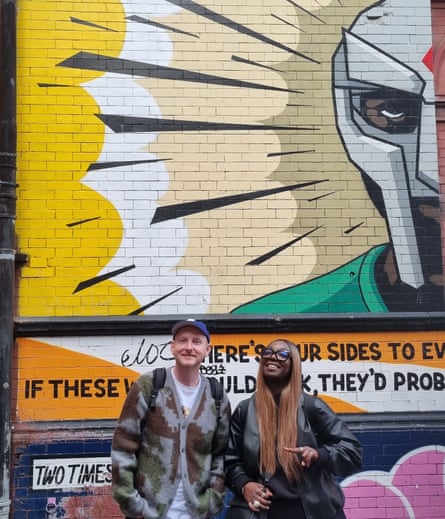
The fact he was even in Leeds after being barred from entering the US in 2010 was news to many people, including Batty, a journalist and Doom mega-fan. “In a way his story is tragedy,” says Batty. “He was failed by many institutions around the world.”
In the podcast Doom-heads, including the comedian Romesh Ranganathan opine about the brilliance of the rapper, who became known in the late 1980s alongside his brother DJ Subroc as the duo KMD. After his brother was killed in a car accident in 1993, Dumile Daniel Thompson re-emerged in 1999 with the album Operation: Doomsday under the moniker MF Doom.
His new mask-wearing image and sound was influenced by superhero and comic-book culture. His records, including the 2004 collaboration with Madlib, Madvillainy, are considered some of the best hip-hop records ever made. “Nobody else can tell a story the way he did,” says Afrodeutsche. “It was funny, it was intellectual, it was something that you couldn’t keep still to as well.”
The legacy of Doom is contested. The rapper’s wife and former A&R recently resolved a long-running legal dispute revolving around his notebooks, while concrete details about his life in the UK remain thin on the ground. “A lot of people won’t speak,” says Batty. “The family are very suspicious of who’s doing what and why they’re doing it.”
That lack of clarity seems to have only driven interest in the rapper who was once described as being “an obstinate and one-of-a-kind genius in the Mingus mould”.
Fellow musicians including Yasiin Bey continue to perform his tracks, reissues of his work abound, and a new illustrated biography published by Faber last year added to a growing Doom bibliography. His lyrics were also included in the first new Dr Doom comic published by Marvel in 20 years.
The reason he was in the UK is clear: despite arriving in the US as a one-year-old infant, he never secured citizenship or residency in the country. In 2010, after returning from a tour, a border official denied him entry, partially based on the fact he had a criminal record dating back to the 1990s.
He then found himself only able to travel to the UK, which meant he had to leave behind his wife and children in Atlanta. In 2023, Leeds teaching hospitals NHS trust issued an apology for the substandard care he was given. “I was most shocked about was how he was treated,” says Afrodeutsche. “That broke my heart – he was a humble man.”
Ultimately, the pair don’t find out why Doom moved to Leeds. Does Batty wish he had solved the riddle of Doom’s time in Leeds? “I don’t think it is an anticlimax as such – the best ending for us is that the mystery lives on.”
-
MF DOOM: Long Island to Leeds is available on BBC Sounds from Tuesday 10 February.