3 months ago
105
3 months ago
105
In the 1980s, Dayyabu Abba-Kurfi’s striking prowess for his high school football club in north-west Nigeria earned him the unlikely nickname Doncaster, after the English third-tier side more than 3,800 miles away. More than four decades later, in August last year, he scored perhaps his most important goal, brokering a peace pact between his neighbours in Kurfi, in Katsina state, and the bandit gangs terrorising communities there.
“For months now, we have experienced relative calm … our people are rebuilding their livelihoods,” the 60-year-old civil servant and local politician said.
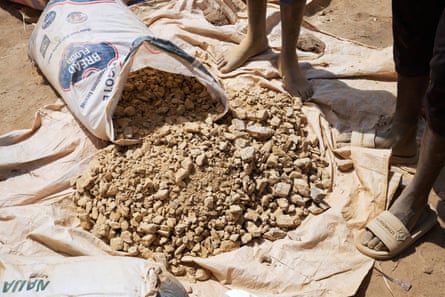
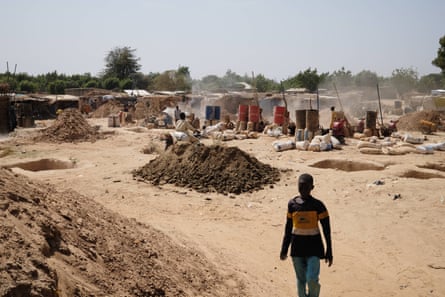
In the decades since Nigeria gained independence from Britain in 1960, a population boom and the climate crisis have led to the shrinking of old grazing routes used by herders. Youths in nomadic Fulani communities, who felt marginalised by the majority Hausa ethnic group, banded into vigilante groups. More recently, those groups morphed into motorcycle-riding criminal gangs, known locally as bandits, who run illegal mining operations and a billion-naira kidnapping industry.
“Because of their nomadic nature, a lot of them are denied land ownership,” said Malik Samuel, an Abuja-based senior researcher at the thinktank Good Governance Africa. “And whenever there are issues between herders and farmers, they [feel] farmers get more sympathy or support from the authorities … The problem is some take advantage of these legitimate grievances to perpetrate violence.”
As many as 15,000 kidnapping incidents were recorded in Nigeria between 2019 and 2025, according to the Lagos-based risk analysis firm SBM Intelligence. Most of them were in the north-west. Kidnappers collected 2.57bn naira (£1.4m) in ransoms between July 2024 and June 2025 alone, another SBM report said.
Eleven of Katsina’s 34 local government areas (LGAs) have found themselves on the frontline of banditry attacks. Villagers were displaced to towns where they had to adjust to new, costlier lifestyles. On their abandoned farms, bandits led cows to forage on young and mature crops.
Across the affected areas of Katsina, families would eat dinner as early as 5pm and enter the forest to hide before nightfall, fearing raids. To prevent mass slaughter of entire families, fathers would flee with some children in one direction while mothers took others and bolted in the opposite direction. In the confusion, children would sometimes be forgotten at home or in the bush, where they risked being bitten by snakes.
In Kurfi, one family dared to stay back during a raid. Bandits raped the mother while the father hid under their matrimonial bed, afraid for his life.
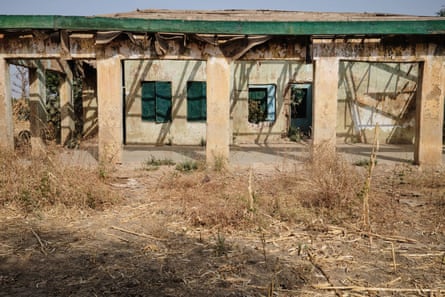
Nigeria has struggled to contain the bandit groups. Military operations often lead to gangs simply relocating to neighbouring areas. Where violence has failed, the government has tried financial incentives, making amnesty payments to militants willing to surrender their weapons. Critics argue that these payouts in effect signal to criminal elements that violence has a high return on investment.
Desperate for survival, some communities have bypassed the state to sign peace deals that sometimes allow bandit factions to collect protection taxes in return for halting raids.
According to elders in Kurfi, after one such deal in a neighbouring LGA, a bandit leader was keen to reach a similar truce with Abba-Kurfi. Community members pleaded with the state government to allow them negotiate directly with the bandits. “The state government’s position was that it does not support peace deals with criminals and instead relies on security operations,” Abba-Kurfi said. “However, community members felt that military offensives sometimes worsened their situation, as retaliatory attacks could occur in nearby villages, sometimes leading to mass casualties.”
Abba-Kurfi, the third of 30 children of a polygamous textile worker, husband to two wives, with 15 children and grandchildren, had long been accustomed to resolving fights in his household and workplace disputes in the civil service. So when Katsina state authorities eventually approved the start of talks, Abba-Kurfi was nominated to lead a team that also included the district head, community elders and clerics from the influential Izala sect.
The bandits, numbering more than 80, sent word that they trusted Abba-Kurfi to be the mediator. “Most of them grew up here before joining [gangs in the bush and] some of their parents are even government officials … so we are familiar faces with each other,” he said.
Firm conditions were presented to the bandits: there would be no amnesty payments and no guns would be allowed into the communities. In return, bandits would get free movement within the community and their demands would be met: access to markets and Islamic schools, and basic social amenities such as potable water for themselves and for their cattle to boost their milk production.
“We want our children to be knowledgable,” said a bandit called Bello just outside the nearby goldmining town of Nahuta.
Villagers say mediators dealt transparently with the bandits, leading to mutual respect and a level of trust. Less than a year on, life seems to be back to normal. The bandits returned more than 70 cows and allowed farmers to return to their farms. More than 1,000 abducted people were freed, and no deaths at the hands of bandits have been reported in recent months.
“[They were] released without ransom, I swear with my holy Qur’an,” Abba-Kurfi said. The council reportedly established Islamic teaching programmes to encourage repentance for those involved in violence and to get bandits to “show greater respect for human life over cattle unlike before.”
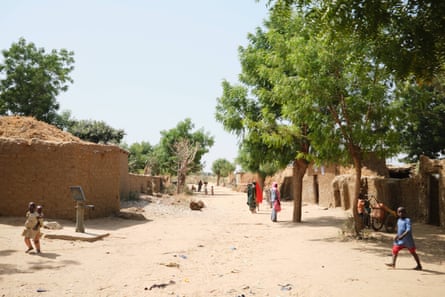
In one instance where a gang came from far away to steal cows, bandits who had accepted the Kurfi deal confronted them and helped recover stolen cattle, one elder said.
“We now take off our clothes to sleep at night,” said Abubakar Gadawa, a 46-year-old farmer and herder in Kurfi.
Not every deal has stood the test of time: on 3 February, a six-month pact in the Doma community in Katsina collapsed when one gang slaughtered 21 residents in a door-to-door attack.
On Sunday, bandits abducted dozens of villagers whom they had invited to a meeting about potential peace negotiations. According to local police, 39 people were seized during a meeting in the forest near Magamin Diddi village in the Maradun municipality of north-west Zamfara state.
In Kurfi however, there is cautious optimism. So far, the bandits have kept to their word, but they say the state government has not fulfilled its end of the bargain. While they do not carry their weapons into public spaces, they have refused to surrender their guns, afraid of possible reprisals by unforgiving vigilantes or attacks from distant gangs.
That has led to concerns that the deal could fall apart. “From what I understand, the failure [of previous deals] occurred because of lack of communication and unkept promises,” said Abba-Kurfi, who has kept an open line to the bandits and their relatives.
Samuel, who attended some peace deals last year, agreed, saying previous attempts were government-led and shortsighted.
“The government is more interested in procuring peace than actually the process that will lead to permanent peace,” Samuel said. “The government would rather prefer to pay tens or hundreds of millions of naira to bandits in exchange for their weapons than fulfilling those promises. How much does it cost to build a school? How much does it cost to build a borehole?”