3 weeks ago
63
3 weeks ago
63
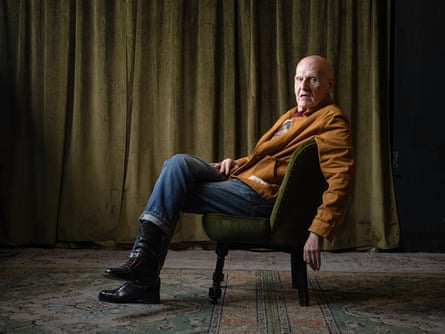
‘The essence of pop is, one, brilliant fucking songs – and the rest is sex, subversion, style and humour. And that was us.” So Adam Ant told me in 1995, describing the reconstructed Adam and the Ants, which formed in early 1980 with the arrival of guitarist/songwriter Marco Pirroni, who was sitting next to him. “We’re responsible for bringing back dressing up, going mad and screaming your head off.”
“That’s it!” grins Pirroni when I remind him of this, as we sit in the shabby-chic lounge of London’s 21Soho venue. Back then, I didn’t tell them I was 15 in 1980, forever sprinting across dancefloors pretending to be Adam Ant, chiffon scarves tied to knees, limbs flailing like a whirling Cossack. Pirroni hears this today and laughs. “That’s what it’s all about,” he hoots. “When I was 13, watching Bowie, Roxy, T Rex, you just go, ‘I wanna do that.’ It’s exciting, sexy, about looking good, Top of the Pops. I can’t imagine anyone saying, ‘Wow, I desperately want to be in Cabaret Voltaire. They must be earning no money, look boring and nobody likes them – that’s the band for me!’”
Pirroni, 67, is a winningly wry character, his sardonic eye enlivening his rollicking memoir, Your Money or Your Life: From Punk to Prince Charming. The book leads us, in forensic detail, through his teen years in mid-to-late 70s London. He was involved in every aspect of punk, every character, clothes shop, incident, ludicrous look and iconic gig. He was also a friend and bandmate of Sid Vicious, temporary guitarist with Siouxsie and the Banshees – and was obsessed with Roxy Music, John Barry and the spaghetti western soundtrack thrills of Ennio Morricone.
These were the sensibilities he brought to the newly adrift Adam Ant in late 1979, after three original Ants were stolen by estranged manager Malcolm McLaren for new proteges Bow Wow Wow. They informed the Ants’ landmark second album, Kings of the Wild Frontier, released in November 1980 and mostly written in Pirroni’s bedroom in his parents’ home in Harrow, London. The pair conjured a feat of audacious imagination, a call-to-arms cacophony of twangy guitars, lusty yodelling, voodoo incantations, comedy gunshots and euphoric, communal chanting.
Underpinning everything was their pioneering, two-drummer, Burundi beat sound. This was first suggested by McLaren, as was Native American imagery, and the result was a band that looked like a charging tribe of invincible warriors thundering over the horizon, fronted by a pirouetting pirate in feathers-and-frills, an “Apache” white stripe slashed across his nose.
The impact was rapid, global and era-defining: Kings of the Wild Frontier wasn’t just No 1 in the album charts for 12 weeks, the band’s singles and narrative videos – storyboarded by Ant – laid the theatrical, visual-pop foundations for MTV in the US in 1981. They were dastardly, suggestive and definitely grownup, but they nonetheless ignited primal stirrings in even preteens, who saw in Ant a supernaturally attractive superhero, even before his turns as glossy-lipped Dandy Highwayman and pompadoured Prince Charming.
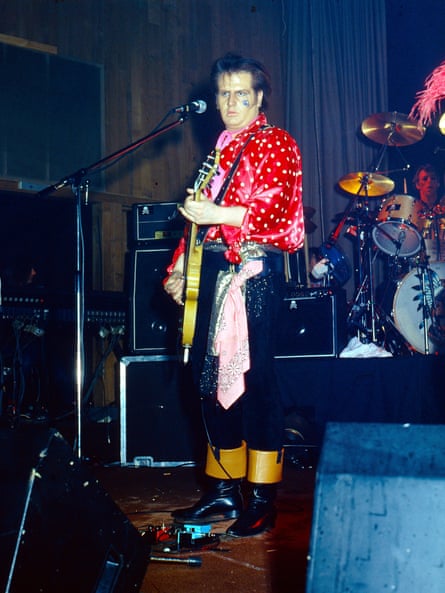
Ant wore glasses: thick-lensed, National Health whoppers. The first night Pirroni saw him without them on, wearing that white nose stripe and dressed in the 19th-century, gold-braided Hussar jacket from the film The Charge of the Light Brigade, his appeal was obvious. “It was like Clark Kent becoming Superman,” says Pirroni, who cultivated his own look, fond of polka dots and skull and crossbones. The band travelled with three huge wardrobe trunks. “And one was just my stuff!” says Pirroni.
Today, the Ants’ Native American leanings would ignite accusations of cultural appropriation. But Pirroni rejects this. “Culture belongs to the human race,” he asserts. “It’s not even stealing. It’s ideas – they’re free. It’s art. We tried to do it well. We didn’t take the piss! Well, I’m going to be dead soon so it doesn’t really matter what I think. You go off and create your own thing. Or steal somebody else’s thing or whatever the fuck you want.”
For 18 months of Antmania, life moved at cosmic speed, a flip book of TV shows, hotels and airports, a heady era for deadly, disparate pop rivals. Pirroni was friends or acquainted with an ostentation of peacocking characters: from his punk years (Billy Idol, Viv Albertine, Chrissie Hynde), his Blitz Club-going era (Steve Strange, Spandau Ballet), and the ones he’d bump into at airports (Culture Club, Duran Duran, the Stray Cats, Madness). “Lots of people I knew personally were on telly, getting successful,” he nods. “And we’re probably all thinking, ‘Those bastards!’ You’re young, you’re supposed to be competitive. I used to say in the press, ‘Their record’s shit!’ That’s the way bands are.”
Soon life became absurd. The Ants were regulars on kids’ TV: Tiswas, Multi-Coloured Swap Shop, The Children’s Royal Variety Performance with Clive Dunn, Basil Brush, Rod Hull and Emu. “Adam really thought Rod Hull and Emu were going to attack him,” he laughs. “Princess Margaret was completely paralytic, breathing on you. We found it all hilariously funny. The pirate ship that seemingly took us up the Hudson in New York? It wasn’t a magnificent pirate ship with skull and crossbones. It was this stupid Playmobil … cartoon. As much as we were trying to be a cartoon – but not like this!”
They had dinner with Liza Minnelli, hung out backstage with Liberace. “I remember being in this great big James Bond-like hotel suite looking over Tokyo and saying to Adam, ‘How did we get here?’ Eighteen months before, we’d been in my bedroom in Harrow.”
Their descent was equally rapid. By late 1981, the band had three managers and Ant’s erratic personality – prone to excessive drama, persistent paranoia and chart-success obsession – was increasingly problematic. “Adam is extremely difficult,” declares Pirroni. “It was always, ‘Oh God, what now?’ ‘The BBC’s banned our record.’ ‘No, they haven’t, they’re just not playing it.’”
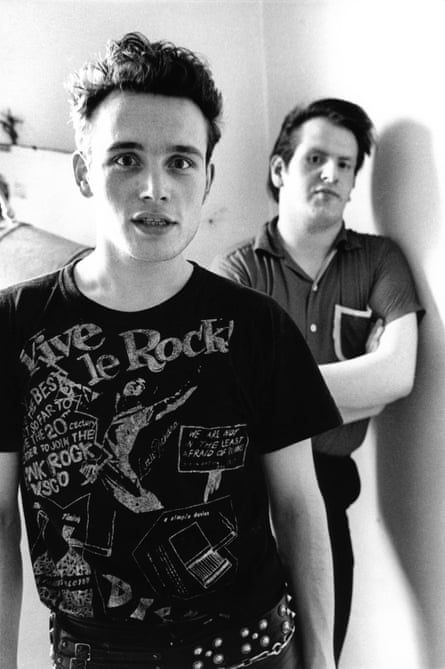
By the age of just 22, Pirroni was disillusioned. He hated performing, finding it “boring, repetitive” and felt exasperated over all the infighting and resentments. “Bands are not built to last,” he says. As the Prince Charming Revue tour ended in January 1982, a cynical quip from Ant finished Pirroni off.
“He said, ‘No one cares what we sound like, they just want to see me dance about.’ I thought, ‘Well, fuck it, what am I doing here then?’ It did feel a bit like the Beatles – with a really, really young audience, young girls. We didn’t do that on purpose. Perhaps we were just completely infantile!”
Their relationship endured after the split in March 1982, lasting throughout the 80s and 90s, with Pirroni also working with Sinéad O’Connor and Siobhan Fahey, the Bananarama founder who is now a close friend (they’ve holidayed together in Antigua).
Today, Adam Ant still tours, having been diagnosed with bipolar disorder. As a young man, he had mental health issues, which Pirroni was aware of in the 80s but remained a little sceptical “because he does make things up”. During the 1990s, he fielded calls from Ant’s doctors, the police and his neighbours: “I didn’t blame him. He was sick.”
He was with Ant the day of his infamous altercation in the Prince of Wales pub in Kentish Town in 2002, wielding a starting pistol at revellers who mocked his cowboy outfit. He was later charged with affray and sectioned. Beforehand, Pirroni and Ant had met up in a restaurant, but Ant bolted off to continue drinking, says Pirroni. In the 1980s, the singer had famously been a righteous teetotaller in a hedonistic era. His disciplined lifestyle was, explains Pirroni today, a reaction to his severely alcoholic father. “But he controlled it. Until the mania took over.”
Pirroni, who now lives a rural life in Derbyshire, lost contact with Ant years ago and is no longer interested in creating music. “Records now,” he says, “are like a plastic animal you give away with cornflakes. Your album given away to get people to come and see you live. I’m not going back on the road. You’d have to pay me millions.”
He’s done enough anyway, I assure him. For teenagers like me, what he did was magic. “I find that really hard to accept,” he unexpectedly confesses. “When someone comes up to me and says, ‘Kings is my favourite album. It really affected me.’ If I think that our album, my album, affected them in the same way as, say, Roxy Music’s For Your Pleasure affected me, then I’m scared.”