3 months ago
77
3 months ago
77
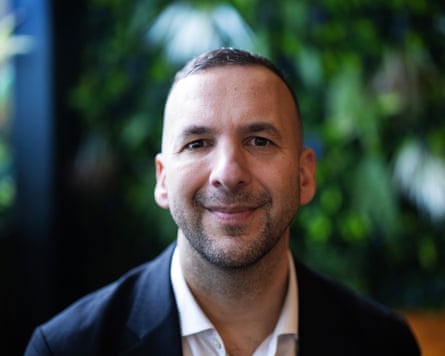
Zack Polanski finally decided to stand as the Greens’ leader, he says, after witnessing the party being eclipsed by Reform in last May’s local elections across England, and realising that British politics had changed for good.
While the Greens made yet more steady gains, Reform won nearly 700 councillors from a standing start. As deputy leader, it was Polanski’s job to speak to losing candidates to both offer consolation and ask what lessons could be learned.
“The ground game was as solid and as effective as it could be,” he told the Guardian. “Where they felt we were missing was in the national conversation. Reform was this new beast that had clearly dominated the air game. I realised we needed to match that.”
Soon after the local elections, Polanski announced his candidacy, promising to shake up the party with a Reform-like dose of what he called “eco-populism”, a phrase he made up on the spot in an interview launching the campaign and which became its unofficial slogan.
Four months after he became leader, membership of the Greens in England and Wales has shot up from about 70,000 to well over 180,000, and poll ratings have risen such that a handful have shown the Greens above the Liberal Democrats and even Labour.
This is uncharted territory for a party that had specialised in the patient long game, building up networks of councillors before challenging for parliamentary seats.
Even senior Green members who were sceptical about his candidacy now credit Polanski for boosting the party’s profile – as well as his own.
A year ago, Polanski was a member of the London assembly who was barely known outside the party despite being its deputy leader. But since trouncing two of the party’s MPs, Adrian Ramsay and Ellie Chowns, in the leadership contest, he is everywhere; on the airwaves and on social media. He also has his own podcast that he says has a million listens a month.
Even sitting at the very back of a cafe in north-east London, Polanski is recognised. If he walks in the area on his own, “within about 30 seconds someone will come and lobby me about something”, he says.
Polanski appreciates that such approaches are to be welcomed, particularly for a party which has traditionally struggled to get attention.
Amid all his other tasks as leader, he tries to spend an hour every day replying to people who message him on social media. Why? Because many of them are new supporters, who then eagerly share his reply with family and friends, setting off, he hopes, a domino effect of enthusiasm and activism.
“I’ve gone around the country and bumped into people where that was the beginning of their journey, and who now have an important role in their local party,” he says. “And it started with that first engagement.”
Rising membership numbers are mainly a source of bragging rights for other parties, but for the perennially cash-strapped Greens it has brought a welcome surge of income. This has been supplemented by crowdfunders, with one Christmas-themed video that Polanski fronted raising £260,000.
It is all relatively small-time in a world where Reform can receive £9m from a single wealthy donor, but Polanski says it is an advantage.
“We really require that membership surge for funding, because the vast, vast majority of our finances come from regular donations from members,” he says. “That’s an important principle, because that frees you up to never have a vested interest, never have someone that you’re beholden to.”
It is allowing the party to recruit more staff, with a planned increase of nearly 80% in paid personnel this year including a senior communications aide for Polanski, who writes all his social media posts as well as replying to messages. “It’s been really bad for my reading life,” he says.
The next 12 months will bring two significant challenges, one shorter term, the other more structural. The first involves May’s local elections in England and for the Senedd in Wales, while the Scottish Greens fight their own campaign for Holyrood.
Polanski’s arm of the party is forecast to make large gains in London. It has never before held a Senedd seat, but polls suggest a tally of up to three, potentially giving the Greens the balance of power.
At the same time, the party has to finesse a programme for the next general election, one that will not only attract much more scrutiny than ever before, but that will be drawn up without the big parties’ retinue of thinktanks and other policy specialists.
“Increasingly, experts in all fields are offering their services or advice, and that’s something I do want to lean into, not just for me, but for the party more generally,” Polanski says.
“People rightly want to know, beyond the principles, what do these practical policies look like and how we pay for them? I think they’re all legitimate questions. I think it’s also a legitimate answer that we’re three or four years away from a general election.”
Would he do it all again? Polanski says he has no regrets.
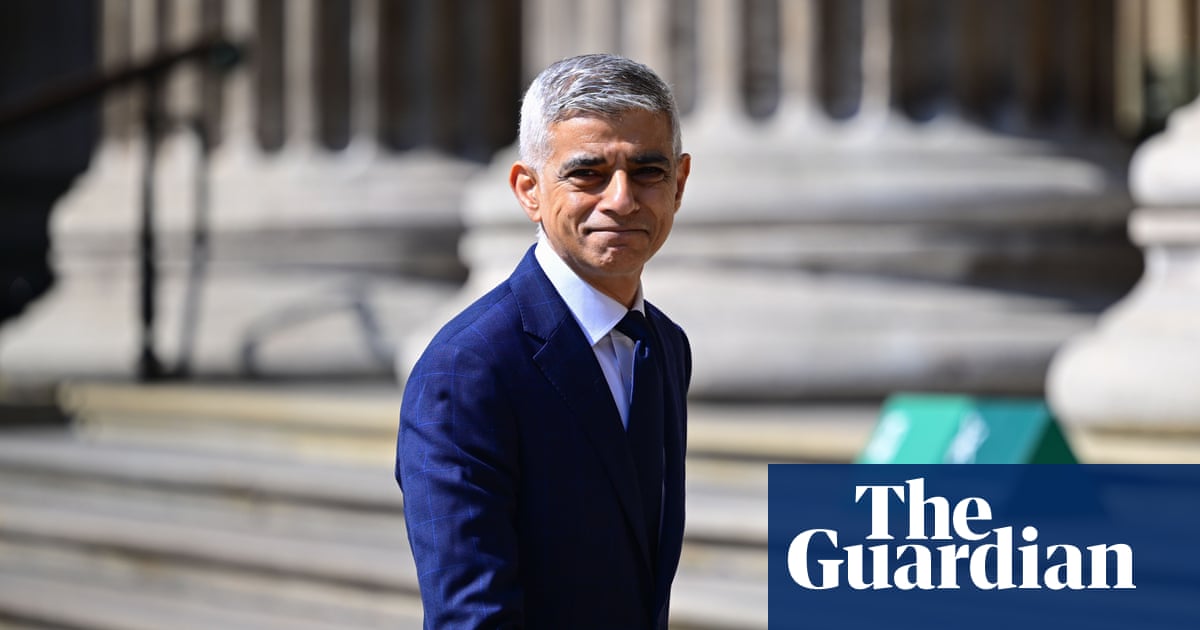
“It’s been amazing. When I was first elected as leader, Sadiq Khan [the London mayor] said he had not seen a politician enjoy a campaign quite so much. And I think that’s continued.
“There are definitely days that are less enjoyable than others, particularly personal attacks on my loved ones or my family, but actually, 99% of the time, it’s the most privileged, wonderful position to be in, and I’m loving every second.”