3 months ago
74
3 months ago
74
A 69-year-old woman is recovering in hospital with four broken vertebrae after a police officer allegedly pushed her down “very violently” and “without warning” at Sydney’s protest against a visit by the Israeli president.
“I straight away knew I’d hurt my back,” Jann Alhafny told Guardian Australia over the phone from her hospital bed on Tuesday.
Alhafny said while she was on the ground, other people were pushed on top of her. She said she feared there could be a stampede or that she might suffocate.
“[The officer] grabbed one arm, and he yanked me up on to my feet, like really severely, and that was excruciating.”
A spokesperson for NSW police said it was not aware of the incident. Police said investigators were continuing to review body camera and social media footage of the event.
Alhafny was one of several protesters injured during the rally attended by thousands at Sydney’s town hall on Monday evening against a four-day visit by the Israeli president, Isaac Herzog.
Sign up: AU Breaking News email
Protesters were pepper sprayed and kettled by police as some attempted to defy a Minns government ban on marches in the area where the protest was held.
The protest also fell within a designated area declared a “major event” under state legislation, which gives police expanded powers to move protesters on and search people for the duration of Herzog’s visit.
It extinguished the ability for anybody who alleges they were the victim of any tortious acts by police to sue the state.
Labor MP Stephen Lawrence, who attended the protest, said the state should have facilitated a peaceful protest. He estimated about 20,000 to 30,000 people had been present. Police said about 6,000 people attended.
“We’ve removed that capacity to have those sorts of processions and protests authorised,” Lawrence told ABC radio on Tuesday.
“This [violence] was a pretty much inevitable consequence of that. I don’t like to be right about a thing like this, but it’s been repeatedly said in parliament, and in different places, we’re basically creating a pressure cooker, and we saw that last night.”
Lawrence added: “There will be no civil liability, because under the Major Events Act declaration, all civil liability is extinguished.”
Alhafny said she had attended most protests held by the Palestine Action Group over the past few years. Previously, organisers could complete a form 1 to negotiate marching with police permission.
The group submitted a form one for Monday’s march, but it was rejected due to anti-protest legislation passed in the wake of the Bondi terror attack. The restrictions prevent the use of the permit-style system in certain areas for up to 90 days after a terror attack.
Alhafny’s husband, who died many years ago, was Palestinian and escaped with his family from Palestine when he was a child during the Nakba.
“We always go to the protest, my daughter and I, and it’s just the right thing to do. Even if my husband wasn’t Palestinian, I’d still be supporting Palestine,” she said.
Alhafny recalled walking around the protest and taking photos on Monday. She alleged that “without any real warning”, police officers charged towards where she was standing. She said that after the officer pulled her up, he was shoving her and telling her to move.
“I could barely walk, and so I hobbled away,” she said, adding that another protester then helped her to take a seat. She then called an ambulance.
“I don’t need surgery, luckily, if you can call it luck, but the pain is excruciating,” she said. “They said that it will be slow, but I will recover. I’m 69 years old. I don’t deserve this. I’ve worked hard all my life, and now I’m putting up with this. I don’t know what my future holds now.”
On Tuesday, the lord mayor of Sydney, Clover Moore, called for an independent investigation into “police activities” at the protest and an urgent review of the policing of protests more broadly.
“We cannot simply say the images aren’t a good look, or that police were just doing their jobs in trying conditions, or play a blame game – the community needs to be able to trust police, and that trust relies on transparency and accountability,” she said.
“Both our state and federal governments have committed to addressing the terrible rise in antisemitism and Islamophobia in our communities, and that is most welcome. As in any effort to achieve ‘social cohesion’.
“But we should be careful not to erode civil rights or chill genuine protest in the process. That doesn’t unite us, or make us feel safe.
“If we truly value inclusion and diversity, we must ensure all our communities are permitted to gather – to reflect, to mourn, to voice opposition to violence and war – safely and freely.”
The NSW police commissioner, Mal Lanyon, told reporters on Tuesday that officers “did what they needed to do, which was to hold the line and then fall and move the protesters back with a view to dispersing them. That was designed to keep the community safe.”
The premier defended the actions of the NSW police and rejected suggestions his own anti-protest restrictions had created what he deemed to be an “impossible situation” for police dealing with thousands of protesters outside Sydney’s town hall.
He also urged people “to not look at a 10-second clip without the full context”.
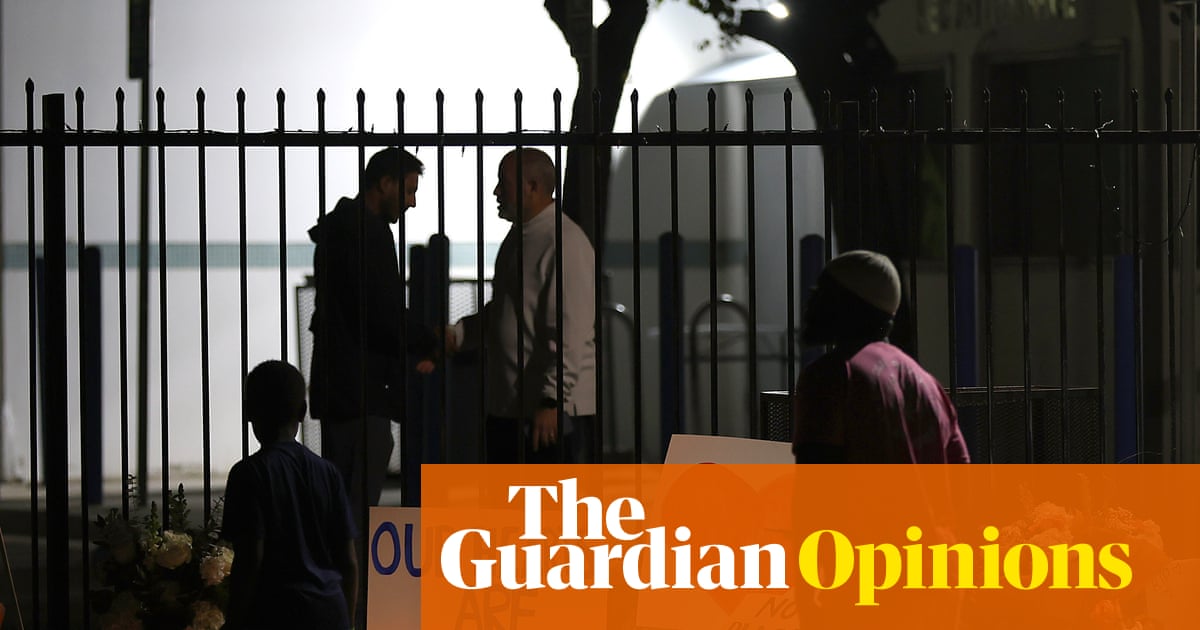
One incident captured on video showed a number of men kneeling to pray before some were dragged away by police.
Sheikh Wesam Charkawi, who led the prayer, told Guardian Australia on Tuesday that he and his fellow worshippers were about 15 minutes behind schedule to hold sunset prayer towards the end of the demonstration.
As he was pulled by police, he said he felt like his shoulder was nearly ripped out of its socket.
“We weren’t disobeying any police commands. We were simply making our prayers and we had our back turned,” he said. “What an unacceptable thing that they have done.”