3 months ago
63
3 months ago
63
The first time gay hockey romance crossed Mary’s radar, she was warned off it. A 64-year-old non-profit executive from Toronto, Mary recalled mentioning the Canadian author Rachel Reid’s Game Changers series to her son, a twentysomething queer writer and fellow hockey-obsessive, a few years ago.
“I said: ‘Have you heard of these books?’ and he said: ‘Yeah.’ I said: ‘Should I read these books?’ And he said: ‘No. They’re not for you.’”
Mary took her son at his word; after all, she considers herself “basically a cynic”, hasn’t cracked a romance novel since she threw a Danielle Steel book across the room in disgust about 40 years ago, and declares that she would have to be “hogtied” to watch a Hallmark Christmas movie. “I’m divorced. I’m old. I’ve had men in my life and I’ve had romance in my life,” she said. “I watch TV and I’m just like, it doesn’t happen like that. No.”
But when gay hockey romance entered the cultural zeitgeist with a vengeance late last year, thanks to the steamy television adaptation of Reid’s Heated Rivalry by the Canadian streamer Crave, Mary, who asked to be identified only by her first name, discovered that a sexually explicit love story about two men was “for her” after all.
“I admit I may have rewatched it more than once,” she said. “It’s super sexy. They’re fabulous to look at. There’s a huge amount of consent. I’d really like to get that back in my life – that feeling of ‘I can’t keep my hands off you.’”
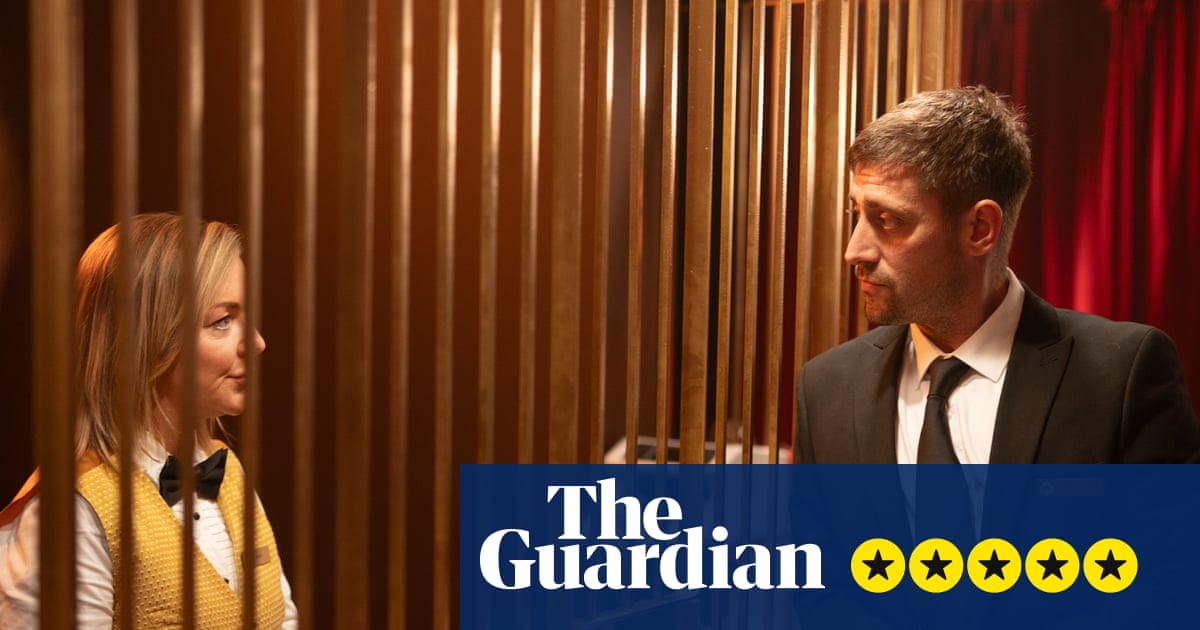
Straight women, queer women, cisgender women, trans women; young and old, single and coupled, Canadian, American and increasingly every other nationality – they’re all going feral for the love story between Shane and Ilya, two closeted professional hockey players on rival teams whose sexual chemistry sustains them for a decade as they learn to open their hearts and minds to the possibility of love.
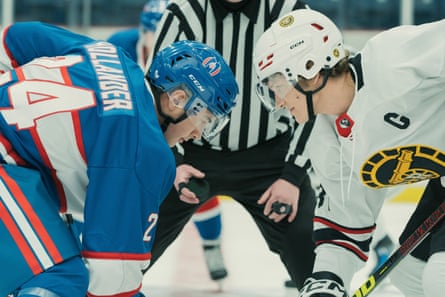
But what does it say about gender relations in 2026 that so many women are fantasizing about gay smut? The fervent popularity of Heated Rivalry suggests that for many, the real romantasy is not sex and romance with dragons and fairies, but sex and romance without misogyny and gendered hierarchy. If the only way to get that in today’s media environment is through sex and romance without any women, they’ll take it.
The women who love men who love men
Lillian King is the last person anyone would expect to enjoy a TV show that kicks things off with a locker room masturbation qua seduction scene and builds toward scenes of remarkably tender frottage. A writer for the NPR quiz show Wait Wait … Don’t Tell Me, King is 30 years old, straight, engaged and decidedly “sex negative”, at least when it comes to media. She’s “squeamish” about onscreen kissing and prefers Anna Karenina’s approach to representing sex scenes: “Tolstoy just does ‘dot, dot, dot’ and I think that’s right,” she said. “When my fiance told me that Timothée Chalamet goes down on Gwyneth Paltrow in the ping-pong movie, I was like, ‘I don’t need to see that.’”
But she decided to check out Heated Rivalry when she learned, via viral TikToks, that it featured a song by the Canadian indie band Wolf Parade. She figured she could put it on in the background while she did laundry. Instead, she “inhaled the first three episodes” and ended up being late to meet a friend. “I couldn’t let it go. I just was so in.”
King sounds amused but untroubled by her newfound appreciation for gay smut. “There was a moment where I was like, ‘Wait, why is this hot?’” she said. “Well, of course it’s hot. If I find one hot guy attractive, when there’s two of them it’s just like, ‘Oh, sick.’”
The fact that some women enjoy watching men have sex with each other on screen is not exactly new – PornHub claims that nearly half of the people watching gay porn on its platform are women – but the Heated Rivalry fandom may be the first truly mainstream example of the phenomenon in North America. As the show’s audience has grown, it has tilted even more heavily female, according to HBO figures reported by the New York Times.
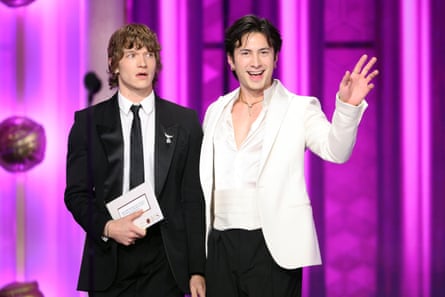
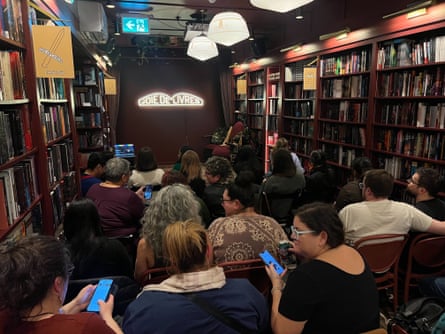
TikTok and Instagram are awash with videos of female fans filming their tearful reactions to The Cottage (IYKYK) or expressing their utter devastation at the bleak contrast between their app-blighted dating lives and Shane and Ilya’s delicate yearning. Lesbian and women’s sports bars are holding marathon screenings of all six episodes; one bar’s tagline for its event reads: “Sapphics love a slow burn.” Late-night host Jimmy Fallon compared the screaming crowd that gathered to watch him interview Hudson Williams, who plays Shane, last week to the kind of enthusiasm he’s seen for BTS and Harry Styles.
I experienced that fervor when I posted a call-out for women who enjoyed Heated Rivalry on social media. Never in my career have I received so many responses, so quickly. Some were veterans of the men loving men (MLM) romance genre. Others were entirely new to the idea that they could find depictions of gay sex appealing. Many revealed that they had already watched the series multiple times, that they had bought and read the rest of Reid’s Game Changers series (six books in total), or that they were now planning to read nothing but MLM. A lesbian said that Heated Rivalry had “some of the all-time best kisses on TV”. A trans woman told me that, after so many people had put pressure on her to “just” be a gay man when she transitioned, she was hesitant to watch the show; despite that trepidation, she loved the romance and the characters – and has downloaded all the audiobooks.
Some even suggested that the gay and bisexual men of Heated Rivalry had convinced them to give straight men another chance. “I’ve been single for forever and off the dating apps since August, but I’m ready to get back out there again,” said Marie Stone, a 35-year-old social media manager from Philadelphia who primarily dates men. After watching the series “about 15 times”, she feels that her brain has been “rewired – for the better”. “I’m open to dating and love again,” she said. “Thanks, Canada.”
Jacob Tierney, the Canadian showrunner who wrote, directed and produced the series, was aware that his show’s chance of gaining widespread popularity rested on a demographic that simply outnumbers gay men.
“I always said: ‘Once you film this, gay men will watch it, but we’ll watch anything with gay men in it,’” he told Teen Vogue. (Much of the media campaign by the show’s stars and creators has centered on women’s outlets.) “We’re not wildly discerning in that way, and we’re starved for stories. But the secret fanbase of this is women, and that is a much bigger target than just queer people or queer men.”
The genre of gay romance stories written by and for women goes by a number of different names on the internet: MLM, MM, slash fiction, boy’s love (BL) and yaoi among them. But women producing and enjoying gay erotica predates the internet.
“There’s a whole tradition of women, usually lesbian women, writing classical era historical fiction with pretty heavy man-on-man themes,” said Adrian Daub, a professor of comparative literature and gender studies at Stanford University. Mid-century historical fiction writers Mary Renault and Marguerite Yourcenar wrote novels exploring homosexual relationships set in ancient Greece and ancient Rome, respectively, for an audience that was likely heavily female, Daub said.
Daub draws a direct parallel between the assured masculinity of Heated Rivalry’s hockey players and those literary depictions of gay love. “The show seems to go out of its way to say that it’s very masculine to be gay, which is exactly why people like those classical romances, where homosexuality is a natural overflow of masculine energy,” he said. “It’s a vision of a sort of non-toxic but also non-anxious masculinity – masculinity that doesn’t require women to constantly affirm it.”
Clare Sears, a professor of sociology and sexuality studies at San Francisco State University, traces the roots of commercial MLM romance novels to fan fiction, which emerged in the 1970s and largely featured “fictional male pairings, most notably Kirk and Spock from Star Trek”. Same-sex relationships were not represented on TV, but there was often an erotic subtext to the relationships between two male characters that fans – most of them straight women – picked up on and ran with in self-published zines and slash fiction (or just “fic” for short).
With the internet came an explosion of fan culture and the development of websites such as LiveJournal and Archive of Our Own (AO3), where slash fics continued to show a marked preference for gay male pairings.
The cultural impact of fan fiction has been undeniable. Fifty Shades of Grey started life as a Twilight fan fiction, while certain Harry Potter fan fics have eclipsed the original in parts of the fandom. Commercial MLM book publishing, of which the Game Changers series is just one example, evolved out of the online appetite for MM fan fiction. (Reid published an initial draft of the first Game Changers novel as a Marvel fanfic, later swapping out Steve Rogers and Bucky Barnes for the hockey captain and smoothie maker that started off the Game Changers series.)
This history points to a clear provenance of MLM romance as a distinct genre. “Gay romance novels are written by gay men for gay men,” Sears said. “Whereas MLM romance novels, similar to slash fan fiction, are intentionally written by women for women, they tap into women’s fantasies, and they’re exclusively about men having sex with men.”
Whether or not it’s problematic for women to read and write MLM is a debate that has been hashed out extensively in the online communities where such fics are shared, to the extent that the MM_RomanceBooks subreddit declared a blanket ban on complaints about female authors and readers in 2021, arguing that they are reductive and unresolvable. Some people worry that female authors are misrepresenting the gay experience and that female readers are objectifying or even feminizing gay men. In a recent TikTok about Heated Rivalry, Griffin Maxwell Brooks, a gay, non-binary influencer, offered this attempt at detente: “When people are like, ‘Oh, they’re fetishizing gay men,’ I’m like, ‘Girl, if anything they’re fetishizing men who are not abusing women, and I think we can’t be mad at that.’”
Perhaps the more interesting question is why so many women are fantasizing about gay sex at all. On the one hand, the answer to “why?” might as well be “why not?” Sears said. “Sexual fantasy is totally different from sexual identity. Many people enjoy fictional stories or fantasies that are really removed from who they are or what they want to do in real life.”
Still, stories that cater to our desires can be illustrative of what those desires are – and that’s useful in a society that still prefers to tell women what they should want rather than listen to what they say. The “basic explanation” that scholars such as Lucy Neville, a lecturer at the University of Southampton and author of Girls Who Like Boys Who Like Boys: Women and Gay Male Pornography and Erotica, have hit upon is, according to Sears: “Erotic stories that focus exclusively on men sidestep the kind of gendered power imbalances that structure intimacy between men and women, both in fiction and in real life.”
At a time of trad wives, Trumpism, and more than a little scolding from a pundit class that women need to spend more time and energy attending to men’s loneliness, it can seem like heterosexuality itself is in a death spiral. Women are hyper-aware of the real world threat of sexual violence, of the expectation that they will make concessions to a male partner’s career, of the ongoing rollback of reproductive and LGBTQ+ rights, and that sex and dating are often unsatisfying and disappointing.
“Is having a boyfriend embarrassing now?” Vogue asked in a recent article about women who are foregoing posting about their male partners on Instagram. Others are swearing off men altogether, a phenomenon known as heteropessimism or heterofatalism.
So many of the major book-to-film franchises of the 21st century, such as Twilight, Fifty Shades of Grey and Bridgerton, serve as exemplars of the kind of extreme but societally normalized gendered power imbalance (male vampire v female mortal; male billionaire v female mortal; male aristocrat v female mortal) that Heated Rivalry defies. (It might behoove those men who complain about the use of the phrase “toxic masculinity” to consider what women find so intoxicating about Shane and Ilya’s relationship, but I won’t hold my breath.)
“This is our dream romance,” said Mary, who invoked a lifetime of dealing with sexism and inequality in the workplace – starting with her first job out of college, when she was paid less than men because she was expected to marry and quit working – to explain why Heated Rivalry felt so refreshing. “Number one: I wish I looked that good in the shower. Number two: that there was someone who was literally my equal.”
This was a common theme among the women who reached out to me, some of whom had been seeking out MLM romance for years for this exact reason. “Without the default expectations, the power dynamics had to be negotiated more consciously,” said one woman. “In these romances there is a conscious effort to identify who leads, who yields, how care and vulnerability are expressed and that it can shift more fluidly.”
The genre also creates avenues for women readers to play around with their own sexual and gender identities. “This kind of MLM romance offers a more complex and fluid viewing position, because you’re free to identify with either character or both characters,” said Sears. “Your identification isn’t predetermined by gender, so it opens up imaginative space for women to access more masculine parts of themselves or to fantasize about themselves in different sexual roles or scenarios.”
Daub described the dynamic as “the opposite of the friction one experiences when one realizes, ‘oh, this isn’t made for me’… It’s allowing a certain viewer, usually women, to engage in a male gaze without a woman being offered as its object. You’re not having to think of yourself as an object of male power relations.”
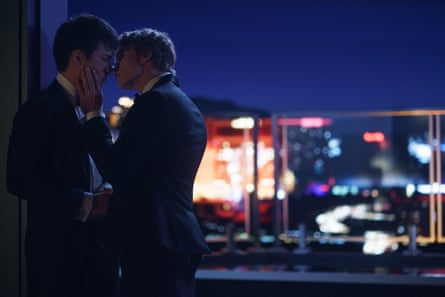
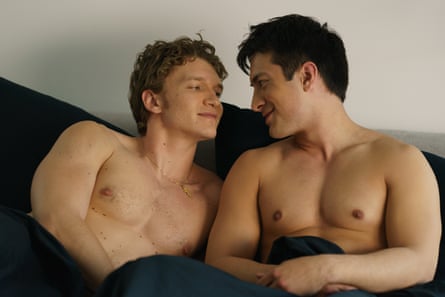
In Heated Rivalry, nude male bodies are shot with a lingering and appreciative gaze, while women get to keep their clothes on. Though early episodes mimic the gendered dynamics that typify straight romance – the first two cast Ilya as the more experienced and emotionally withholding Russian top to Shane’s virginal and emotionally needy Asian Canadian bottom, while the third episode features a Cinderella tale of a star hockey player and the smoothie-serving cater waiter he falls for – the second half of the season subverts those paradigms comprehensively.
It doesn’t hurt that Shane and Ilya are wealthy enough that almost all domestic labor is taken care of offscreen, presumably by well-compensated housekeepers, interior designers and stylists. When these characters cook for each other, the implications are strictly emotional.
Many women spoke to me of the sense of freedom that Heated Rivalry and other MLM gave them to indulge in fantasy while shedding their personal experiences. “It’s seeing a romantic relationship where you don’t have to think about your own baggage and hurt,” said one woman. Women struggling with disability or chronic illness mentioned that MLM freed them from having to think about the differences between their own bodies and those of romance heroines.
“It’s extra fun and escapist for me to watch a relationship that is hard to possibly project myself into,” said Annie Vought, a 34-year-old bisexual woman from Seattle. “There is zero room for me personally to be like, ‘Wish that was me.’ I’m just like, ‘Get it, boys!’”
An escape from misogyny
While for some women, the gender equality evinced in Heated Rivalry is aspirational, for others it’s a necessary escape.
“The main reason I read MM is I just absolutely cannot stand reading or watching women suffer at the hands of men – in any way, big or small, anymore,” said Dawn Bovasso, a 49-year-old queer woman from Boston.
Bovasso is a voracious reader – getting through 250 to 350 books a year, she estimates – but she hit a limit on fictional depictions of female characters when she read Fourth Wing, a hugely popular romantasy novel published in 2023. Despite the novel featuring a “strong female lead who is smart, fierce and brave”, Bovasso said, the plot of the book involves a lot of emotional abuse, disrespect and poor treatment.
“I have never found one novel – romance or other – where the woman is just treated well from the beginning,” she said. Even lesbian romances almost always include “women being treated with disdain and trauma when they’re at work and when they’re talking to their families and when they’re moving through life”, she said.
The constant reminder of misogyny and inequality makes it impossible for her to relax and enjoy a story. That’s not a problem with MLM in general and Heated Rivalry in particular, Bovasso said. “The women who are in it are all treated with respect. The men do their own emotional labor. It’s not on us to fix, defend ourselves, or worry. We, as women, can just watch this and relax.” She now reads almost exclusively MM and encourages other women to do so as well: “I realized how much better these were for our psyche and our wellbeing.”
The sharp contrast between this imaginary space free of gendered hierarchy and the attempts by the Maga movement to capitalize on the backlash to the #MeToo movement to reinforce female subservience offer a meaningful context for Heated Rivalry’s runaway success.
Maya Lorey, a 30-year-old bisexual lawyer in Seattle, switched from reading literary fiction to romance novels at the beginning of the second Trump administration, when she was clerking for a federal judge and “very, very keenly aware of the degree to which the judiciary was being dismantled and the rule of law was being attacked”. She started using Romance.io, a website where readers rank and rate books by their level of smuttiness; by March 2025, she had read “easily” 40 gay hockey romances.
Lorey appreciates the “subtle suspensions of patriarchy” that occur in MLM romance. “In classic male-female romance, women are often the ‘weak’ partner,” she said, while MLM romances more typically depict actual equality between partners. “It’s catching up with what women can genuinely expect – or should expect, or should demand – from our relationships, which is equality,” she said.
But no matter how many MLM novels Lorey reads, she can’t ignore the reality that the rights of women and queer people to pursue lusty, joyous sex lives are under severe threat.
“It’s devastating to read these stories and know that this would have been more believable five years ago,” she said. “The Trump administration is making any kind of sex other than straight sex within marriage fundamentally unsafe. I think if they had a choice they would roll us back to actual laws outlawing sodomy, and that’s terrifying.
“Maybe that’s why it was so easy for me to go from Fourth Wing and the other romantasy books to MM romance. This is fantasy.”