3 months ago
73
3 months ago
73
Emerald Fennell’s casting choices for her new version of Wuthering Heights have already been much scrutinised. As well as the apparent “whitewashing” of Heathcliff by casting Jacob Elordi in the part, there’s the fact 35-year-old Margot Robbie is playing a woman 20 years her junior.
Plus, of course, they’re both Australian, not British – and certainly not from Yorkshire. Fennell has offered a defence of her casting choices as a “personal fantasy” – but amid all the scoff and chatter surrounding the film and its myriad deviations from the book, the erasure of regional authenticity risks going under-discussed.
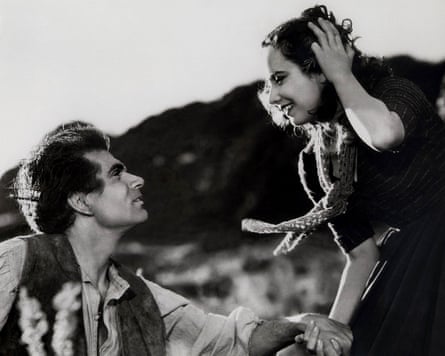
Wuthering Heights, one of the world’s most revered novels, is inseparable from the capricious landscape of the Yorkshire moors. Yet screen adaptations have consistently neglected the local identity of its central character. Across every major adaptation, from Merle Oberon in 1939 to Kaya Scodelario in 2011, not one Cathy has been portrayed by a Yorkshirewoman, let alone an actor from Bradford, the cultural heartland of the novel’s setting and the city in which it was written.
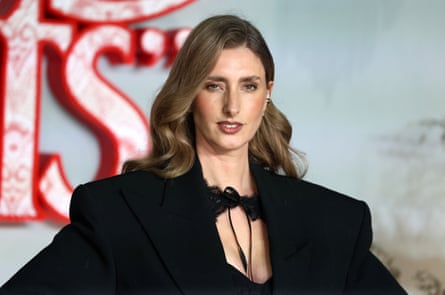
Fennell’s latest version perpetuates this pattern, sidelining northern talent at a moment that could have been pivotal in elevating underrepresented talent. The film’s sole Bradford-born actor, Jessica Knappett, plays Mrs Burton, a servant role.
Casting Wuthering Heights without regard for regional specificity is not a neutral creative decision. While Robbie may be “so beautiful, and interesting and surprising”, according to Fennell, such star-driven considerations constitute a frustrating dismissal of the environment that fabricated Cathy’s temperament. Cathy is not merely situated within a landscape, she is symbiotically shaped by it.
Amber Barry, a PhD researcher in Victorian literature at King’s College London, says: “The Yorkshire moors illuminate Cathy and Heathcliff’s story particularly within the context of working-class demonstrations at the time. Can we call this Wuthering Heights if such a crucial setting is reduced to a flat, vaguely gothic backdrop?”
As a Bradford-born actor, I have experienced barriers in the arts first-hand, and I believe casting choices such as Fennell’s preserve a system that undervalues northern women. Of course, acting is a transformational craft – performers are expected to inhabit lives far removed from their own, myself included. But the issue is not that actors shouldn’t extend beyond their lived experience. The question is far broader: when a major production depicts a didactic novel steeped in landscape, dialect and cultural identity, why should those from that region be denied such life-changing opportunities? It’s not about choosing between A-listers and regionally authentic actors, it’s about asking why so few actors from Bradford have ever reached the visibility necessary to be considered at all.
Structural biases in training, access, industry networks and commissioning maintain this inequality; for example, research shows that almost a third of Bafta-nominated actors have been privately educated. Of course, star power brings in audiences and financing, but there is space for emerging regional talent to platform alongside established actors.
Bradford’s socioeconomic context only intensifies this inequality. The district ranks as the 12th most deprived in England, fourth for income deprivation, and fifth for employment, with 19.8% of households in fuel poverty, 40% of children living below the poverty line, and 12% of working-age residents lacking formal qualifications. Roles such as Cathy Earnshaw, intrinsically tied to Yorkshire, could have offered a rare rejection of the marginalisation of northern actors, and a career-defining moment for talent from an underrepresented background.
Hollywood’s focus on star power over geographic authenticity reflects a broader industry bias, with women making up only about 30% of UK film cast roles, and northern women disproportionately pigeonholed into stereotypical or comedic parts, rather than complex, upper-middle-class characters like Cathy. Northern stereotypes in film and television fall within a narrow range of familiar tropes, casually reinforcing prejudices rather than attempting nuance.
While such portrayals may seem harmless in isolation, collectively they establish a pattern in which northern characters, particularly women, are coded as working class, comic, chaotic or intellectually limited, and rarely cast as romantic heroines. A Channel 4 report found that northern accents were twice as likely to be coded as working class, and were significantly less likely to be used in advertisements promoting aspirational products such as luxury goods. The report concluded that representation of working-class people in advertising was both low and poor, undermining advertising’s ostensible aim of promoting aspiration and reinforcing the association between prestige and non-northern identities.
Wuthering Heights is not the only problem, but it represents yet another blow to people perennially constrained by society’s expectations. When Cathy says: “I’m sure I should be myself were I once among the heather on those hills,” she articulates a truth that resonates with me deeply; that this particular landscape has shaped my sense of self, as it has for many others, and it is precisely for this reason that continued underrepresentation feels so profoundly ostracising.