3 months ago
70
3 months ago
70
Trevor Peeler has spent 50 years of his life driving in and out of the gates of the Harcourt Cooperative Cool Stores. He didn’t see the site burn to the ground on Friday night because he was blocks away protecting his house.
Not that he could have done anything. The Cool Stores were directly in the path of the fire and turned into an inferno.
“You actually can’t be happy about it,” he says of the house. “You can feel lucky, but you can’t feel happy because you look at everyone else who’s lost their homes and it’s just unimaginable.”
Peeler managed the Cool Stores, a cluster of refrigerated sheds. The business was established in 1917 for a co-op of local apple growers, and in recent years had become essential storage for about 85 customers, from boutique producers to established wineries such as Bress.
Peeler, a fifth-generation Harcourt apple grower, was delighted that a wave of innovative winemakers and craft brewers had appeared on the scene. But the bushfires that continue to burn in Harcourt and Ravenswood have wiped out these businesses’ liquid stock and, in many cases, their ingredients, packaging, equipment, chiller units and distilleries.
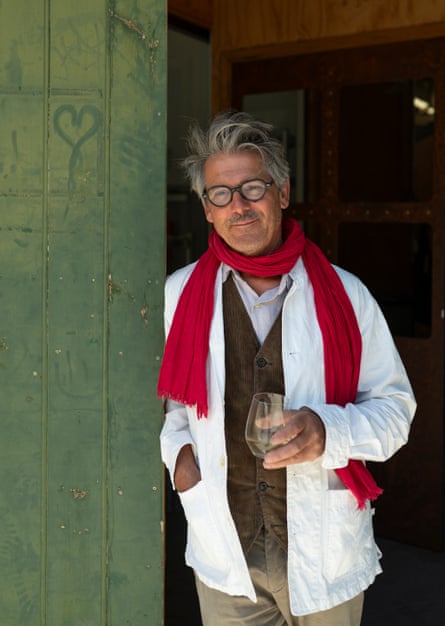
“I’m having trouble talking about it,” Peeler says. “Everything’s still burning. I did go down to work yesterday because the insurance broker needed photos. I watched a few of our customers walking around the premises and you can tell the effect that it’s having on them. They’re not really customers any more, they’ve become friends. I know what they’re going through is hard and I can’t help.”
For many local producers there’s a sense of numbness. French winemaker Gilles Lapalus helped establish the local Sutton Grange Winery, before launching his own labels. He started at the Cool Stores 15 years ago, progressing from one room to four. On Friday, he lost all his equipment and most of his stock, including museum stock dating back 20 years and wine with a 10-year-old solera – a system of ageing wine.
“You can never replace that, because you can’t replace time,” he says. “I was saying to my partner this morning, I’m still there in my head, checking the wine, checking the temperature. But it’s all flattened, and I’m still not processing that. I’m not a young chicken, either. So what do I do? I tell all my friends that I’m becoming a postman soon.”
‘So many people have fond memories’
Others are forming a steely resolve. Ken Gilchrist and Kaye Graves own the GilGraves vineyard in Axedale, which was safe from the fires, but the couple lost an estimated 97% of their stock. Graves says the pair sat in bed with a coffee the morning after the Cool Stores burned down.
“We looked at each other and said, ‘What are we going to do?’ And we decided, GilGraves will rise from the ashes.”
Those who want to help should always buy local, Graves says. “If people realised what went into a glass of wine they might think more about it. You dig the hole, you plant the vine, you produce the wine and it’s a very soulful experience.”
Conna Mallett, co-director of Love Shack Brewing Co in Castlemaine, less than 10km from Harcourt, became a Cool Stores customer five years ago.
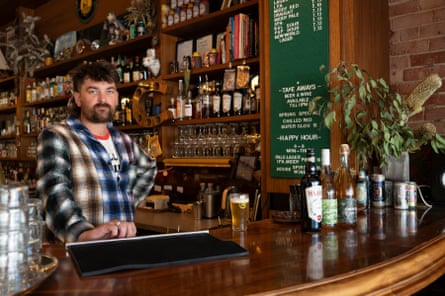
“When I first met Trevor I think he thought we were crazy because of what we were trying to do,” Mallett says. “He’s seen people like us come and go, but when we started trying more things, he loved it. It’s a passionate industry and everyone’s chasing their dreams. The Cool Stores became a community and so many people have fond memories and an emotional attachment to the place.”
Love Shack had 350 kegs and 1,400 slabs of beer in storage at the Cool Stores, as well as packaging. “We lost a lot, but people lost their homes,” he says. “We can make more beer.”
Mallett estimates the cost at $120,000, which may not be covered by insurance. Uncertainty around what is covered by each business’s insurer is front and centre of many minds. Answers will be urgently sought over the next few working days.
Doug Falconer, who runs the Shedshaker Brewery and Taproom with his partner, Jacqueline Brodie-Hanns, estimates that Shedshaker lost about 80% of its stock and most of its packaging, as well as the beer it brews for another organisation.
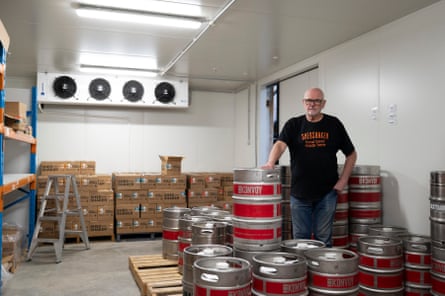
“The role the Cool Stores played was absolutely pivotal for anyone producing anything that needs cold storage within 100km,” Falconer says. “It was a meeting place as well. Every time we went out there to drop stuff off you’d run into winemakers and apple growers and everyone would have a big chat.”
Falconer and Brodie-Hanns donated pizzas to a barbecue for exhausted CFA volunteers on Sunday, and attended a public fundraising event at Boomtown Winery in Castlemaine along with hundreds of locals.
“It’s still raw and too close and difficult to work out priorities,” Falconer says, but that event, at least, was “cathartic”.
A huge well of goodwill
Boomtown owner Tim Sproal didn’t have stock at the Cool Stores, but felt moved to help.
“With the fires we had a lot of cancellations and food left over, so we thought, let’s throw a free lunch, and then the idea grew into a fundraiser that absolutely snowballed in a way I had not expected,” he says.
“Although I should have expected it, because Castlemaine is the biggest well of goodwill ever. There are a lot of people here who want to contribute and who feel a bit hopeless and useless.”
Venues, winemakers and brewers from central west Victoria donated wine and beer to sell from the bar, and local businesses donated about $25,000 in prizes. Before doors even opened at 1.30pm on Sunday, the raffle had raised $15,000 online, and by Sunday evening that figure had risen above $130,000.
Peeler hopes that in a year’s time everyone affected will be able to talk about the disaster and move on together. He’d like to rebuild the Cool Stores in a way that suits his customers even better, but for now there are too many unknowns.
“One thing I have learned in this process is if you treat people well, it’ll come back to you,” he says.
“Even though I’m an old bloke, it’s taught me a lifelong lesson.”