2 months ago
95
2 months ago
95
Any fashion-conscious England fan watching the World Cup this week would have appreciated the moment the attack reached the Croatian end – and not just for the potential goals.
It offered another glimpse of goalkeeper Dominik Livaković in hot pink, a shade fast becoming a visual signature this tournament. Forget Barbie pink – welcome to the World Cup’s hot pink summer.
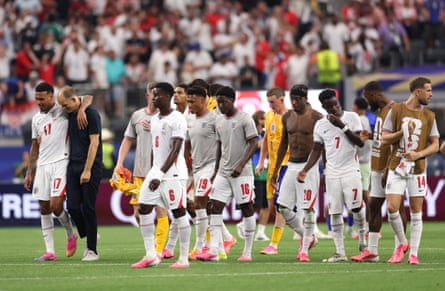
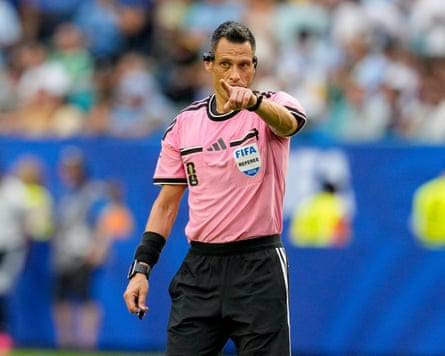
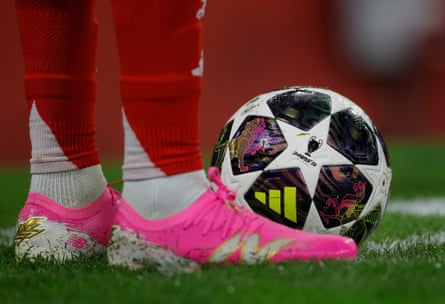
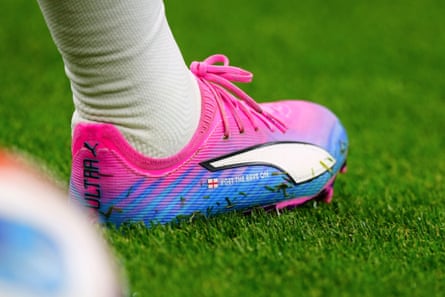
Livaković’s kit matched the shirts worn by officials during Saudi Arabia’s match against Uruguay this week, as well as boots worn by players from Croatia and England. Dozens of others have been wearing pink in brands including Nike, Adidas, Puma and New Balance. As GQ recently observed: “Everywhere you look, the boots are pink: fluoro pink, hot pink, fuchsia pink. Once you notice it, you can’t unsee it.”

In 2023, Barbiecore propelled bright pink to the forefront of fashion. The trend forecaster WGSN predicted in 2024 that bright pink – which it describes as “electric fuchsia” – would once again be popular this year. The head of womenswear, Sara Maggioni, says the shade at the World Cup is the latest example of its enduring cultural power. “Pink is probably one of the most influential colour stories of the past decade,” she says.
Maggioni says the bright shades at the World Cup make sense for brands who are clued in to changes in football fandom. “A lot of young people probably watch matches on their phones and so the colour [which is easily seen] does your branding,” she says. This is emphasised by the fact it contrasts well against the green of the grass.
It might be tempting to assume the men’s World Cup is a new arena for pink – a colour more commonly associated with women. In reality, its presence in the game has been growing for more than a decade.
The Guardian reported in 2020 that 636 Premier League goals had been scored by players wearing pink boots in the 2019-20 season, compared with just 36 by players in black footwear.
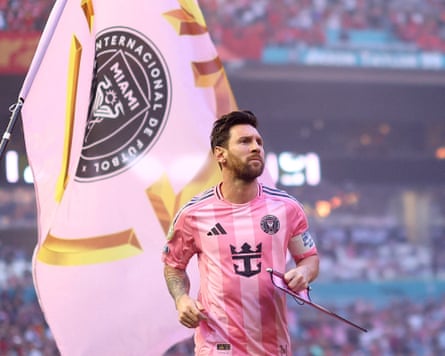
Pink kits have also been on the rise. Arsenal introduced a popular baby pink third kit for the 22-23 season, while the MLS club Inter Miami has worn pink since 2022. The sight of their record transfer – one Lionel Messi – in pink in 2023 was perhaps the final seal of approval. After the player’s move to the club, the shirt sold out almost instantly. Three years later, the shirt andits distinctive Pantone 1895C shade are a familiar sight among football fans worldwide.
Speaking to the Athletic this week, Odinga Nimako, the director of product management for Nike football footwear, said game had reached a tipping point for brighter shades of pink.
“What we always hear from our consumers and athletes is that when you wear a colour like pink, which is so loud and so bright, it is like … you need to be really good to wear these [colours] as well,” he said. “At the same time, there’s also been a level of acceptance with pink that makes it not too niche for people, it speaks to a broad audience.”
Andrew Groves, a professor of menswear systems at Westminster University, argues that football’s relationship with pink stretches back much further. He notes that Everton wore a pink kit in 1892, without controversy.
“The colour only became loaded later, first through wider consumer culture and then through a football culture that became increasingly anxious about masculinity, tradition and what male players were supposed to look like,” he says.
The fact that male footballers now wear pink without suggests those associations are fading. In fact, in the early half of the 20th century, pink was often considered a colour for boys, while blue was linked to girls – partly thanks to the use of lapis lazuli in paintings that depicted the Virgin Mary.
“The modern footballer is no longer just a player, but also a brand and a style figure,” Groves says. “Pink works because it makes him visible as an image.”
For Maggioni, football’s embrace of pink is ultimately about visibility.
“What we are seeing now is [pink] adopted [because it stands out],” she says. “It’s just the right shade because it’s got that energetic feel to it. It’s exciting.”