4 weeks ago
51
4 weeks ago
51
Thea Musgrave is a phenomenon. Born in Scotland in 1928, the composer has lived in the US since the early 70s, but has lost none of her accent, her infectious optimism, and her drive to keep writing. As she told me from her home in California, with a joyfully rolling laugh, “I’ve got to this age, and from now on I’m going to do what the fuck I want to do”. That includes her latest opera, on Virginia Woolf’s novel Orlando – Orlando: An Escapade – which will premiere at the Buxton festival next year, and a new bassoon concerto for Amy Harman, Out of the Darkness, which you can hear at the Proms this weekend, on 23 August.
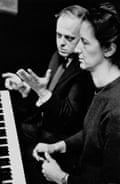
The bassoon concerto develops one of the central innovations of Musgrave’s life and career, which she’s still intensifying and exploring in her 99th year: what she calls her “dramatic-abstract” approach to her orchestral compositions, in which the players aren’t a single collective told what to do by a conductor’s gestures, but instead are released as individual characters and identities.
Musgrave’s inspiration to work this way came from a dream. She was taking conducting lessons and, she told me, “One night I dreamt that I was conducting a big orchestra, and all of a sudden one of the players, the clarinettist, stood up and wouldn’t sit down, so I signalled to the brass players to stand up and play, and shut the clarinet up.”
The very next morning, Musgrave was commissioned by the City of Birmingham Symphony Orchestra to write a a new work, which became her Concerto for Orchestra in 1967. In that piece, as she says, “the clarinet stands up, defies the conductor, and other soloists get up too, so the conductor has to get the whole brass section in to drown them out” – exactly as in her dream. It’s music of febrile and instantly communicative drama, as Musgrave turns the volatile musical relationships between every section of the orchestra into something visceral and tangible.
In her Clarinet Concerto, written a couple of years later, Musgrave goes even further: the clarinettist walks around the orchestra, playing with the smaller groups that she splits the orchestra into, and the soloist controls the flow of the piece as much as the conductor. In her Horn Concerto, the soloist is amplified by the orchestral horns who eventually surround the stage and the audience. And in a later concerto, Two’s Company, for the unique combination of oboe and percussion, played by Nicholas Daniel and Evelyn Glennie at the Proms in 2007, the soloists start as distant musical satellites, separated on stage and in their soundworlds, but grow to find a musical friendship and togetherness.
Daniel introduced Musgrave to Harman last year, when the composer’s opera Mary, Queen of Scots was staged at English National Opera. “He said, this is Amy Harman, and you have to write a concerto for her,” Musgrave tells me.
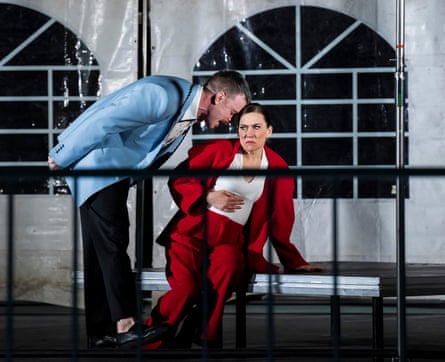
Harman told her that she can walk around when she’s playing. “What, with that big heavy bulky instrument?” Musgrave asked. “She took the bassoon out and did exactly that, and I said: ‘You’ll be sorry you told me this!’”
Harman will indeed be moving around the orchestra throughout Out of the Darkness. “But there has to be a reason she’s doing this: and here’s my reason, which is to do with Covid,” says Musgrave. “The whole work starts in great sadness. Everyone, including the bassoonist, is very gloomy. All of a sudden, the concertmaster [first violinist] plays a little melody, which is like the voice of hope.”
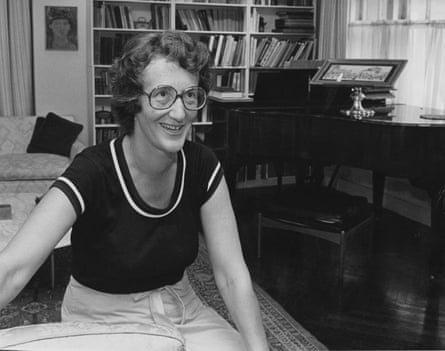
Harman encounters virtuosic trumpeters and double basses playing above her in weird ethereal registers on her journey towards that sound of hopefulness. The end isn’t the solution, Musgrave says, but a sense of “determination to do something about the situation we’re in. It’s the darkness and the light together. We all come through dark places in our lives and you have to deal with it and face it in the best way possible. The light at the tunnel always returns. Sometimes you have to wait many a year, but eventually it does arrive. You just hope it’s not too long,” she says, with another of those irresistible laughs.
This week Tom has been listening to: Musgrave’s concertos on the Lyrita album Thea Musgrave: Concertos, Monologue & Excursions. Why aren’t these pieces – and her other concertos, for bass clarinet, trumpet, viola, and many more – played and programmed every week? They’re fearlessly direct and dramatic, totally uncompromising but completely communicative.