3 months ago
76
3 months ago
76
You’re right – it is smaller. The Terry’s Chocolate Orange on shop shelves this Christmas weighs 12g less than it did this time last year. That’s a decrease in size of 8% – not as big a cut as when the product lost 10% of its mass in 2016, but a further whittling away of a favourite Christmas treat.
Prices have been going up too, although it’s been a series of increases. Figures from market researchers Assosia show that across the big four supermarkets, the full price of a cChocolate oOrange has increased from £1.24 in December 2022 to about £2.25 today – a rise of 81%. If you factor in the size reduction, you’re actually paying 96% more.
And it’s not just the Chocolate Orange. Other Christmas favourites have also been shrinking in the UK – Toblerone and Quality Street boxes among them – while some snacks are now described as “chocolate flavour” rather than chocolate, because they contain more palm oil and shea oil than cocoa.
It’s a similar trend in other countries. Julia Buech, senior consumer foods analyst at Rabobank, says across western Europe, prices for bars have increased more than 50% since 2021 and by 18% since last year. “A dramatic shift for a category built on affordable indulgence,” she says.
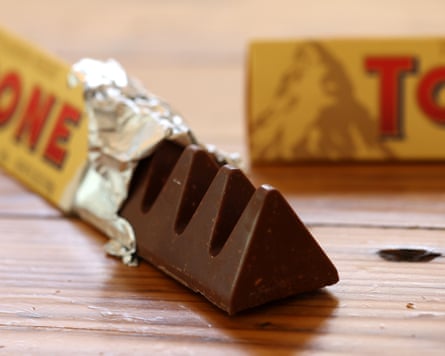
So why are we paying more for less? Simply, it’s the rising cost of almost everything that goes into producing chocolate: cocoa, sugar, milk, packaging, transport and wages. Mondelez International, one of the biggest chocolate makers in the world and the owner of Cadbury and Toblerone, says it is experiencing “significantly higher input costs across our supply chain”. Not only do ingredients cost “far more” than previously, “other costs like energy and transport also remain high”.
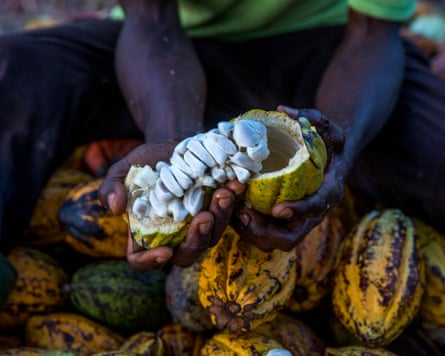
The climate crisis is at the heart of ingredient price rises. More than 60% of the world’s cocoa comes from Ivory Coast and Ghana in west Africa, and in 2023 these areas were hit by extreme rainfall, which led to an outbreak of black pod disease. That was followed by severe drought and a resurgence of swollen shoot virus, which is transmitted by mealy bugs. “To get rid of it you have to rip the tree out, treat the soil and then plant a new tree,” says Chris Jaccarini, food and farming analyst at the Energy and Climate Intelligence Unit. While eventually new plants may be good for yields, they have to survive the first few years and young trees are much more susceptible to climate stresses.
Falling supply has been coupled with growing demand from countries including India and China. As a result cocoa prices reached a record high of $12,000 (£9,000) a tonne late last year, which was three times where they were in 2023. Cocoa remains twice as expensive as in 2022.
Jason Archie-Acheampong, sustainable sourcing lead for cocoa at the Fairtrade Foundation, says price volatility is a huge problem. In the current system many farmers are unable to invest in changes that might help iron out the ups and downs in cocoa yields. Fairtrade is designed to give them some money to attempt to mitigate the effects of global heating. He gives the example of “planting shade trees that can protect cocoa trees from the scorching sun”, but outside the Fairtrade scheme “farmers are ultimately price takers – they have to take what they are being offered,” he says.
Sugar prices are 60% higher than they were in January 2022, says Jaccarini. In the UK, sugar beet crops are threatened by aphids, which have been able to survive warmer winters, and beet moth, which also thrives in higher temperatures. At one farm in Suffolk, beet moth reduced yields by 25% this year. Cane sugar prices have been pushed up by extreme weather in Brazil, India and Thailand.
The Food & Drink Federation, which represents UK manufacturers, says there have been other pressures including a new packaging tax and increases in the national insurance contributions they pay for workers. The minimum wage has also gone up, and energy and transport costs have risen. Between January 2020 and September 2025, its members’ outlays, excluding labour, regulatory costs or costs of finance, rose by 39%.
Buech says similar is happening elsewhere: “Labour costs in particular are climbing in Europe, with minimum wages going up in many countries.”
And in the UK there is another factor. Since October, retailers have been banned from including these products in multibuys (several years ago, one supermarket offered a buy-one-get-two-free deal on Chocolate Oranges).
But the big makers at least have the benefits of scale. Adam Levy, founder of the Chocolate Professor website, says the rising cost of cocoa is more noticeable in the products of the small producers who “buy in smaller volumes and do not have the leverage in purchasing and volume efficiency in production”. He says 70% cocoa bars have seen the biggest increase in price.
That said, there are some special offers, which are bringing prices down a bit. And if you get a move on you might be able to snap up the last of the Chocolate Orange Advent calendars from B&M – at 50p for 106g, that’s the price of Christmases long past.