3 months ago
81
3 months ago
81
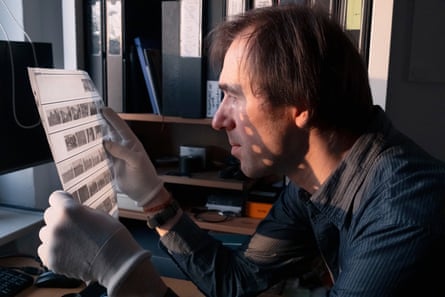
After pulling on white cotton gloves, Arthur Bondar carefully takes a handful of 4cm by 9cm negatives from an old cigarette box and holds them up to the light of his study window. Inverted images of a woman on a horse, a group of women tending cabbages in a field, laughing figures at the seaside, a woman posing as a military ship sails by, hover in front of him, almost ghostlike. Although they are tiny, he is able to make out key details such as the insignia on a uniform, or the name of a ship, that trigger his curiosity and give him a starting point for his research.
-
Arthur Bondar examines some of his negatives. Photograph: Oksana Yushko/The Guardian
-
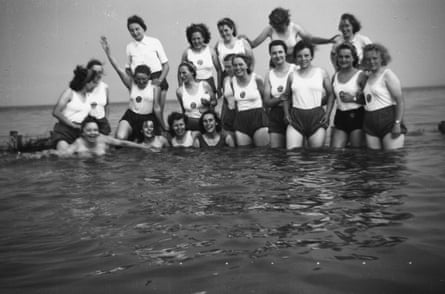
Group photo of the young girls from Reich labour service at the lake, 1935-39, taken by an unknown photographer. All archival photos: Arthur Bondar private collection
-
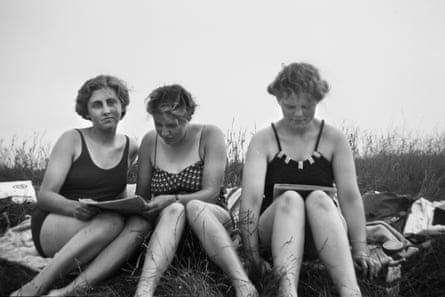
Young girls from Reich labour service at the lake, Lower Saxony-Central, Germany, 1935-39, taken by an unknown photographer.
He bought the images depicting women from the Reichsarbeitsdienst, a female labour force that served the Nazi Reich, from a German seller online. It is the latest addition to a burgeoning collection of about 35,000 negatives from the second world war that the Ukrainian-Russian photojournalist and publisher has been amassing since 2016.
Mostly he only knows what he has bought once he has flattened and scanned the negatives, comparing his purchases to “buying a black cat in a black sack”.
-
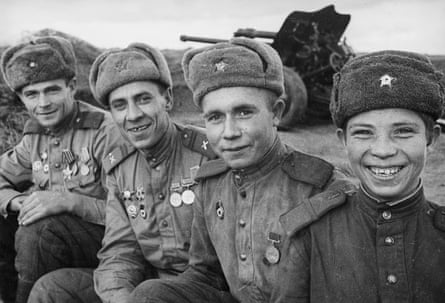
An artillery crew firing at the enemy, 1st Ukrainian Front, 1943–44. Photograph: Olga Ignatovich
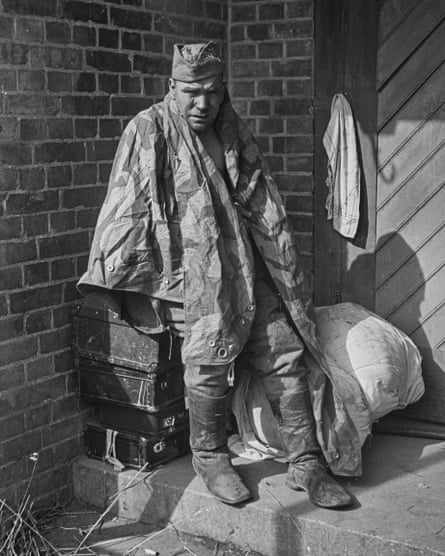
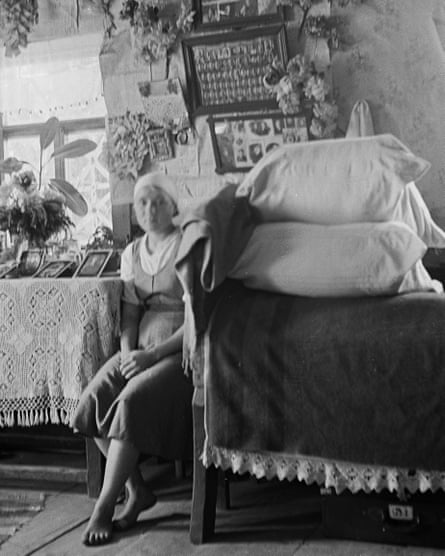
-
Left: Soviet artillerist, Berlin, Germany, May 1945. Photograph: Valery Faminsky. Right: a portrait of a local young woman in her house, USSR, 1941. Photographer: Wagner
He only buys negatives – taken by either amateur or professional photographers everywhere from the Soviet Union to the United States – to ensure he is getting the most unadulterated images of the war.
“Negatives are photographic truths that make it difficult to distort history. Prints on the other hand might well have been manipulated,” he says, referring in particular to the Soviet military practices of “sometimes pasting two images together to create a collage, or cutting dead soldiers out of negatives”.
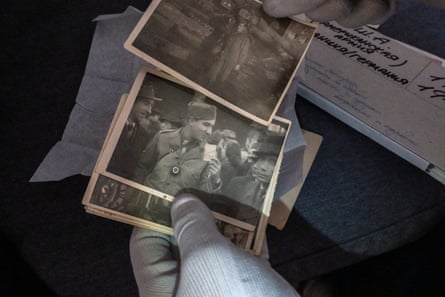
-
Arthur Bondar’s second world war archival collection. Photograph: Oksana Yushko/The Guardian
Bondar smuggled his photographic treasures out of Moscow, where he had been living for over a decade, in eight separate hauls during 2023 – leaving his own photographic archive behind in safe-keeping, “hoping to retrieve it one day”. He brought them over the border, first to Georgia, and later to Germany, where he and his wife, Oksana, a Ukrainian-Russian artist and photographer from Kharkiv, now live in exile (or self-imposed relocation, as they refer to it).
In doing this he risked at the very least the confiscation of his negatives, a fine and, in the worst case, imprisonment. Many of the images, despite being legally bought, would probably have been considered by Russian censors to dishonour the “defenders of the fatherland” through their honesty, including the vulnerable way they depict soldiers (showing distress and injury as well as humanity and humour). Since 2020, this has been a prosecutable offence in Russia.
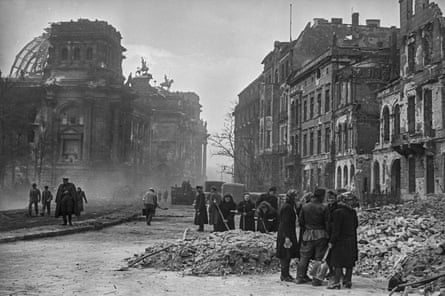
-
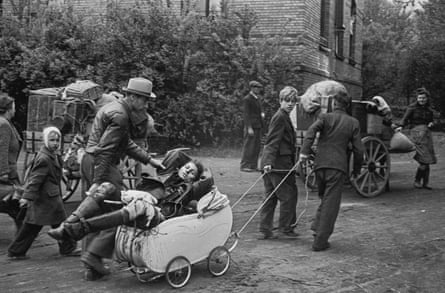
Cleaning the streets between the Reichstag and the Brandenburg Gate, Germany, May 1945. Photograph: Valery Faminsky
-
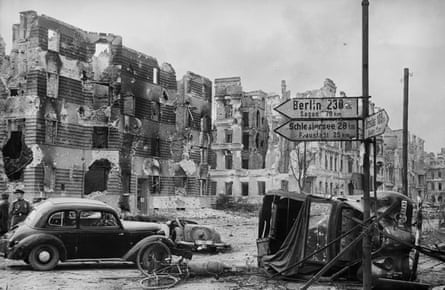
Suburbs of Berlin, Germany, May 1945. Photograph: Valery Faminsky
-
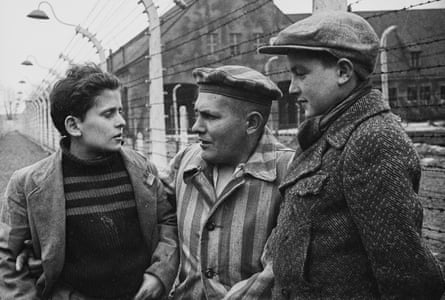
Prisoners of Auschwitz concentration camp, Poland, late January 1945. Photograph: Olga Ignatovich
“To boot, I was a Ukrainian doing this ‘dishonourable’ act,” says Bondar, who was born and grew up in a military family in Krivoy Rog, central-southern Ukraine. In the event, although he was interrogated, he managed to get the images out.
Bondar says his archive acts as a counterpoint to the “comfortable” narrative of the second world war – celebrating it as a triumph rather than a tragedy – that Moscow uses to justify its invasion of Ukraine, embodied in its propaganda slogan “we can do it again” – meaning conquering Ukraine like it once did Nazi Germany.
-
Captured Glogau, a fortress city in Silesia, Germany (now Głogów, Poland), March–April 1945. Photograph: Olga Ignatovich
-
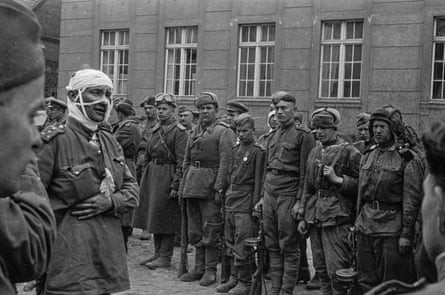
The only surviving member of a tank crew, Seelow Heights, Germany, April 1945. Photograph: Valery Faminsky
Bondar is dedicated to preserving and sharing the images in his archive. The war raging in his homeland makes him all the more determined to show “all the sides of war, above all its stupidity and uselessness”.
He has uploaded the photographs to a carefully curated website, published hardback books with them and held numerous exhibitions, such as the one now running at a museum dedicated to the Battle of the Seelow Heights, the most vicious and bloody episode in the operation to seize nearby Berlin from Nazi control in the spring of 1945.
It features the images of Bondar’s first and most precious find, Valery Faminsky.
-
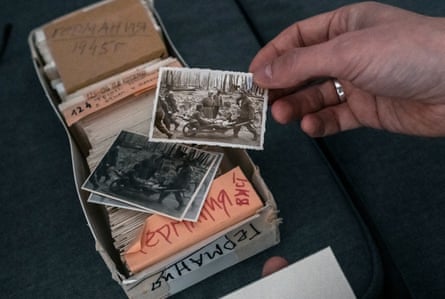
Photographs by Valery Faminsky from Arthur Bondar’s collection. Photograph: Oksana Yushko/The Guardian
“I had never before seen pictures like these,” Bondar says, recalling the sense of awe he felt on first setting eyes on Faminsky’s works, after an advert was posted by his family. He pulls out Faminsky’s neatly arranged homemade cardboard boxes bound by white army-issue medical tape, full of the photographer’s negatives. Each is wrapped in a crisp piece of paper, signed with a description of what, where and when.
Faminsky, who died in 1993, had originally been exempt from going to the front due to poor eyesight, despite desperately wanting to, with the military leadership telling him: “What good is a blind photographer to us?”
-
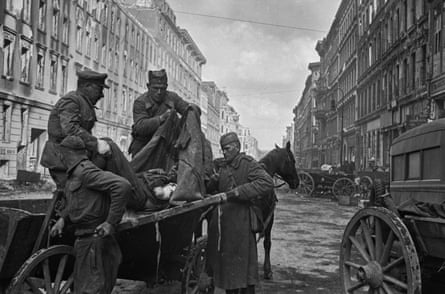
Unloading a wounded soldier at the field hospital in Friedrichstrasse, Berlin, Germany, May 1945. Photograph: Valery Faminsky
-
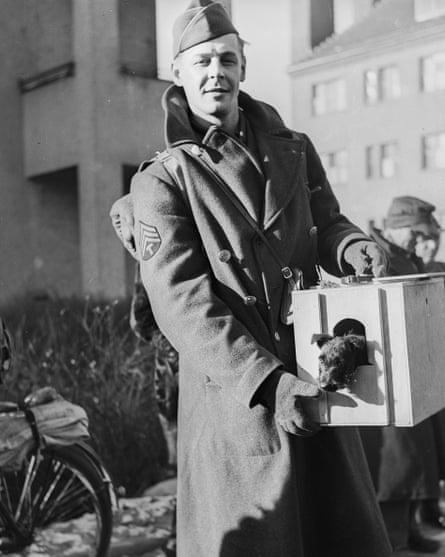
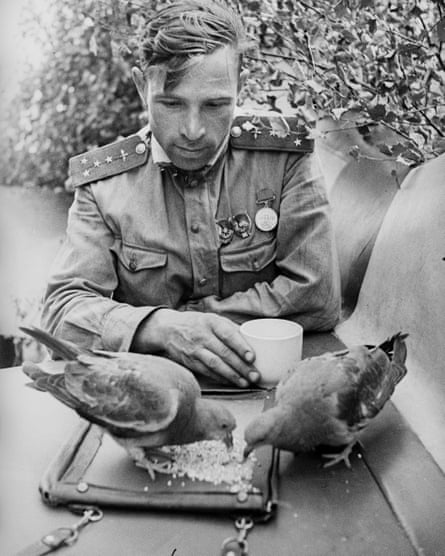
Left: A US Army technician holding a puppy in a doghouse upon arrival at the unit, Berlin, Germany, October 1945. Photograph: Sam Jaffe. Right: between battles a Soviet fighter pilot, Captain V Popov, feeds pigeons on the tail of a fighter aircraft, Kalinin Front, Soviet Union, 1943. Photograph: Olga Ignatovic
In 1943, he finally got to go, aged 31, for the Military History Museum in what is now St Petersburg, which sent him to collect pictures documenting how first aid was administered to the Red Army, which explains his many depictions of wounded soldiers.
But he went way beyond his brief. His army accreditation enabled him to move freely to photograph German civilians and Soviet soldiers in non-staged, highly humanistic scenes of everyday wartime life.
“It is ironic to me that the legacy of a man with poor eyesight has been to give us one of the most enlightening views of war possible,” Bondar says.
A jumbled selection of negatives by Olga Ignatovich, one of only seven female photographers working for the military, were handed over to Bondar in a shoebox in Moscow in 2020. He has since neatly ordered all 1,500 of them and scanned them frame by frame. Some were too disintegrated by mould to save, “a metaphor for the fading memories,” Bondar says. A frontline photographer like Faminsky, Ignatovich, too, was forgotten after the war.
-
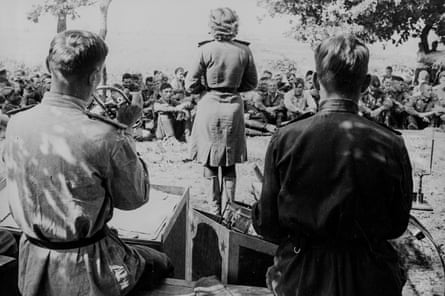
A jazz band entertaining troops at an air unit. Soviet Union, 1943. Photograph: Olga Ignatovich
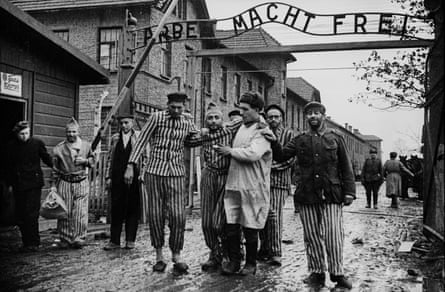
Some of her images, including photographs of the liberation of the Auschwitz concentration camp, which were used as evidence in the Nuremberg Trials, were, for decades, even attributed to her far more famous photographer brother, Boris.
-
Auschwitz prisoners liberated: Red Army soldiers leading the survivors out of the death camp, Poland, late January 1945. Photograph: Olga Ignatovich
Bondar searched for her grave for months before finally coming across her snow-covered, white marble headstone in the winter of 2020-21. “The only information anyone could provide was that she died in Moscow in 1984.”
Although Ignatovich worked for the Soviet media and her images were consequently used for propaganda purposes, Bondar is struck by the authenticity of many of them. “She got people to smile for the camera,” Bondar said, “maybe they were surprised at being photographed by a woman. She was less interested in the fighting than she was in depicting the individuals caught up in it.”
Bondar has frequently been contacted by people from Siberia to New York, excited to discover either themselves or a relative in the images. After verifying their claims, he has sent them copies of the particular photograph in high resolution.
-
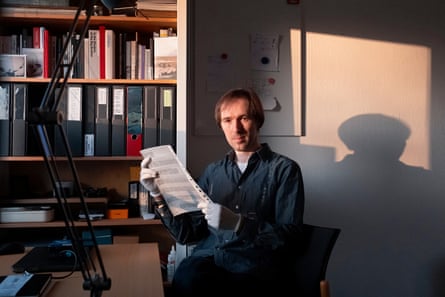
Arthur Bondar. Photograph: Oksana Yushko/The Guardian
He feels haunted and thrilled not only by the millions of negatives that will have been discarded on rubbish dumps or left decaying in attics, which are forever lost to the world, but also by the scores of packages of unprocessed negatives stored floor to ceiling in cardboard boxes in his home in northern Germany. Even if he stopped adding to them, he says these “amount to about 20 to 30 years of work”, and he expresses a heartfelt wish to find an institute that might choose to collaborate with him.