3 months ago
51
3 months ago
51
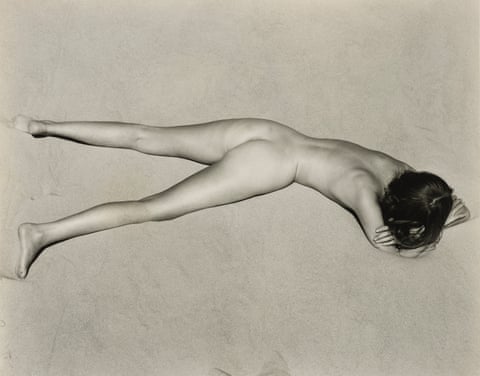
Moving from one avant garde movement to another during the 1920s, the American photographer’s work helps tell the story of the birth of modernism
Beach bum … Nude on Sand, Oceano, 1936. Photograph: Edward WestonWed 17 Dec 2025 08.00 CET
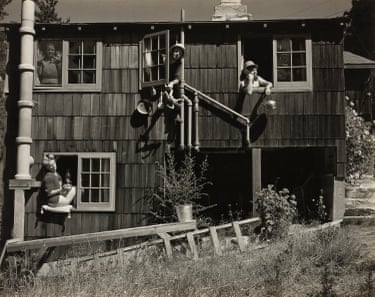
Exposition of Dynamic Symmetry, 1943
Becoming Modern is an exceptional insight into the birth of modernist photography through the gaze and practice of American photographer Edward Weston. It charts the paths Weston followed from one avant garde movement (pictorialism) to another (modernism) in the 1920s. Drawn entirely from the prestigious collection of the Wilson Centre for Photography, the exhibition traces a decisive turning point in the history of photography. Edward Weston: Becoming Modern is at the MEP, Paris, France until 25 January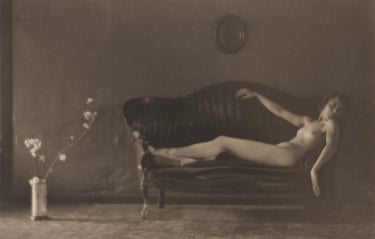
‘M’ on the Black Horsehair Sofa, 1921
Curator Simon Baker writes: ‘M’ on the Black Horsehair Sofa offers an evident debt to painting and painterly composition; a fluid, languid nude, artfully draped across a couch, with a beautifully Japanesque ikebana flower and vase arrangement in the left-hand corner for balance’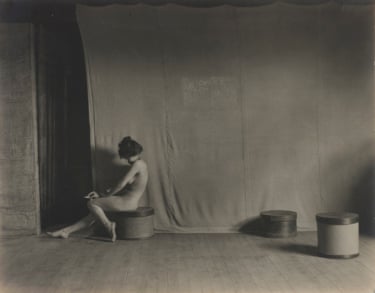
Tina Modotti (Nude in Studio), 1922
‘Then we have Tina Modotti (Nude in Studio), made a year later, from which all signs of pictorialist visual language have been excised. No couch, mirror, or flower arrangement; no reclining figure reminiscent of salon painting. Instead, we find a similar subject: a female nude, taking a break, as it were, from the conventions of the life-drawing studio, smoking a cigarette on a small round stool against a plain but heavily shadowed backdrop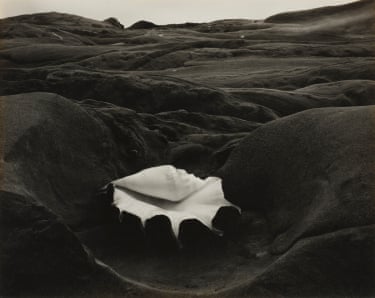
Shell and Rock Arrangement, 1931
The ways in which Weston approached still life, as well as fragments of nature (rocks, plants, sand), reveal a tension in his work between the notion of artifice and pure abstraction achieved through close focus and framing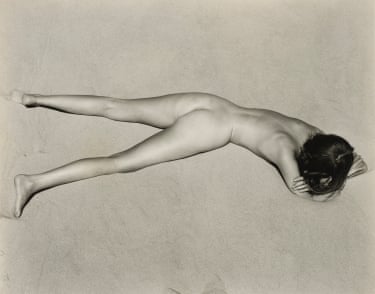
Nude on Sand, Oceano, 1936
It was during this period that the photographer refined his style, simplifying his framing, eliminating any artifice, to focus on lines, shapes and light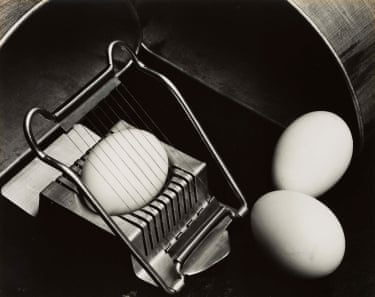
Eggs and Slicer, 1930
Weston photographed ordinary objects – shells, vegetables, bodies, stones – with great formal rigour, transforming reality into visual motifs. He complained that his egg slicer photograph was such a popular emblem of modernism, and wished that his studies of vegetables were understood in the same – but more subtle – vein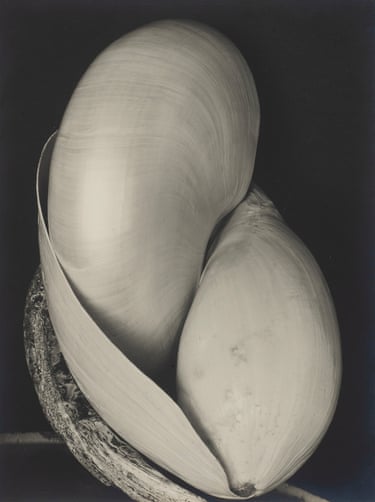
Shells, 1927
Many of his images are exhibited in their original form, hand-printed by the artist himself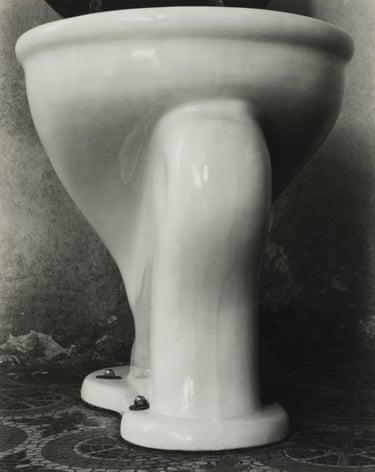
Excusado (Toilet), 1926
Weston contributed to this modern perspective on the periphery of the art world. His photography became language, sculpture, a gaze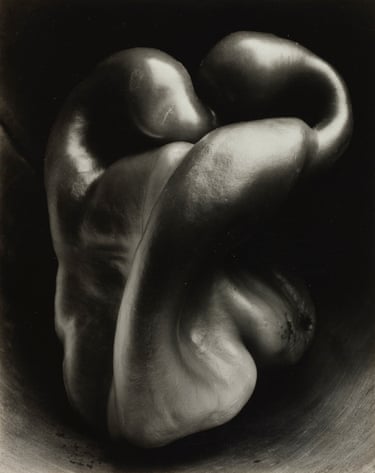
Pepper, 1930
Weston made at least 30 different negatives of peppers, all in four days in August, 1930. He devised how to prop up the vegetable with a tin funnel, allowing him to dispense with the white cardboard or piece of muslin with which he had previously backed the pepper. His peppers became sculptures. He made at least 25 prints of this image, which became his most popular pepper study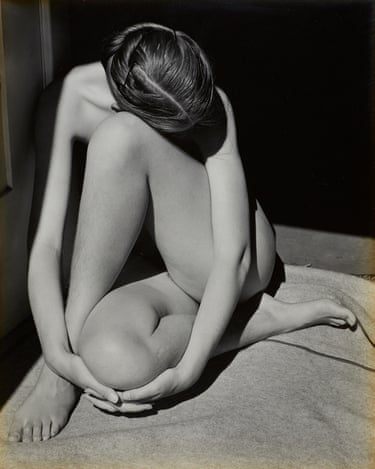
Charis, Santa Monica (Nude in doorway), 1936
Helen Charis Wilson met Edward Weston in Carmel in 1934. She began as a model for Weston’s nude studies but quickly became his partner in both life and work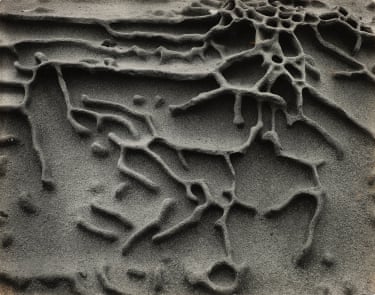
Sandstone Erosion, Point Lobos, 1942
By the late 1930s and early 1940s, Weston was working with increasing passion for landscapes. While this focus also led to some of his most important nude studies, it is in the sun-drenched dunes of Oceano, and the rugged terrains of Big Sur, Death Valley and Point Lobos, that, to paraphrase Weston himself, ‘the heavens and earth became one’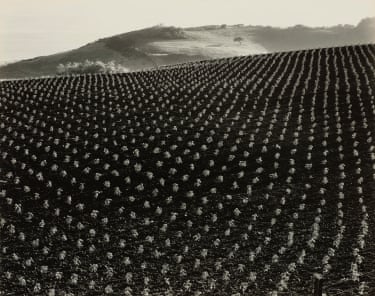
Tomato Field, Big Sur, 1937
Weston lived and worked in California, travelling to Mexico and distancing himself from the centres of power and influence. He sought neither effect nor provocation, but rather an accurate view, a form of silent revelation. All photographs: Edward Weston/Centre for Creative Photograph, Arizona Board of Regents/Adagp, Paris/Courtesy Wilson Centre for PhotographyPhotograph: Edward WestonExplore more on these topics