3 months ago
62
3 months ago
62
Drawing on more than 100 interviews with senior intelligence officials and other insiders in multiple countries, this exclusive account details how the US and Britain uncovered Vladimir Putin’s plans to invade, and why most of Europe – including the Ukrainian president, Volodymyr Zelenskyy – dismissed them. As the fourth anniversary of the invasion approaches and the world enters a new period of geopolitical uncertainty, Europe’s politicians and spy services continue to draw lessons from the failures of 2022
The phone call
William Burns had travelled halfway around the world to speak with Vladimir Putin, but in the end he had to make do with a phone call. It was November 2021, and US intelligence agencies had been picking up signals in the preceding weeks that Putin could be planning to invade Ukraine. President Joe Biden dispatched Burns, his CIA director, to warn Putin that the economic and political consequences if he did so would be disastrous.
Fifteen years earlier, when Burns was US ambassador in Moscow, Putin had been relatively accessible. The intervening years had concentrated the Russian leader’s power and deepened his paranoia. Since Covid had emerged, few had been granted face time. Putin was squirrelled away at his lavish residence on the Black Sea coast, Burns and his delegation learned, and only phone contact would be possible.
A secure line was ready in an office at the presidential administration building on Moscow’s Old Square, and Putin’s familiar voice came through the receiver. Burns laid out the US belief that Russia was readying an invasion of Ukraine, but Putin ignored him and ploughed on with his own talking points. His intelligence agencies had informed him, he said, that there was an American warship lurking over the Black Sea horizon, equipped with missiles that could reach his location in just a few minutes. It was evidence, he suggested, of Russia’s strategic vulnerability in a unipolar world dominated by the US.
The conversation, as well as three combative face-to-face discussions with Putin’s top security officials, seemed extremely ominous to Burns. He left Moscow far more concerned about the prospect of war than he had been before the trip, and he relayed his gut feeling to the president.
“Biden often asked yes/no questions, and when I got back, he asked if I thought Putin was going to do it,” Burns recalled. “I said: ‘Yes’.”
Three and a half months later, Putin ordered his army into Ukraine, in the most dramatic breach of the European security order since the second world war. The story of the intelligence backdrop to those months – how Washington and London garnered such detailed and accurate insight into the Kremlin’s war plans, and why the intelligence services of other countries did not believe them – has never before been told in full.
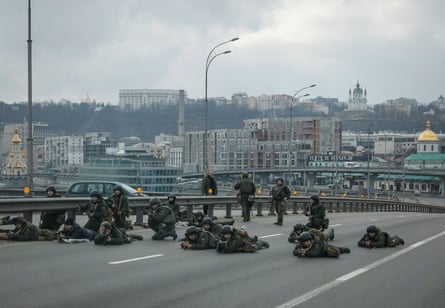
This account is based on interviews conducted over the past year with more than 100 intelligence, military, diplomatic and political insiders in Ukraine, Russia, the US and Europe. Many spoke without attribution to discuss events that are still sensitive or classified; those quoted by name are referred to by their job titles at that time.
It is the story of a spectacular intelligence success, but also one of several intelligence failures. First, for the CIA and MI6, who got the invasion scenario right but failed to accurately predict the outcome, assuming a swift Russian takeover was a foregone conclusion. More profoundly, for European services, who refused to believe a full-scale war in Europe was possible in the 21st century. They remembered the dubious intelligence case presented to justify the invasion of Iraq two decades previously, and were wary of trusting the Americans on what seemed like a fantastical prediction.
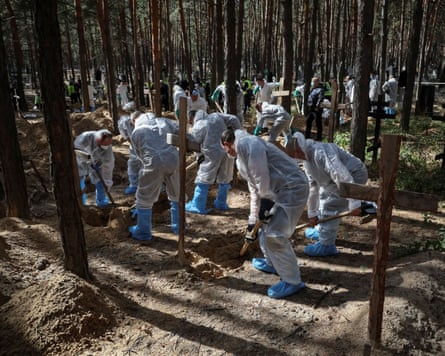
Most crucially, the Ukrainian government was thoroughly unprepared for the oncoming assault, with President Volodymyr Zelenskyy spending months dismissing increasingly urgent American warnings as scaremongering, and quashing last-minute concerns among his own military and intelligence elite, who eventually made limited attempts to prepare behind his back.
“In the final weeks, the intelligence leaders were starting to get it, the mood was different. But the political leadership just refused to accept it until right at the end,” said one US intelligence official.
Four years on, there are many lessons to be drawn from these events about how intelligence is collected and analysed. Perhaps the most pertinent, as the world appears more unpredictable than at any time in recent history, is that it is dangerous to dismiss a scenario because it seems to fit outside the realm of what is rational or possible.
“I felt the evidence we presented to them was overwhelming. It’s not like we held back something that, if only they had seen it, would have made all the difference,” said Jake Sullivan, Biden’s national security adviser, on why European allies did not believe the Americans. “They were just seized with the conviction that this simply made no sense.”
Putin starts planning
The CIA discovered an awful lot about Putin’s plans to invade Ukraine, but one thing they never worked out for sure is when he first made up his mind to go all-in. Sifting through the evidence later, like detectives at a crime scene, some of the agency’s analysts pinpointed the first half of 2020 as the most likely moment.
During those months, Putin passed constitutional amendments to ensure he could stay in power beyond 2024. Then, locked away in isolation for months during Covid, he devoured books on Russian history and pondered his own place in it. Over the summer, the violent crushing of a protest movement in neighbouring Belarus left President Alexander Lukashenko weaker and more reliant on the Kremlin than ever. It opened up the possibility of forcing Lukashenko to allow the use of Belarusian territory as an invasion launchpad.
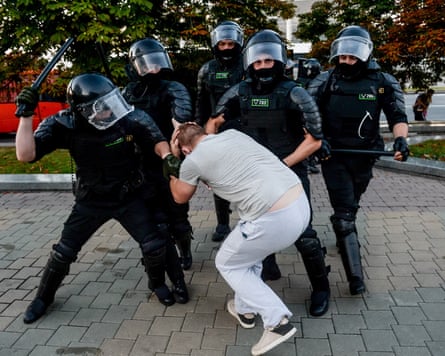
Around the same time, a team of FSB poisoners slipped novichok nerve agent into the underpants of Alexei Navalny, the one opposition politician with the potential to command mass public support, sending him into a coma. Back then, these all seemed like discrete events. Later, they started to look like Putin getting his ducks in a row before implementing the big Ukraine gambit he felt would cement his role in history as a great Russian leader.
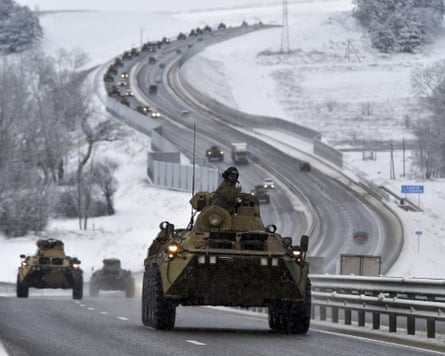
Hints of that plan first came into focus in the spring of 2021, when Russian troops began building up along Ukraine’s borders and in occupied Crimea, supposedly for training exercises. The US received intelligence suggesting Putin could use an annual set-piece speech, due on 21 April, to lay out the case for military action in Ukraine. When Biden was briefed on the intelligence, a week before the speech, he was so alarmed he called Putin directly. “He raised concerns about the buildup and called for a de-escalation, as well as proposing a summit in the coming months, which we knew would be of interest to Putin,” said Avril Haines, Biden’s director of national intelligence.
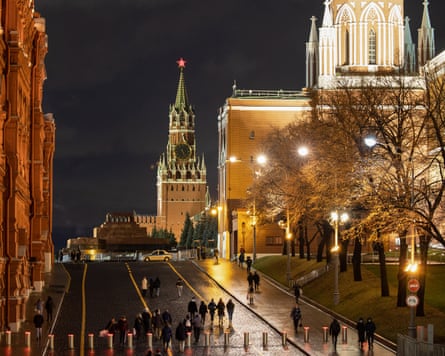
When Putin gave the speech, it was much less bellicose than expected, and a day later the Russian army announced its military exercises at the border were over. It seemed the summit offer had successfully defused the threat, and when the two leaders met in Geneva in June, Putin hardly mentioned Ukraine.
It was only in hindsight that it became clear why: he had already decided on a non-diplomatic solution.
Raising the alarm
Four weeks after the Geneva summit, Putin published a lengthy, rambling essay about the history of Ukraine, in which he went back as far as the ninth century to make the argument that “true sovereignty of Ukraine is possible only in partnership with Russia”.
The screed raised eyebrows, but attention in London and Washington was soon diverted by the chaotic withdrawal from Afghanistan. In September, Russian troops began another buildup along Ukraine’s borders; within a month it had reached a mass that was hard to ignore. Washington collected new intelligence about Russian plans, more detailed and much more shocking than in spring. Back then, the assumption had been that Russia could attempt a formal annexation of the Donbas region, or in a maximalist scenario, might try to hack a land corridor through southern Ukraine, linking Donbas to occupied Crimea. Now, it looked as if Putin could be planning something bigger. He wanted Kyiv.
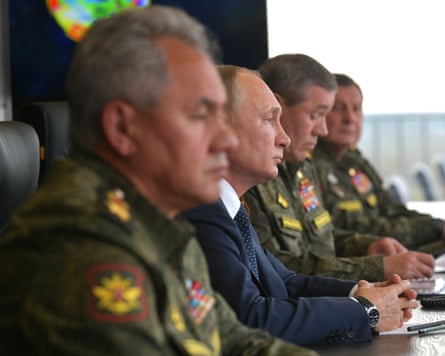
Many in the US political elite were highly sceptical, but the intelligence analysts were worked up over what they were seeing. “There was enough information coming in that made it clear this was no longer a remote possibility,” said Haines. When Burns came back from Moscow, the alarm bells rang even louder. Whether or not the intelligence was right, Biden said, it was time to start planning.
In mid-November, he dispatched Haines to Brussels. There, at the annual meeting of Nato-member intelligence heads, she presented the US belief that there was now a real chance of a massive Russian invasion of Ukraine. Richard Moore, the head of Britain’s MI6, backed her up. As part of the Five Eyes intelligence-sharing alliance, Britain had seen most of what the US had collected, and also had its own intelligence channels that pointed towards the possibility of an invasion. The primary response in the room, however, was scepticism. Some dismissed the idea of an invasion out of hand. Others expressed a fear that if Nato adopted a strong posture in response, it could prove counterproductive, provoking exactly the scenario the US claimed to be concerned about.
Managing that perception would be in the back of US and British minds over the next months. “We had to make sure we weren’t going to do anything that gave them an excuse to invade,” said Chris Ordway, a senior official working on the region at Britain’s Ministry of Defence. At the same time, London and Washington believed Russia needed only two more months to be ready for an invasion, and they wanted to raise the alarm.
Biden ordered his team to share as much intelligence with allies as possible, to help them understand why Washington was so worried. He also suggested a declassification push to get some of the information into the public domain. This had to be done carefully, to avoid exposing how Washington had obtained the evidence. “These are sources and methods that we put our blood and sweat and tears into obtaining, and they can put people’s lives at risk if lost,” said Haines.
A system was implemented whereby officials from different intelligence agencies would have “an opportunity to weigh in on anything before it went out the door”, she said, to make sure nothing slipped through that could give away a source. Over the next weeks, the US downgraded more sensitive intelligence than at any time in recent memory for allies and often for the general public, too. “We were getting classified briefings from the Americans, and then a few hours later you’d read the exact same information in the New York Times,” said one European official.
The view from Kyiv
At the end of October, the CIA and MI6 sent memos to Kyiv outlining their alarming new intelligence assessments. The next week, after Burns visited Moscow, two US officials on the trip peeled away from the delegation and flew to Kyiv where they briefed two senior Ukrainian officials on the US fears and the CIA director’s conversations in Moscow. “We basically said: ‘We will follow up. You’ll see the intel. This is not a normal warning, this is really serious. Trust us,’” said Eric Green, one of the US officials. The Ukrainians looked sceptical.
In mid-November, the British defence secretary, Ben Wallace, visited Kyiv and told Zelenskyy London believed a Russian invasion was now a matter of “when”, not “if”. He urged Zelenskyy to start preparing the country for war. “You can’t fatten up a pig on market day,” Wallace told the Ukrainian president, according to a source briefed on the meeting. Zelenskyy appeared to be in passive listening mode.
Zelenskyy had been elected in 2019 on a platform of pursuing peace negotiations to end the conflict Russia had launched in eastern Ukraine in 2014. He no longer believed he could do a deal with Putin, but he feared that public talk of an even bigger war would prompt panic in Ukraine. This could lead to an economic and political crisis, collapsing the country without Russia needing to send a single soldier across the border. This, he suspected, was Putin’s plan all along. He grew increasingly irritated at the Americans and British, who alongside the private warnings were starting to talk about the invasion threat in public. In November, he dispatched one of his most senior security officials on a top-secret mission to a European capital to deliver a message to political leaders via intelligence channels: the war scare is fake, and is all about the US trying to leverage pressure on Russia.
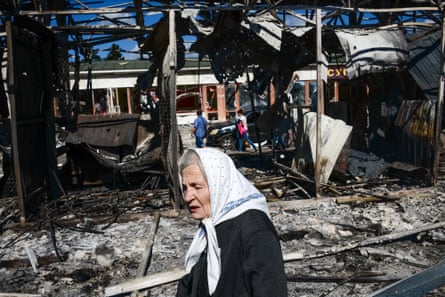
Few in Ukraine believed a full-scale invasion was likely, but the country’s intelligence agencies had been picking up worrying signs of increasing Russian activity. Ivan Bakanov, the head of the SBU domestic agency, recalled that while Russian spy services had traditionally focused on trying to recruit high-level Ukrainian sources, in the year prior to the invasion “they were going after everyone”, including chauffeurs and low-level functionaries. Often, these pitches were “false flag”: the Russian recruiters would pretend to be from one of Ukraine’s own intelligence agencies.
The SBU also tracked clandestine meetings between officers from Russia’s FSB and Ukrainian civil servants or politicians. These meetings often took place in luxury hotels in Turkey or Egypt, where the Ukrainians travelled under the guise of tourism. Russia hoped these people, motivated variously by ideology, ego or money, would act as a fifth column inside Ukraine when the time came.
“Before I came to the SBU, I also thought we could do a deal with the Russians,” said Bakanov, who was an old business partner of Zelenskyy’s and had no intelligence background when appointed in 2019. “But when you see every day how they are trying to kill and recruit people, you understand that they have a different plan, that they are saying one thing and doing another.”
Still, the prevailing mood in Kyiv was that the US warnings were overegged. Ukraine had been fighting Russian proxy forces in the Donbas for eight years, but the idea of a full-fledged war – with missile attacks, tank columns and a march on Kyiv – seemed unimaginable.
A European intelligence official said this line of thought remained fairly constant in briefings from Ukrainian counterparts in the months leading up to the invasion. “The message was: ‘Nothing is going to happen, it’s all sabre-rattling,’” said the official. “They thought the absolute maximum possible was a skirmish in the Donbas.”
The intelligence
Later, when it turned out that the US and Britain had it right all along, many wondered what it was that had allowed them to be so sure. Was there a mole in Putin’s inner circle, passing on the war plans to their CIA or MI6 handlers?
“Often, it’s presented as ‘we found the plans’ but it definitely was not that simple,” said Haines. The most obvious indicator was partly visible on commercial satellite imagery: tens of thousands of Russian troops moving into positions close to the border with Ukraine.
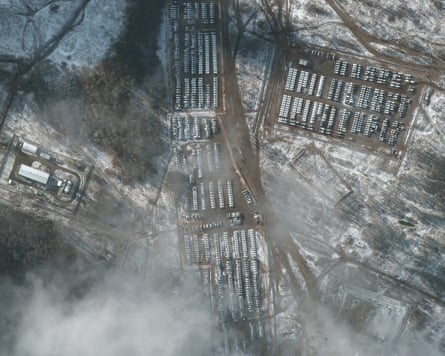
“These troop movements were unexpected and you had to work really quite hard to come up with explanations for why you’d do this, other than that you want to use them,” said a senior official at DI, the British military intelligence service.
There were also intercepted military communications: none of them mentioned an invasion, but they sometimes involved actions that would make little sense if no invasion were in the works. There was other information from various sources that pointed in the same direction: pro-Russian groups doing groundwork in Ukraine that might support military action, and the establishment of a programme to boost the ranks of reservists inside Russia. “For the first time, we saw information indicating the potential for action west of the Dnipro,” Haines said, referencing the river that splits Ukraine in two.
Most of those interviewed declined to expand on what exact intelligence was collected, citing the importance of safeguarding sources and methods. But interviews with dozens of people who saw some or all of the evidence provided plenty of clues.
Two sources pointed to intercepts from the Russian army’s Main Operations Directorate as a likely source of information about the invasion. The department is run by Colonel General Sergei Rudskoi, a well-respected military planner who has long been “the best-informed person inside the general staff,” according to a former Russian military insider who knew him personally. All strategic planning goes through his close-knit unit, based inside the general staff headquarters in central Moscow, and it was the place where war plans were drafted and refined, even as other top army commanders were left in the dark.
Preparations could be discerned in other parts of the military and intelligence services too, even if the people carrying them out did not know the end goal. “Most people in Russia did not know about the plan,” said one US official. “But to make it possible, enough things had to happen that it was very difficult to hide.”
The veteran journalist Bob Woodward, in his book War, referenced a “human source in the Kremlin”, without giving further detail. This is certainly possible – back in 2017, the CIA had exfiltrated a long-standing source who worked for Putin’s foreign policy chief and had been passing the agency secrets for years. There may be others still in place.
But Putin went to great lengths to hide his intentions even from most of his inner circle, and only a handful of people in the Russian system knew of the invasion plans until a couple of weeks before it began. It could be that the CIA or MI6 had recruited a super-mole right by the president’s side, but it seems more likely that human sources in Russia provided tangential or corroborating evidence, rather than the core details. Much of the key intelligence could be sourced to satellite imagery, or to intercepts collected by the NSA and GCHQ - the US and British signals intelligence agencies - said people who saw it. “No human source detected,” said one.
Ten weeks before the invasion
By December 2021, the US and Britain had obtained reasonable clarity on what Putin’s war plan might look like. In Washington, a cross-agency “tiger team” began meeting three times weekly, to discuss how the US would prepare for and respond to the worst-case scenario: an attack on the whole country with the goal of regime change. But there was no solid evidence that Putin had taken a political decision to put his plan into action. And this was where everyone else had a problem.
In Paris and Berlin, just as in Kyiv, intelligence agencies interpreted the military buildup not as a war plan, but as a bluff to put pressure on Ukraine. The British defence intelligence official said “huge amounts of effort” were invested to bring the French and Germans around, including several briefing trips by various delegations. But the conversations were largely met with resistance. “I think they took as a starting point: ‘Why would he?’ And we took as a starting point: ‘Why wouldn’t he?’ And that simple semantic difference can lead you to wildly different conclusions,” said the official.
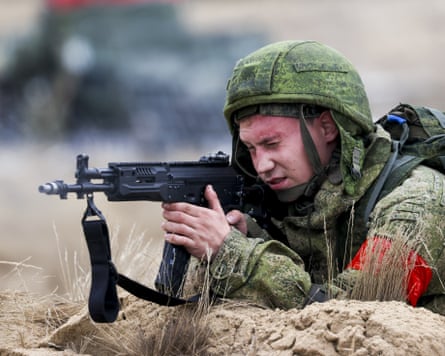
For some Europeans, memories of the twisted intelligence backdrop to the invasion of Iraq in 2003 fuelled scepticism of this new war scare. One European foreign minister, who asked not to specify their country, recalled a discussion with Antony Blinken, the US secretary of state, that became heated: “I’m old enough to remember 2003, and back then I was one of those who believed you,” the minister told Blinken. While the British and Americans were sharing more than usual, the really sensitive intelligence often came with its origin obscured, to protect sources. “They warned us, they really did,” said the minister. “But they said: ‘You have to take our word for it.’”
Even when 2003 was not mentioned explicitly, officials often sensed its shadow. “The reluctance to trust us was definitely a legacy of Iraq,” said John Foreman, Britain’s defence attache in Russia, who convened fortnightly meetings of Moscow-based military attaches from Nato countries during the pre-invasion months. He and a US colleague made largely unsuccessful attempts to convince European colleagues the threat was real: “If you’re showing people things and they still don’t believe you, you’ve got a problem,” he said.
A big psychological block for some European intelligence services was that they believed Putin to be a largely rational actor, and were deeply sceptical that he would embark on a plan they felt was likely to fail. According to Russian estimates obtained and collated by a western service, Moscow thought only 10% of Ukrainians would fight an invasion, while the rest would either actively support or grudgingly accept a Russian takeover. This was a hopelessly optimistic assessment, but even 10% of Ukraine’s population was 4 million people. The force Russia had amassed was not nearly enough to fight against such resistance, the Europeans believed.
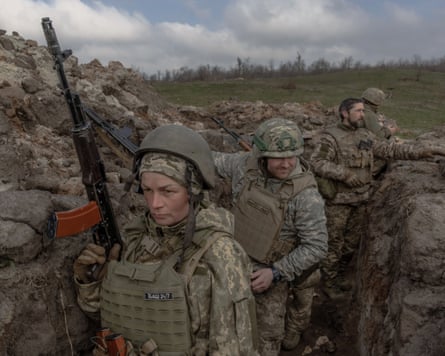
“We had all the same information about the troops at the border, but we differed in our analysis of what was in Putin’s head,” said Étienne de Poncins, the French ambassador to Kyiv.
Even Poland, traditionally hawkish on Russia, was not convinced by the idea of a full-scale invasion. “We assumed that the SVR and GRU [intelligence agencies] would tell Putin that Ukrainians will not welcome the Russians with flowers and freshly baked cakes,” said Piotr Krawczyk, the head of Poland’s foreign intelligence service. The Polish service had good insight into neighbouring Belarus, where the forces who could descend on Kyiv from the north were stationed, and these seemed to be the weakest troops of all. “They were mostly newly drafted recruits … they lacked ammunition, fuel, leadership and training,” said Krawczyk. It looked like a distraction mechanism to draw Ukrainian attention and firepower away from a limited incursion in the Donbas, not a serious fighting force that could hold an occupation of most of the country.
The Americans, however, could see detailed Russian planning for a new political order in Ukraine, and were increasingly convinced that Putin was preparing for a full-scale invasion, with regime change as the goal. “He was not looking at a menu and saying: ‘I could do small, medium or large,’” said Sullivan. “He was very focused on taking over Kyiv.”
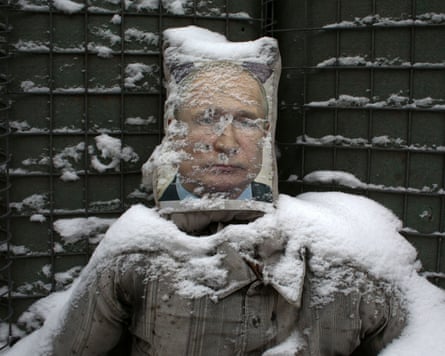
In Washington, the working assumption was that, at least in the initial phase of the war, Putin would be successful. Ukraine’s defence minister, Oleksiy Reznikov, recalled a visit to the Pentagon, shortly after he took office in November 2021. He was sceptical about the invasion scare, but he could see the Americans were convinced, so he asked if they would consider sending more and better weapons to help defend his country from the horrors they were predicting. He received a firm rebuff.
“Imagine you have a neighbour who comes home with a cancer diagnosis that they’re dying in three days,” Reznikov said. “You’ll offer them pity, but you won’t give them expensive medicines.”
Six weeks before the invasion
In the first part of January, the Americans got hold of more detailed information about the plans: Russian troops would invade Ukraine from several directions, including from Belarus, airborne forces would land at Hostomel airport outside Kyiv to set up the capture of the capital, and there was a plan afoot to assassinate Zelenskyy. Preparations for the post-invasion ground game were also under way, with lists being compiled of “problematic” pro-Ukrainian figures who would be interned or executed, and pro-Russian figures who would be tapped to run Ukraine.
Burns flew to Kyiv to brief the Ukrainian president in person on what the CIA feared was about to happen, but the response was not what he might have hoped for. A week later, Zelenskyy released a video appeal to Ukrainians telling them not to listen to those predicting conflict. Come summer, Ukrainians would be grilling meat on their barbecues as normal, he said, insisting that he “sincerely believed” there would be no major war in 2022. “Breathe deeply, calm down, and don’t go running to stock up on food and matches,” he told the population. It was catastrophic advice, given many thousands of people would soon be trapped in an active conflict zone or under Russian occupation.
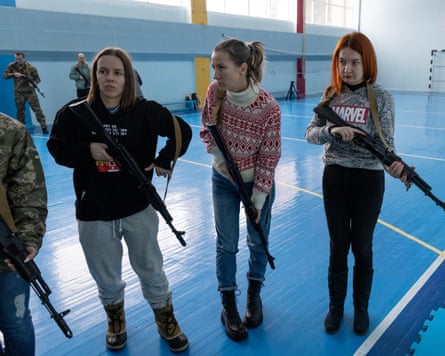
Zelenskyy was still worried, not without cause, that a war panic could crash the economy. The authorities did facilitate military training courses, and thousands of Ukrainians who were spooked by the war scare signed up. But it seems that, deep down, Zelenskyy simply did not believe the Americans. This was partly because the west was not speaking with one voice. The French and German leaders, Emmanuel Macron and Olaf Scholz, still believed a war could be averted through negotiating with Putin. “The Brits and Americans were saying it was going to happen,” said one senior Ukrainian official. “But the French and Germans were telling him: ‘Don’t listen to this, it’s all nonsense.’”
Three days after Zelenskyy’s video appeal on 22 January, the British Foreign Office released a statement claiming London had intelligence that Russia wanted to install the former Ukrainian MP Yevhen Murayev, a marginal figure with little public profile, as a post-invasion prime minister. To many, it sounded absurd beyond belief.
“When Britain announced that, I became even more sceptical,” said a European intelligence official. “It didn’t make any sense. Surely the Russians weren’t that stupid?”
Two weeks before the invasion
By mid-February, the British, US and some other embassies had evacuated Kyiv, destroying sensitive equipment before they left. The CIA station withdrew to a secret base in western Ukraine, dropping off a few shoulder-fired anti-tank missiles at SBU headquarters as a farewell gift on the way out of town. In London, key staff at the Ministry of Defence moved into hotels near to the ministry building, so they could be at work in minutes when the moment came.
Even many European countries had lowered their presence in Kyiv to a skeleton staff and drawn up evacuation plans, just in case. But Macron and Scholz still believed Putin could be talked out of an attack and both travelled to Moscow in February to make the case for diplomacy. After six hours of talks in the Kremlin, Macron proudly announced that he had “secured an assurance” from Putin that Russia would not escalate tensions.
The Americans continued to interpret Moscow’s signals very differently. In Biden’s last phone conversation with Putin on 12 February, he found the Russian leader steely, determined and utterly uninterested in any offers of negotiations. When he put down the phone, Biden told his aides it was time to prepare for the worst. War was inevitable, and the invasion could happen any day.
In calls between Biden and Zelenskyy, the tone sometimes became strained as the US president stated bluntly that the Russians were coming for Kyiv. Frustrated with the failure to get Zelenskyy and his team to listen, Sullivan had decided the focus should be on Ukrainian intelligence agencies and the military, hoping they would raise the alarm from below.
“At every meeting, they told me it’s happening for sure,” said a Ukrainian intelligence official stationed in Washington, recounting numerous encounters with CIA counterparts. “When I looked into their eyes I could see there was no doubt. And every time, they asked me: ‘Where are you going to take the president? What’s the plan B?’” He told them there was no plan B.
A small group of officers at HUR, Ukraine’s military intelligence agency, did begin quiet contingency planning in January, prompted by the US warnings and the agency’s own information, one HUR general recalled. Under the guise of a month-long training exercise, they rented several safe houses around Kyiv and took out large supplies of cash. After a month, in mid-February, the war had not yet started, so the “training” was prolonged for another month.
The army commander-in-chief, Valerii Zaluzhnyi, was frustrated that Zelenskyy did not want to introduce martial law, which would have allowed him to reposition troops and prepare battle plans. “You’re about to fight Mike Tyson and the only fight you’ve had before is a pillow fight with your little brother. It’s a one-in-a-million chance and you need to be prepared,” he said.
Without official sanction, Zaluzhnyi did what little planning he could. In mid-January, he and his wife moved from their ground-floor apartment into his official quarters inside the general staff compound, for security reasons and so he could work longer hours. In February, another general recalled, table-top exercises were held among the army’s top commanders to plan for various invasion scenarios. These included an attack on Kyiv and even one situation that was worse than what eventually transpired, in which the Russians seized a corridor along Ukraine’s western border to stop supplies coming in from allies. But without sanction from the top, these plans remained on paper only; any big movement of troops would be illegal and hard to disguise.
In the second week of February, Ukraine’s border guard agency intercepted a new piece of evidence that should have been decisive: communications from the commander of a Chechen unit stationed in Belarus to Ramzan Kadyrov, the Kremlin-installed leader of Chechnya. The commander reported to Kadyrov that his men were in place and would soon be in Kyiv. Zelenskyy was shown the recording but remained unconvinced, according to a well-informed source. At security council meetings, the prevailing narrative was still that a full-scale invasion was unlikely, and that the buildup was about putting economic and political pressure on Ukraine.
“Lots of us were uneasy, but I guess everyone decided that the safest thing was to agree with the president,” said one senior official.
Several Ukrainian sources said they believed Zelenskyy was adamant that a major invasion was unthinkable because he had been convinced of it by Andriy Yermak, his chief of staff and closest confidant. Russia operated in the grey, deniable zone of hybrid warfare, Yermak believed, and would not go in for a big, dramatic invasion that would sever relations with the west irrevocably.
Yermak, who declined an interview request for this story, was one of the few Ukrainian officials to have regular contact with Russian counterparts. He spoke often to Putin’s deputy chief of staff, Dmitry Kozak, as part of long-deadlocked negotiations over the Donbas region.
If Kozak helped to reassure Yermak that the US invasion scare was ludicrous, it was most likely because he believed so himself. The CIA estimated that just a handful of non-military officials knew about the detail of Putin’s plans until very late in the game. Kozak was kept in the dark, along with the foreign minister, Sergei Lavrov, and Putin’s longstanding spokesperson, Dmitry Peskov, said two well-connected Russian sources.
Even a week before the invasion, most of the Russian elite still had no idea of what was coming. “I got a call from someone high up in the Kremlin saying: ‘There’s a lot of military guys around Putin, the atmosphere is tense, and something is going on, but we don’t know what,’” said one political insider.
Three days before the invasion
Things started to become clearer on 21 February when Putin gathered his security council in one of the Kremlin’s grand, marbled halls. He sat alone at a desk with his courtiers assembled on chairs across the room, awkwardly far away from him. Putin ordered them, one by one, to a podium to offer their support. Ostensibly, the council was debating whether to formally recognise the Donetsk and Luhansk “people’s republics”, which Russia had de facto occupied since 2014, as independent states. But the subtext was clear. This was a war committee.
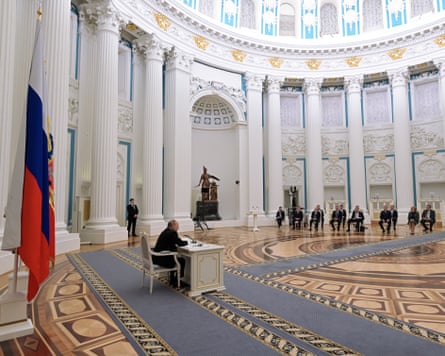
Many of the elite appeared dumbstruck as Putin called on them to give their consent. Sergei Naryshkin, the foreign intelligence chief, looked terrified and fluffed his lines, stammering through a confused answer that prompted Putin to chuckle disdainfully before eventually securing agreement.
One Russian insider said the mood in the meeting was reminiscent of historical accounts of the atmosphere in the Kremlin in spring 1941, when Stalin’s intelligence bosses tried to warn the leader that Nazi Germany was about to invade the Soviet Union, but were afraid to push too hard given the leader’s firm conviction it wouldn’t happen. “Naryshkin had information about Ukraine which did not match what everyone else was saying,” said the source. “But he is weak and indecisive, and Putin wanted to make sure everyone was seen to be part of this decision. So that’s why you saw the behaviour you saw.”
Off camera, there was another startling interaction. Kozak, Putin’s Ukraine point man, had a reputation in Washington as a hardliner, but privately he was horrified by the idea of an invasion, which he only fully realised was in the works on the day of the Kremlin meeting, said a source close to him.
Kozak, who had known Putin for decades, was the only person in the room brave enough to speak up. Arguing from a strategic rather than a moral point of view, he told the president that invading Ukraine would be a disaster, though like most of the elite he still did not know whether Putin’s plan was for limited military action in Donbas or a full-scale war. After the meeting ended, he continued to debate with Putin one on one in the large hall, said the source.
The millions of Russians watching on television did not get to see any of that. Instead, they heard Putin ask: “Are there any other points of view or special opinions on this matter?”
The question was met with silence.
Two days before the invasion
On 22 February, the day after Putin’s theatrical performance, Ukraine’s own security council met in Kyiv. As the bigwigs assembled outside the hall before the meeting, Zaluzhnyi tried to canvass support for the introduction of martial law, which would finally allow him to begin moving troops. In the room, he was supported by Reznikov, the defence minister. But Zelenskyy was still worried about sowing panic, and the council rejected martial law, voting for the lesser measure of introducing a state of emergency.
A few hours later, the security council chief, Oleksiy Danilov, handed Zelenskyy a red folder containing a top-secret intelligence report about a “direct physical threat” to the president. In other words, assassination teams were on the way. Zelenskyy seemed to brush it off, but the information apparently made an impression. The next day, in a sombre meeting with the Polish and Lithuanian presidents inside the grand Mariinsky palace in Kyiv, Zelenskyy told them it could be the last time they saw him alive. As soon as the meeting was over, Polish intelligence officers hurried the two visiting presidents into a motorcade that headed west at top speed.
Bartosz Cichocki, Poland’s ambassador in Ukraine, remained in Kyiv and a couple of hours later he was summoned to the embassy to receive a classified telegram from Warsaw. It was a curt one-paragraph text, stating that the invasion would start that night. In the final two weeks, the Poles had revised their invasion scepticism, based partly on new intelligence about the Russian troops stationed in Belarus. Now there was final confirmation that the attack was coming. It was one of the last such telegrams the embassy received; later, the walls would shake for several hours as one of the Polish intelligence officers still in Kyiv smashed up the encryption equipment with a heavy mallet to preclude any chance of it getting into Russian hands.
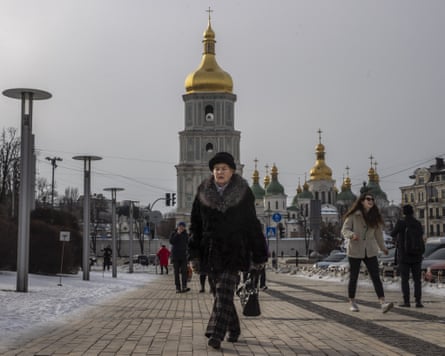
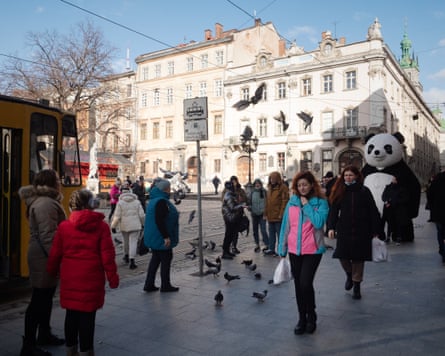
After reading the telegram several times, Cichocki went outside to get some fresh air. He saw the people of Kyiv going about their business on a winter’s evening, a jarringly normal scene given what he now knew. People were checking the playbill at a theatre across the street, and part of him wanted to run, shouting, to tell them that war was coming and there would be no more performances. Instead, he walked home quietly, his head filled with thoughts of how the world was about to change.
Eight hours before the invasion
If Warsaw was now on board with London and Washington, Paris and Berlin remained doubtful even in the final moments. The intelligence assessments of both countries did now accept that some kind of military action was possible, but they still rejected the idea of a full-scale invasion targeting Kyiv. The French ambassador would learn about it only when he was woken in his high-rise apartment by the sound of Russian missiles.
Even more telling is the story of Bruno Kahl, the chief of Germany’s BND foreign intelligence service. By the time his plane landed in Kyiv, late in the evening on 23 February, the US, British and Polish spy agencies had already determined that Russian attack orders had been given. Panicked messages about the imminent invasion were even doing the rounds among foreign journalists in Ukraine, tipped off by their intelligence sources. But Kahl was either oblivious to this information or unperturbed by it.
Soon after Kahl arrived at his upmarket Kyiv hotel, the German ambassador to Ukraine received an order from the foreign ministry in Berlin to evacuate all remaining diplomatic staff from Kyiv by road immediately. The threat was too urgent to wait until morning, said the ministry. Even then, the German spy chief declined an invitation to join the midnight diplomatic convoy, citing his important meetings the next day. Unsurprisingly, those meetings never took place. Instead, Kahl had to be extracted from Kyiv on the day of the invasion with the help of Polish intelligence, along roads gridlocked with fleeing Ukrainians.
At Ukrainian army headquarters on the final evening before the attack, Zaluzhnyi and his top generals tried to implement some last-minute measures. Mines were laid on the bed of the Black Sea to thwart a potential maritime landing in Odesa, and some units were ordered to be moved into more strategic locations. “All of this was totally forbidden. If the invasion hadn’t happened, there would have been a chance of court cases against us for doing it, but most commanders accepted we had no choice and carried it out,” said one general.
Ukraine’s military intelligence agency, HUR, was also continuing quiet preparations. On 18 February, its head, Kyrylo Budanov, had received a three-hour briefing from a western official who laid out in detail the Russian plans for seizing Hostomel airfield. The information helped with setting up some last-minute defensive plans, although the Ukrainian victory at Hostomel in the first days of the war would be a chaotic and close-run thing.
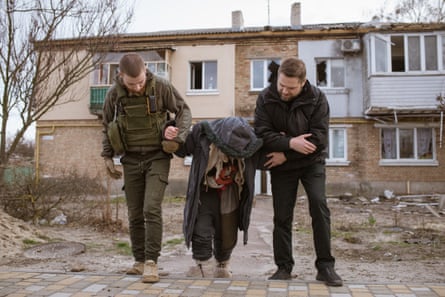
On the eve of the invasion, Budanov met Denys Kireev, a Ukrainian banker with contacts deep in the Russian elite, who had agreed some months earlier to feed HUR information he picked up from his contacts in Russia. Now Kireev told Budanov that the decision to invade had been taken, and gave him information about the timing and vector of the Russian attack. (The SBU believed that Kireev was a triple agent, ultimately working for Moscow, and he was shot dead as the SBU tried to detain him a few days after the invasion.)
As for Zelenskyy, his musing to the Polish and Lithuanian presidents that they might not see him alive again suggested that, at the very last moment, he had accepted the gravity of what was coming. Later that day, he tried to call Putin, but was rebuffed. Instead, he recorded a video message to Russian citizens, calling on them to prevent their leadership from starting a war. He also told them: “If you attack, you will see our faces. Not our backs, but our faces.” It was a complete change of tone from his earlier messages.
Nevertheless, Zelenskyy and his wife, Olena, went to bed as normal that night, she said. She had not even packed an emergency suitcase, something she would do hurriedly the next day while listening to explosions in the distance as she evacuated to an undisclosed location amid assassination threatswith the couple’s two children. The invasion also caught most of the Ukrainian cabinet by surprise, including Reznikov, the defence minister. He went to bed with an alarm set for 6am: he was due to take a military plane to the contact line in the Donbas with Baltic foreign ministers, a show of defiance in the face of the heightened threat. Instead, he was woken at 4am by Zaluzhnyi calling him with news that the war was about to start.
One Ukrainian official who knew what was coming was the foreign minister, Dmytro Kuleba. He had travelled to Washington for meetings on 22 February and intelligence officials there showed him the exact locations where Russian tanks were warming their engines and waiting to cross the border. Afterwards, he was ushered into an unscheduled meeting with Biden. The sombre discussion felt like a “doctor-patient conversation”, he recalled, and the diagnosis was apparently terminal.
“When I left the Oval Office, I had the feeling that Biden was bidding farewell, both to me and to the people of Ukraine,” said Kuleba.
The invasion
Putin announced the start of a “special military operation” at 4.50am Kyiv time on 24 February. Minutes later, Russia launched a series of missile strikes at targets around the capital. Before dawn broke, Zelenskyy arrived at the presidential compound on Bankova Street, where his first foreign phone call was with Boris Johnson. “I want to ask you Boris, like a friend of my country. Call him [Putin] directly and tell him to stop the war,” Zelenskyy told Johnson, his voice hoarse. Later there were more calls, to Paris and Washington, and a meeting with security officials. Martial law, finally, was implemented, in a hastily assembled parliamentary sitting.
Zelenskyy regained his composure as the morning went on, and the disorientation turned to determination and anger. During a meeting with political leaders, his security detail swept into the room and hustled him out: there was information about airstrikes on the presidential office, they said, and possibly assassination squads in close proximity. He re-emerged later, having already begun the transition from a shocked politician in a suit to a wartime leader in military-style fatigues.
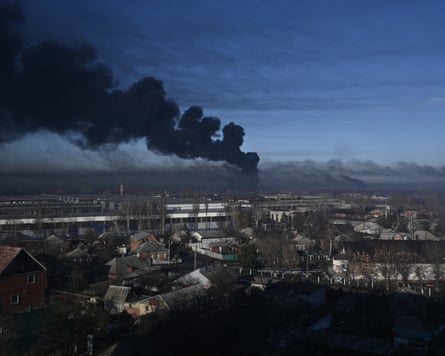
Around the same time as Zelenskyy was changing outfits in Kyiv, Putin welcomed the Pakistani prime minister, Imran Khan, to the Kremlin. The visit had been planned months in advance, and Khan landed in Moscow just as Russian tanks were crossing the border into Ukraine. Surprisingly, Putin kept the appointment. On a momentous day that changed the course of European history, as shocked members of his elite swapped horrified text messages, he spent more than two hours with Khan discussing the minutiae of Moscow and Islamabad’s bilateral relations. Putin came across as “chilled” during the talks, said a source close to Khan. Afterwards, he invited his guest to stay for an unscheduled, lavish Kremlin lunch. At one point, Khan asked about the elephant in the room: the war that Putin had unleashed a few hours earlier.
“Don’t worry about that,” Putin told him. “It’ll be over in a few weeks.”
Aftermath
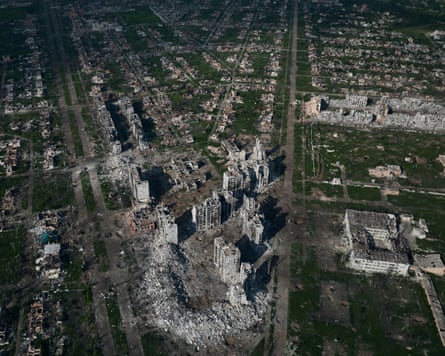
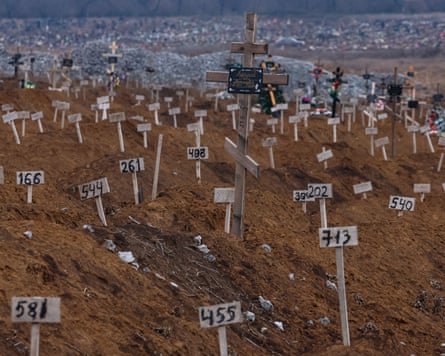
Four years later, the war continues. An estimated 400,000 Russian soldiers have been killed, for the prize of controlling 13% more of Ukraine’s territory than at the beginning of 2022.
For British and US intelligence agencies, Putin’s gruesome and bloody assault on Ukraine was a redemptive moment. For months, they had been deep inside the war plans that Putin had kept secret from most of his own elite, and two decades after the Iraq fiasco, they had been proven right in the face of widespread scepticism. In the aftermath, US officials said, many partner services developed a new respect for the CIA and other US agencies and became interested in closer cooperation. (It is not clear whether those desires have survived into the Trump presidency.)
But whatever they got right, London and Washington underestimated Ukrainian resistance and overestimated Russian power, just as Putin had. They had concluded that the task after the invasion would be to help a partisan movement against successful Russian occupiers, with the Ukrainian government operating from exile, or ruling over a rump state in the west of the country. “All the way up to the day of the race, there had been an assumption that this is not going to last very long,” said the official from British defence intelligence. “We thought they’re going to be west of Kyiv really quickly, at which point they’re going to say: ‘Job done, we’ve got this lot, someone else can take care of that lot, thanks for watching.’”
The Americans had a similar view. “We thought the Russians would be more effective initially – take Kyiv in a couple of weeks, and then the Ukrainians would regroup,” said Haines.
The European services that had been so hopelessly wrong about the possibility of the invasion used this discrepancy as their explanation: “We didn’t believe it would happen, because we thought the idea that they would be able to walk into Kyiv and just install a puppet government was completely insane,” said one European intelligence official. “As it turned out, it was indeed completely insane.”
Part of the problem for the British and Americans was that while there was great insight into the planning, there was too much reliance on Russia’s own estimates of its force capabilities. “The system encourages them to make things sound better than they are,” said a US intelligence official. “We didn’t have a Russian general on the payroll who could say: ‘I haven’t written an honest report in my entire career.’”
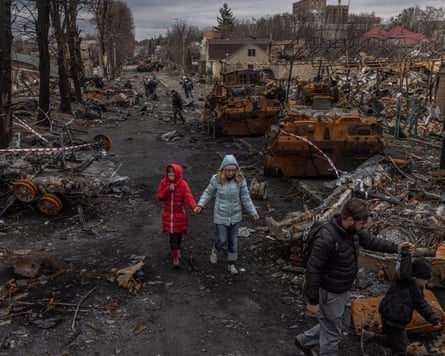
Putin’s tiny planning circle also played a role, creating a hopelessly cocky plan that had not been subjected to a rigorous critique by intelligence professionals versed in Ukrainian realities. Russian troops entered Ukraine expecting a surgical regime change operation with little resistance, rather than the bitter battles that awaited them. Moscow did not bother with many actions that western military analysts had assumed would accompany the invasion, such as taking out Ukraine’s power and communications networks. The Russian army assumed they would control most of the country in a matter of days, so decided to make the subsequent occupation easier by keeping the infrastructure intact. Instead, the working mobile networks and ready power supply proved crucial for the coordination of Ukraine’s hastily assembled defence forces.
“Half of it is we overestimated Russian military performance and underestimated the Ukrainian military,” said Michael Kofman, an analyst at the Carnegie Endowment in Washington. “But the other half is the Russians didn’t execute the operation remotely how many anticipated it might go, or in a way that made sense.”
Zelenskyy’s defiant stand in the days after the invasion was another unexpected factor. Washington, like Moscow, had assumed he would either be killed or flee as soon as the missiles started flying. Biden urged him to leave the capital, or even the country, to ensure he remained safe. But Zelenskyy stayed, and his inspiring performance as a wartime leader during the crucial first weeks of the invasion helped rally Ukrainian society in its fight against the invaders. It also buried questions about his abject failure to heed the US warnings in the buildup.
Ever since then, Ukraine has been at war, with little time or appetite to revisit the debate over whether more should have been done to prepare the population in advance. But this discussion may yet resurface, especially if a future election pits Zelenskyy against Zaluzhnyi, the former army commander and current ambassador to London, who pushed for more action but was rebuffed. Zaluzhnyi said the inability to prepare properly cost Ukraine dearly at the start of the invasion. “Martial law should have been introduced in January, or in February at the latest,” he said.
Others suggest that Zelenskyy’s refusal to raise the alarm – even if not by design – could be what saved Ukraine. “If he had started to talk about an oncoming war, had told everyone to prepare, society would have panicked and millions would have fled,” said one HUR general. “The country would most likely have fallen.”
Lessons learned
For the European services that failed to foresee the invasion, a period of soul-searching followed. One European intelligence officer said they were furious over the failure and had pushed internally for an inquiry into what could have been done better. “The whole raison d’etre of an intelligence service is to predict when the next war will come,” said the officer. “And we completely messed it up.”
Huw Dylan, a historian of intelligence at King’s College London, said there was a long history of intelligence analysts being unwilling to predict that future events will create a dramatic break with the past. People could not imagine what a major European land war would look like in the 21st century, so assumed it was unlikely to happen. Additionally, scepticism is usually the safer option. “If you’re predicting something that has massive implications, you’ve got more to answer for if you get it wrong,” he said.
The Ukraine failure has started to change that. As one German official put it: “The main thing we took away from all of this was that we need to work with worst-case scenarios much more than we did before.”
Now, as the world has entered a new era of uncertainty, there are more worst-case scenarios to ponder. Recent European military exercises have focused on how to maintain order after massive attacks on power and communications infrastructure that cause civil unrest. For the first time in a century, Canada is modelling potential responses to a US invasion.
For many, the key intelligence lesson from Ukraine was stark: do not rule things out, just because they might once have seemed impossible.
Credits
Additional reporting: Pjotr Sauer and Ada Petriczko
Animation: Anaïs Mims
Art direction: Ellen Wishart
Design and development: Pip Lev, Harry Fischer, Fred O’Brien, Alessia Amitrano
Ticker animation: Adapted from Peter Butcher