3 months ago
63
3 months ago
63
A grouping of largely oppressive and authoritarian world leaders and their envoys are flying to Washington for the inaugural meeting of Donald Trump’s newly established Board of Peace.
The body was created to implement his vision for Gaza’s future after it was destroyed by Israel, but Trump has widened its scope, calling it “the most consequential international body in history”.
Global powers, including Washington’s traditional allies, fear the US-led body is an attempt to side-step the more democratic United Nations and replace it with a fee-paying members’ club run on the whims of a single man.
It is not clear how many of the more than 20 members of the Board of Peace, which Trump runs and chairs, will attend the first meeting on Thursday. As a workaround, several governments, including Italy and Greece, are sending observers.
What is clear is that many of the founding member countries are run as military regimes or dictatorships, while others joined to appease Trump. Here is a list of several confirmed attenders, and where their countries are placed in an annual ranking on political rights and civil liberties, compiled by the democracy watchdog Freedom House.
Middle East
Egyptian prime minister Mostafa Madbouly
Freedom in the World Index score: (18/100) ‘Not Free’
Mostafa Madbouly. Photograph: Michele Spatari/AFP/Getty Images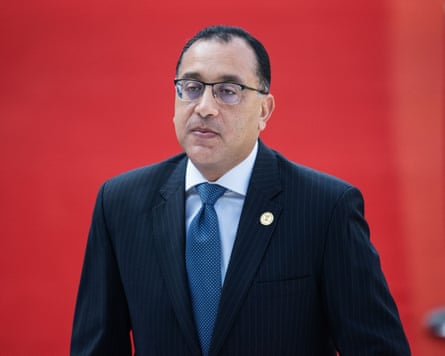
The latest Freedom House report presents a negative image of Egypt’s rights situation, reporting an environment of tightly restricted civil liberties and press freedoms. “Security forces engage in human rights abuses with impunity,” it says.
President Abdel Fattah al-Sisi has, it reports, run Egypt “in an increasingly authoritarian manner” since taking power in a 2013 coup. “Meaningful political opposition is virtually nonexistent, as expressions of dissent can draw criminal prosecution and imprisonment,” it adds.
Turkish foreign minister Hakan Fidan
Freedom in the World Index score: (33/100) ‘Not Free’
Hakan Fidan. Photograph: Anadolu/Getty Images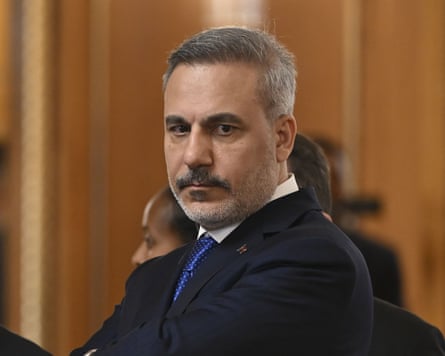
When announcing the creation of the board in January, Trump also unveiled plans to establish a Gaza Executive Board operating under the body, which would include the Turkish foreign minister, Hakan Fidan.
He reports to Turkey’s president, Recep Tayyip Erdoğan, who has, according to Freedom House, consolidated power “through constitutional changes and the imprisonment of political opponents, independent journalists, and members of civil society”.
Israeli foreign minister Gideon Sa’ar
Freedom in the World Index score: Israel (73/100) ‘Free’, West Bank (22/100) ‘Not Free’, Gaza (2/100) ‘Not Free’
Gideon Sa’ar. Photograph: Lev Radin/Shutterstock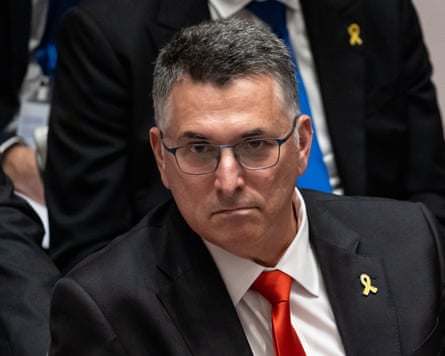
Gideon Sa’ar will represent Israel on behalf of the prime minister, Benjamin Netanyahu.
Freedom House divides Israel and the Palestinian territories it occupies into separate categories (other rights groups accuse Israel of running an apartheid system).
While Israelis enjoy a “parliamentary democracy with a multiparty system and independent institutions”, the Freedom House report presents a dire situation for Palestinians under Israeli occupation. In Gaza, the index says the Israeli military has “consistently pursued a strategy” that resulted in “mass displacement and loss of life”. In the West Bank, it says, the Israeli occupation entails “restrictions on Palestinians’ political rights and civil liberties, and expanding Jewish settlements”.
Asia
Cambodian prime minister Hun Manet
Freedom in the World Index score: (23/100) ‘Not Free’
Hun Manet. Photograph: Evelyn Hockstein/Reuters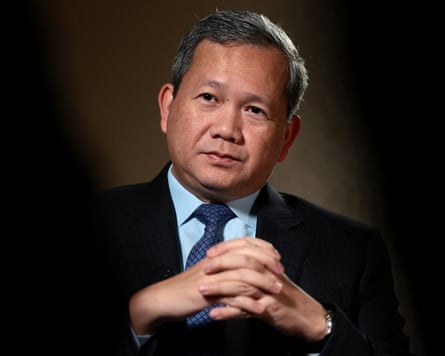
Cambodia’s political system has been dominated by the Cambodian People’s Party (CPP) and its leader, Hun Sen, for more than three decades, Freedom House says. While Hun Sen stepped down in 2023, he did so only after facilitating “an undemocratic transfer of power to his son, Hun Manet”.
The CPP-led government uses intimidation, politically motivated prosecutions and violence to maintain pressure on the opposition, independent media, and civil society, Freedom House says.
Indonesian president Prabowo Subianto
Freedom in the World Index score: (56/100) ‘Partly Free’
Prabowo Subianto. Photograph: Denis Balibouse/Reuters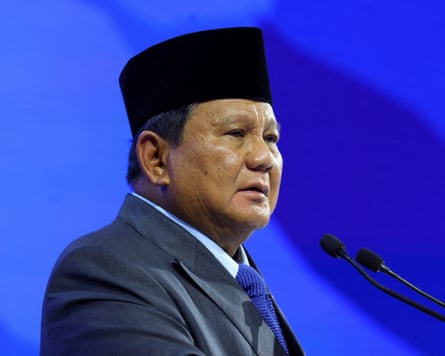
Indonesia has been a key member of the Board of Peace, and has offered up to 8,000 troops for deployment to Gaza as part of a humanitarian mission.
The Freedom in the World index said Indonesia had made “impressive democratic gains since the fall of an authoritarian regime in 1998” but added that significant challenges persisted, “including systemic corruption, discrimination and violence against minority groups … and the politicised use of defamation and blasphemy laws”.
Kazakh president Kassym-Jomart Tokayev
Freedom in the World Index score: (23/100) ‘Not Free’
Kassym-Jomart Tokayev. Photograph: Alexander Zemlianichenko/AFP/Getty Images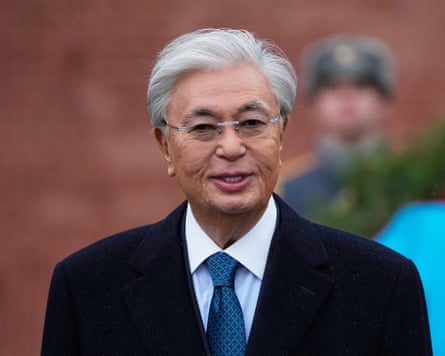
Freedom House offers a blunt assessment of the central Asian nation. “In Kazakhstan, parliamentary and presidential elections are neither free nor fair,” it says. “The dominant media outlets are either in state hands or owned by government-friendly businessmen. Freedoms of speech and assembly remain restricted and punished, and corruption is endemic.”
Kassym-Jomart Tokayev, who was handpicked for president by the former dictator Nursultan Nazarbayev, will travel to Washington for the Board of Peace meeting, and will also use the trip to “meet with executives of leading American companies”, his office said.
Pakistani prime minister Shehbaz Sharif
Freedom in the World Index score: (32/100) ‘Partly Free’
Shehbaz Sharif. Photograph: Pakistan’s Prime Minister Office/AFP/Getty Images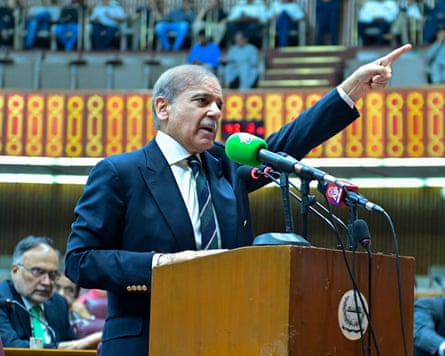
Pakistani foreign office spokesperson Tahir Andrabi told journalists in Islamabad that the country had joined the Board of Peace “in good faith”.
Pakistan holds regular elections under a competitive multiparty system, Freedom House says. “However, the military exerts enormous influence over government formation and policies, intimidates the media, and enjoys impunity for indiscriminate or extralegal use of force.”
Uzbek president Shavkat Mirziyoyev
Freedom in the World Index score: (12/100) ‘Not Free’
Shavkat Mirziyoyev. Photograph: Anadolu Agency/Getty Images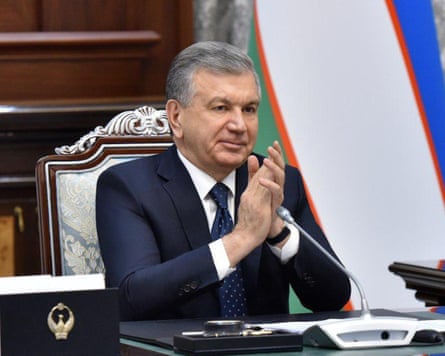
Despite some reforms under Shavkat Mirziyoyev, Freedom House says, “Uzbekistan remains an authoritarian state with few signs of democratisation. No opposition parties operate legally”. The president is a founding member of the Board of Peace.
Vietnamese Communist party general secretary Tô Lâm
Freedom in the World Index score: (20/100) ‘Not Free’
Tô Lâm. Photograph: Agence Kampuchea Presse (AKP)/EPA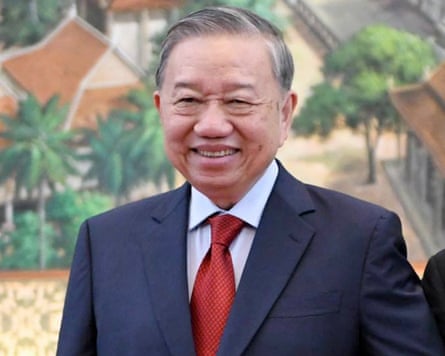
Vietnam is a one-party state. Last year, the print edition of the Economist, which featured Tô Lâm on its cover, was banned in the country, part of a long series of acts of media censorship by authorities.
“Freedom of expression, religious freedom, and civil society activism are tightly restricted,” Freedom House says. “The authorities have increasingly cracked down on citizens’ use of social media and the internet to voice dissent and share uncensored information.”
Europe
Albanian prime minister Edi Rama
Freedom in the World Index score: (68/100) ‘Partly Free’
Edi Rama. Photograph: Geert Vanden Wijngaert/AP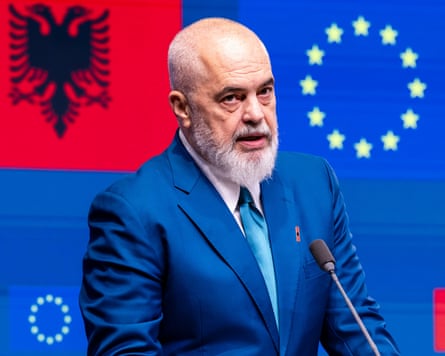
Albania, which is led by the socialist artist-politician Edi Rama, was a founding member of the Board of Peace. Rama said this week it would not become a permanent member, which comes with a $1bn price tag.
The European country is considered “partly free” by Freedom House, which says Albania has a record of competitive elections. “Corruption and bribery remain major problems, though the government is working to address corruption in the judiciary.”
Hungarian prime minister Viktor Orbán
Freedom in the World Index score: (65/100) ‘Partly Free’
Viktor Orbán. Photograph: Zoltán Fischer/Hungarian PM Press Office/EPA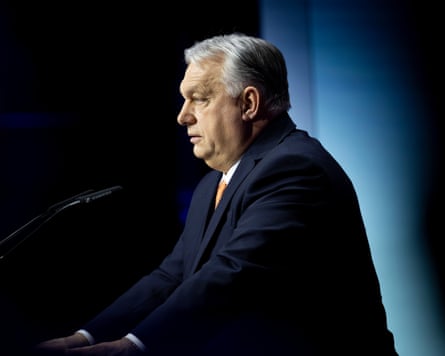
The right-wing nationalist Viktor Orbán is one of Trump’s closest allies in the EU, and is seen as a hero to many Maga supporters for his hostility to migration. He has made several visits to Trump’s Mar-a-Lago resort in Florida.
Freedom House accuses the Orbán government of pushing through “anti-migrant and anti-LGBT+ policies, as well as laws that hamper the operations of opposition groups, journalists, universities, and nongovernmental organisations”.
Kosovan president Vjosa Osmani
Freedom in the World Index score: (60/100) ‘Partly Free’
Vjosa Osmani. Photograph: Fermin Rodriguez/AP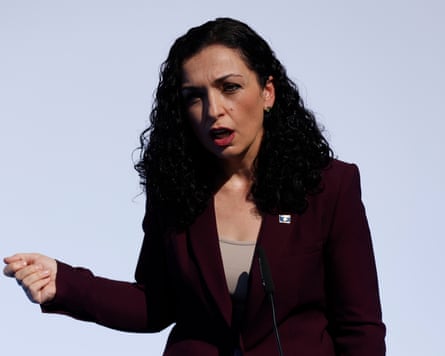
President Vjosa Osmani is the only woman who was a founding member of Trump’s Board of Peace.
Freedom House says the small country of 1.5 million people in south-east Europe is partly free, holding what it said were “credible and relatively well-administered elections”. “Many public institutions are undermined by entrenched corruption, though there are signs that a new generation of politicians are moving to confront corrupt practices through judicial and administrative reforms,” it adds.
South America
Argentine president Javier Milei
Freedom in the World Index score: (85/100) ‘Free’
Javier Milei. Photograph: Francisco Loureiro/Reuters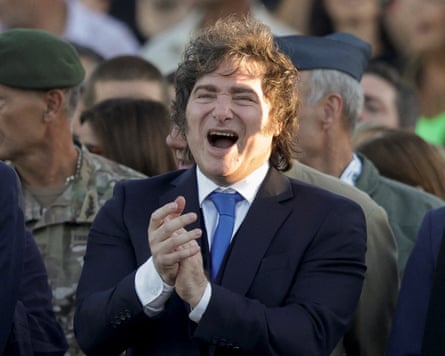
Argentina receives a high score in the index, with Freedom House celebrating its “vibrant representative democracy with competitive elections, lively media and civil society sectors, and unfettered public debate”.
However, the country is transforming under the 55-year-old former TV celebrity and liberatian president, Javier Milei, who along with other government officials has accused universities of “indoctrinating students with leftwing ideology”, according to Freedom House. Milei is a close ally of Trump, who threatened to cut US aid if Argentinians did not back Milei’s coalition in October legislative elections.