2 months ago
59
2 months ago
59
Never has there been a more fickle or divisive piece of clothing.
Jeans, patented 152 years ago as workwear, have the power to make a wearer feel either on-trend or old fashioned, depending on their cut, wash and length and, most importantly, timing. As we bid farewell to 2025, it’s hard to decipher what exactly the jean of the year has been.
In April, Vogue declared baggy white jeans as a “spring staple”. By August, it was endorsing slim cigarette styles, but by December “straight-leg jeans – not baggy, not skinny, but that sweet spot in between,” were the new must-have. In November, GQ hailed a pair of vintage slim-cut Levi’s 501s worn by Ben Whishaw in Peter Hujar’s Day as the “Sexiest movie jeans of 2025”. Add to the mix viral carrot, horseshoe and stovepipe shapes and can anyone really keep up?
Amy Leverton, founder of Denim Dudes, a denim consultancy firm, says social media and a growth in competition have created greater choice. “Consumers have never been more in control of the narrative when it comes to fit trends,” she says. “The late 90s and early 00s were simpler times, where jean fits moved slowly, acted like a kind of ‘universal uniform’ and stuck around much longer.” Now, Leverton says, “the switch has flipped.”
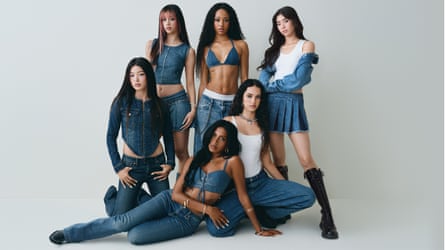
She points to a Gap campaign released in August starring the K-pop-inspired girl band Katseye as exemplifying the trend. In the advert, each of the band’s six members and dozens of backing dancers appear in different types of jeans, including extra-baggy and flared styles.
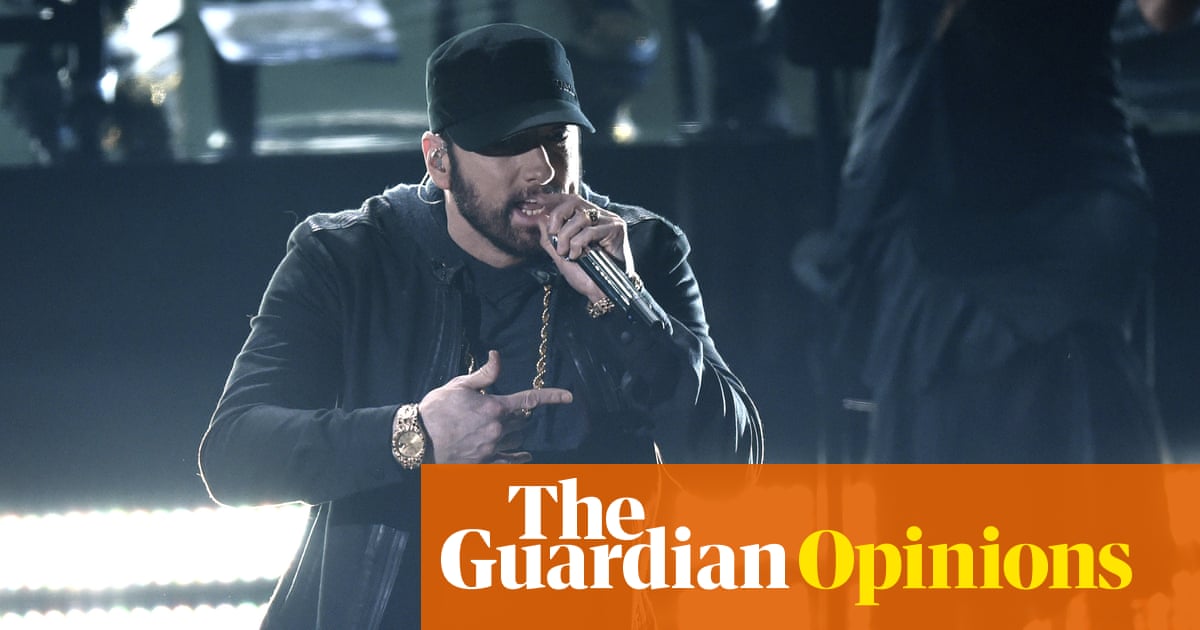
While there is no agreed It-jean of 2025, there has been a general loosening and widening of the silhouette. The catalyst was Kendrick Lamar’s half-time Super Bowl performance in February. When the American rapper dissed Drake to more than 133 million viewers, he did so in a pair of women’s low-rise, blue-wash, bootcut jeans from Celine.
According to John Lewis, out of the 1,349 styles of jeans available in its womenswear, wide-leg cuts have outpaced straight and skinny this year. At M&S, which is No 1 in the women’s jeans market, selling 10 pairs every minute, the current bestseller is a wide-leg indigo wash jean. Barrel legs, a sort of balloon-like shape that hang wide on the hip and thigh, then tapers at the ankle, are also a strong performer. Since April, it has sold 47k pairs of its mid-rise version.
Yet at Levi’s, the XL straight in womenswear remains its most popular style. Anne-Catherine Lepas, vice-president of merchandising of Levi’s Europe, says part of their appeal is their versatility. Cut for a baggy fit, they feature an adjustable tie waist allowing the wearer to choose where they want them to sit.
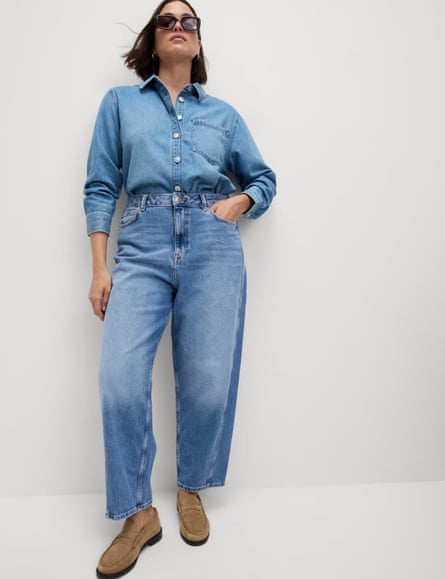
In womenswear Levi’s “baggy dad barrel” jean with a subtle curved leg has also gained traction, while in menswear the 568 and 578 styles, both of which take baggy inspiration from the 90s, are trending. Mitch Hughes, menswear director at M&S, describes giving its denim offering a “complete overhaul” with a focus on trend-led styles, including loose, tapered and baggy styles. After the success of the barrel leg in womenswear, the retailer introduced the shape into menswear in September and it’s now one of its most popular styles. At John Lewis, sales of men’s denim is up 484% year on year. Beth Pettet, head of menswear buying, says men are pivoting towards relaxed fits. Skinny jeans made up 15% of its denim offering in 2019. Now it is 5%.
While Levi’s sees “a bigger traction” of low-rise and baggy fits with gen Z, Lepas says the XL straight and baggy barrel have resonated across genders and all age groups. Leverton says it is the versatility of a baggy fit that has multi-generational appeal. “Baggy is more universally adopted because no matter who you are, you can wear ‘your interpretation’ of it. Looser fits don’t have to be extreme,” she says. Even gen Xer Parker Posey posed in Gap’s baggy “Carpenter” jeans.
Leverton describes a sense of individualism as a new challenge for brands. “A regular high-street brand really has to carry every fit and size in store, which isn’t great for the environment,” she says. “But in my opinion it is positive when it comes to easing the social pressure for consumers to jump on the new trend ‘just because’. Finding what you love and sticking to it is more acceptable.”
By August, baggy and flare styles were endorsed by the gen Z actor Sydney Sweeney in her controversial American Eagle campaign that was accused of pro-eugenics messaging. Despite widespread criticism and Trump weighing in, it fuelled interest in the brand, with shares up nearly 60% since the ad launched in July. It wasn’t the only politicised moment for jeans this year. Clips of the 71-year-old US health secretary Robert F Kennedy Jr went viral in August when he was filmed doing a “Make America Healthy Again” gym challenge in baggy-ish blue jeans.
In September, the lines between millennials and gen X were blurred once more when the actors Amanda Seyfried (millennial) and Julia Roberts (gen X) shared a pair of Versace high-rise, dark-wash, straight-leg jeans during the Venice film festival. Elsewhere, Levi’s leaned into its western roots, which saw Beyoncé don some classic 501s.
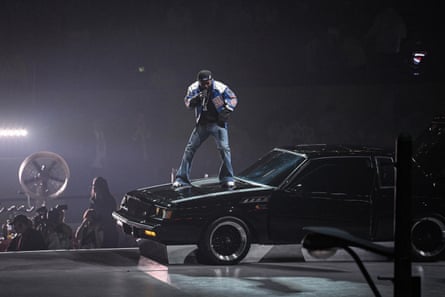
So does this mean it’s all over for skinny jeans? In short, no. Lamar’s jeans were designed by Hedi Slimane before he left Celine in 2024. He is the designer responsible for launching skinny jeans at Dior Homme circa 2000 and Saint Laurent during the 2010s. Fans of Slimane’s spindly silhouettes are known as Hedi boys, and now, thanks to the LA band the Hellp, are once again gaining traction. Its members, Noah Dillon and Chandler Lucy, gatekeep where their spray-on skinnies are from, although it is widely believed they hail from Slimane’s time at Dior and Saint Laurent. His successor at Celine, Michael Rider is also backing them. Even the ex-Balenciaga designer Demna, who made oversized everything his default, told Die Zeit in June that he has lost interest in the XXL style. Although he did caveat with: “That doesn’t mean I’m going to start wearing tight stretch jeans. You have to be careful with skinny jeans. We don’t want the whole world to look like sausages.”
So what can we expect in 2026? While Leverton describes a baggy flare as “kind of cool”, she doesn’t believe they have “main character energy”. For her the flare is “counter culture”, referencing how people collectively wore flares in the 70s. “I don’t see it as taking over again, at least not right now. It’s certainly a B-list denim trend and we’ll see it on the runway and on the streets, but I don’t think it has universal appeal.”
Right now, jeans seem to be simply extreme. Jonathan Anderson, who showed straight styles in his debut Dior collection, just launched extra-long pavement-scraping styles for a mid-season women’s collection, describing them as “really weird”. On the final day of the F1 season in December, Lewis Hamilton was pictured in a giant pair with the circumference of a bank vault as he exited the paddock.
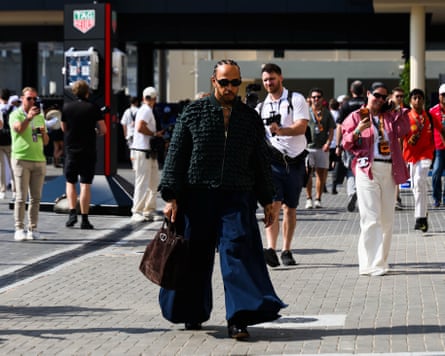
Leverton suggests that once we reach peak baggy, the pendulum will swing back and we will see “slimmer silhouettes gain traction, but not in the super-stretch ‘jegging’ direction that shaped the 2000s”. Her money is on a twisted baggy style, where the seams curve around the leg rather than sitting in a straight line.
Meanwhile, Levi’s is betting on “the freedom to move between silhouettes – loose and baggy one day, skinny or low-rise the next”. But for those worried about soggy hems being the future, there is some reassurance. Leverton says looks such as Hamilton’s will “always live on the fringes of fashion”. But she says: “What I would bet my life on is that we’re not all going to be wearing them down Tesco Metro on a random Tuesday!”