1 hour ago
13
1 hour ago
13
Caitlin Clark spent most of the 2025 WNBA season sidelined with a series of injuries that forced her to miss more than 30 games. But she also spent part of the season (and the preceding offseason) quietly navigating a tumultuous and scary reality: a 55-year-old man was stalking her, and he was convinced they were in a relationship.
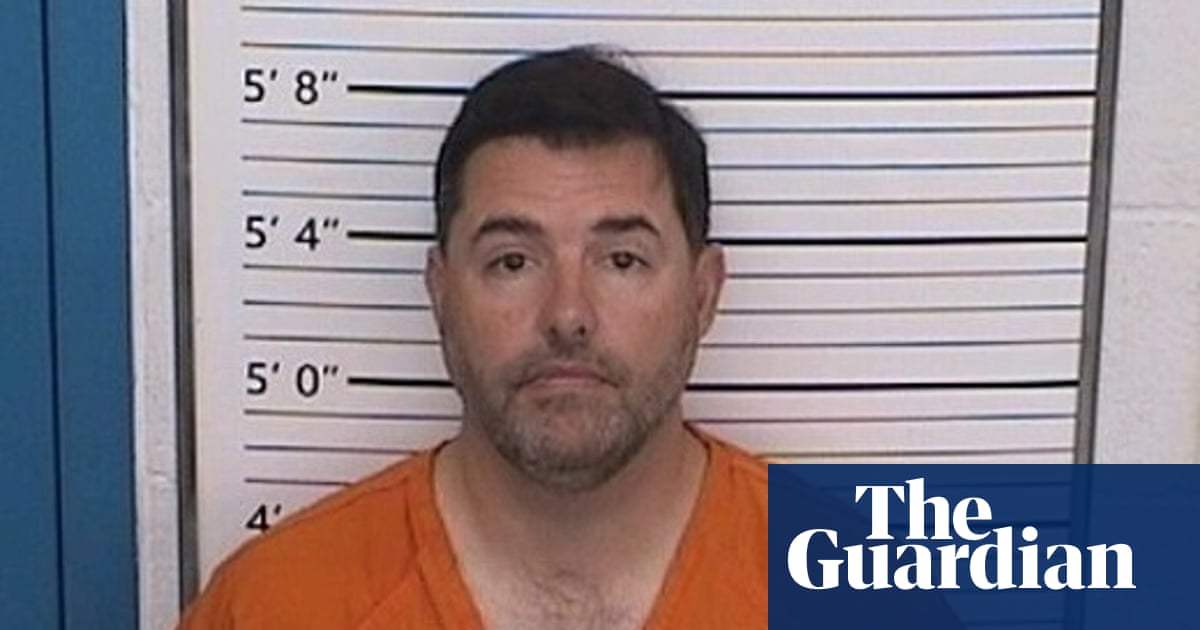
That man, Michael Lewis, was sentenced to two-and-a-half years in prison last July. Lewis sent Clark “hundreds” of messages – many of which were “threats and sexually explicit” – between 12 December 2024 and 11 January 2025. Lewis, who is from Texas, was arrested at a hotel in Indianapolis, where Clark plays for the Indiana Fever. The case took a toll on Clark: she said she feared for her safety and had changed her appearance in public.
Clark isn’t the only player in the WNBA who has had a stalker, and stalking isn’t limited to the pros. In 2024, a 40-year-old man pleaded guilty to stalking Paige Bueckers, who was then playing for the UConn Huskies; former Indiana Fever guard Syd Colson has spoken about her own stalker several times. As a college student at UCLA, Toronto Tempo’s Kiki Rice received “dozens” of messages from a man who believed the pair shared something “magnetic.” In June, a 48-year-old man was arrested for stalking Clark’s teammate Sophie Cunningham.
The problem is not unique to the WNBA: NFL star Aaron Donald was stalked by a woman who falsely claimed they were married. But the league’s rising popularity, the ever-present threat of misogyny and the fact that women are far more likely to be stalked than men mean the problem is one the league is unfortunately becoming more familiar with.
That’s not to say that every fan interaction is negative; in fact, most are great for both parties. Earlier this month, the Portland Fire’s Emily Engstler told reporters that the team gets “recognized a decent amount.”
Portland fans are “super respectful,” she added. That’s something Engstler “really appreciates,” and she likes the fan-athlete relationship to be a two-way street. “I think it’s not hard to be respectful to your fans and give them the time of day,” she added. “So I try to make sure I do it.”
The fan-athlete relationship is parasocial, Dr Shira Gabriel, professor of psychology at SUNY, University of Buffalo, says. But, she points out, parasocial relationships aren’t inherently bad, and we all have them.
Gabriel, whose book Collective Effervescence will be released next year, studies these relationships. While writing her book, she found that researchers examining parasocial bonds “at first were looking for all the bad stuff and trying to find that these are the loneliest, most desperate people,” she says. “And if anything, the opposite is true.”
Forming these bonds “is a part of being a healthy person in the modern world,” Gabriel says. “We have access to information about people that we would never have had when we were developing as a species.”
She went on to point out that nearly all of us have some kind of parasocial bond, whether that’s keeping up with Prince Harry and Meghan Markle, or attending WNBA games and following players on social media to find out more about their lives.
Humans seek connection, Gabriel says. “If you’re a big WNBA fan, you can feel connected to the whole fandom, and that’s great,” Gabriel continues. “That’s an important thing for us. Again, we’re a really social species, and we want to have those connections … this is something that healthy people do and that increases the degree to which we can feel connected.”
Those relationships begin to go wrong when “people sort of forget that the person who they have the bond with is an actual living and breathing human being, and you are sort of dehumanizing them” when you forget that, Gabriel says. “They’re just sort of this person online, and that opens up avenues for people to behave in ways or treat people in a way that they wouldn’t in their real life.”
The risk factors that make someone more likely to escalate a parasocial relationship to stalking are similar to those that exist in real relationships, too.
after newsletter promotion
“I think the people who are doing this are people who are probably not particularly stable in other aspects of what they’re doing,” Gabriel says. “You’re not going to find somebody who is doing well in their lives, and is happy, and not suffering from severe mental illness, who mistakes these for real bonds and starts going after someone, just like you’re not going to date somebody who’s actually like a super healthy wonderful person and have them turn into a stalker who completely disrupts your life.
“When that happens, that’s because this person is bringing some kind of real emotional baggage with them, and that’s what we would see with a parasocial bond, too.”
A league source told the Guardian that the WNBA is well aware of all of these dynamics, and player safety is paramount. The league pays attention to safety across the board: at games, of course, but also at hotels, airports, and online. The new Collective Bargaining Agreement contains minimum safety requirements each team must have in place.
There is a three-step process when a threat is reported. First, the league’s Global Security Operations Center, which operates on a 24/7 basis, assesses the validity of the threat and begins an investigation. The league next determines what additional security needs to be deployed to mitigate the threat. The third step includes potentially banning or restricting the threatening individual from arenas and games, or referring the case to local authorities. Every reported incident is investigated.
“We’re going to care about what the prominent people in our society are doing,” Gabriel says. “And that’s good. There’s nothing bad about that. That’s like being an engaged person who cares about the world around them, and all the research that I’ve done and other people have done really suggests that this can be a really healthy part of life in the modern world.”
The WNBA is working to ensure that when those relationships turn unhealthy, the problem is quickly dealt with.