4 hours ago
6
4 hours ago
6
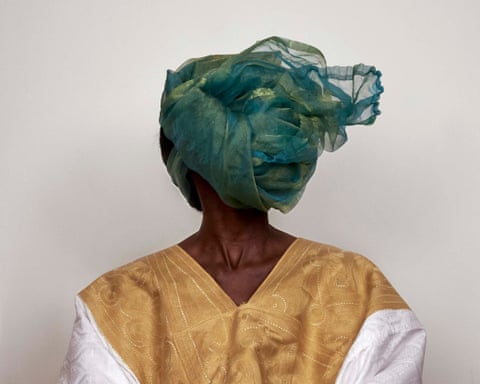
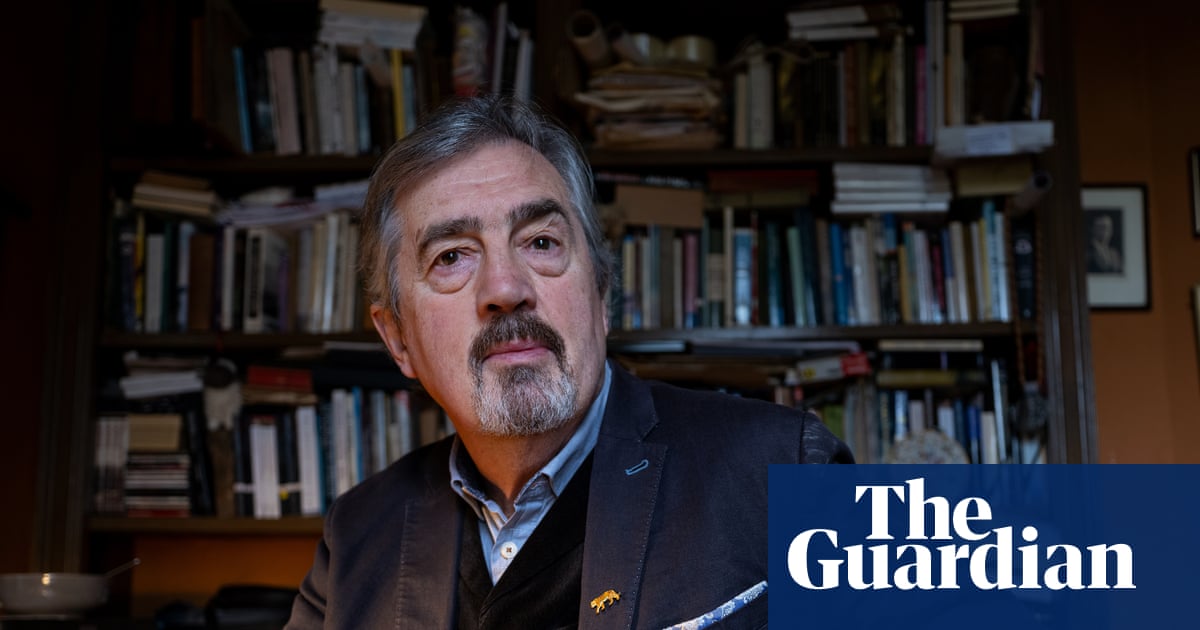
Souleymane Bachir Diaw’s photographs of textiles and bodies carry messages around patriarchy, domestic violence and the rituals of manhood
‘Dignity and authority’ … Grey Area, 2022. Photograph: xoulixool/Souleymane Bachir DiawTue 8 Sep 2026 08.00 CEST
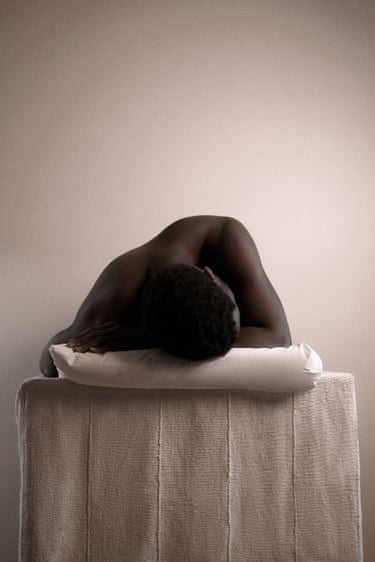
Self-Portrait Resting on Rabbal, Earth Tone, 2021
Multidisciplinary artist Souleymane Bachir Diaw draws on research, photography, installation and sound to examine processes of transformation affecting memory, space and materials. In this image, made at the beginning of the project, the artist seeks rest, curled over a pillow and held by the rabal beneath him. Souleymane Bachir Diaw’s solo show Sutura is at Les Rencontres d’Arles festival until 4 October, presented as part of the 2026 Louis Roederer Foundation Discovery award. All photographs: Souleymane Bachir Diaw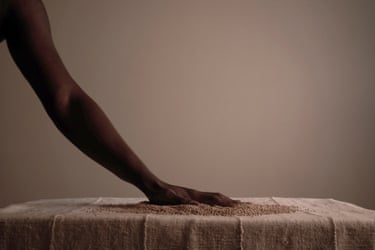
Self-Portrait, Hand on Arrow on Rabbal, 2021
Millet, textile and body meet in a gesture of nourishment and repair, making space for an intimacy that allows for vulnerability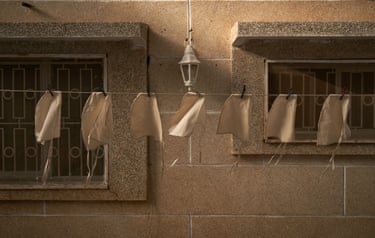
White Cotton Headpieces on Clothes Line, 2022
Across a domestic courtyard, a row of white cotton headpieces evokes a group of absent boys and a ritual passage towards manhood. The piece looks at how ideas of discipline, endurance and patriarchal masculinity are placed on the body before they can be fully understood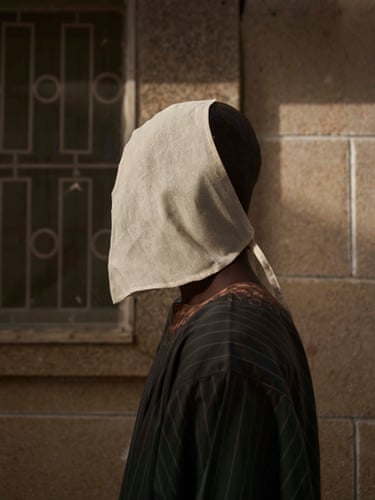
Worn Striped Olive Green Jam-puut and White Cotton Headpiece, Earth Tone, 2022
The white cotton headpiece seen suspended in the earlier still life is here returned to the body. With the face obscured, the figure becomes less an individual portrait than a body entering a prescribed role. The image considers how rituals of passage make patriarchal masculinity tangible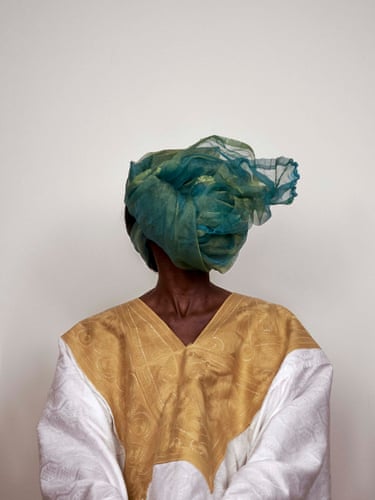
Worn White Grand Boubou with Gold Embroidery and Green Headscarf, Grey Area, 2022
The embroidered grand boubou gives the body presence, dignity and authority, while the headscarf removes the face from view. Drawing on the fluidity of a garment worn across genders, the image shifts attention from identity to the codes through which appearance is constructed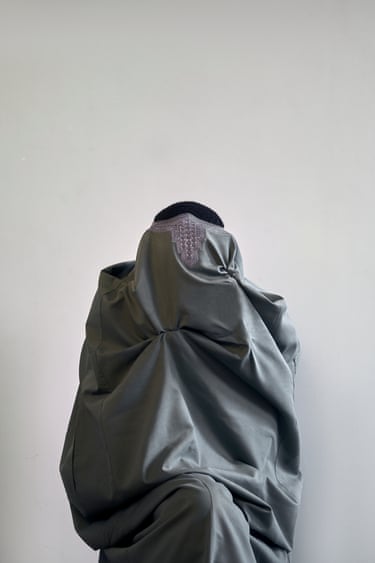
Worn Light Green Jam-puut, Grey Area, 2022
The jam-puut gathers around the body until garment and figure become almost indistinguishable. Its elegance creates a commanding presence, while the concealed face shifts attention towards the silence and violence that beauty and authority can be made to carry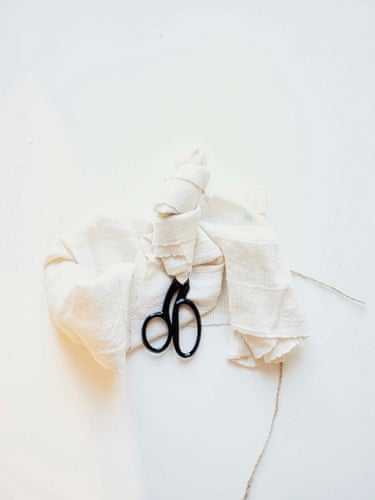
Rabal and Threads Wrapping Scissors, Grey Area, 2021
Wrapped in rabal and trailing threads, the scissors are held somewhere between concealment and transformation. The arrangement allows familiar objects to drift away from their assigned uses, opening a search for new forms through which change might appear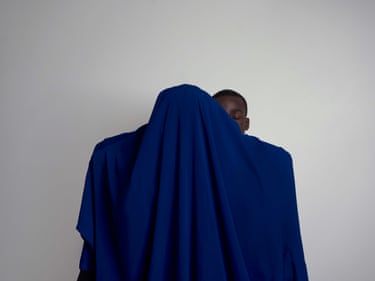
Worn Navy Blue Hijab, Blue Note, 2022
Behind the draped form of a navy blue hijab, a face appears with its eyes closed, suspended between concealment, rest and comfort. The image offers masculinity a space of calm and vulnerability, while questioning the patriarchal structures that assign the work of intimacy, care and emotional shelter to a feminised body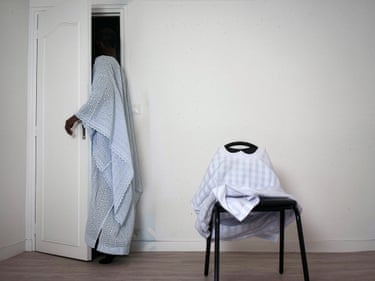
Worn Light Blue Lace Boubou and Striped White Jam-puut, Grey Area, 2021
A figure leaves the room while another seems to remain seated, formed only by a garment draped over a chair. Set within the domestic space, the image considers how patriarchal ideas of masculinity can turn withdrawal into a position of authority, while silence, care and vulnerability are left to be carried by those who remain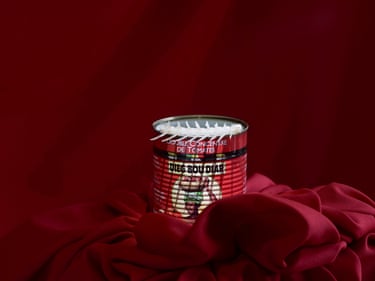
Diég Ñáata?, Red Line, 2022
A fish bone rests across a tin of tomato paste branded Diég Bou Diar, a Wolof expression suggesting a woman of value, or one considered worthy of a home. By turning the remains of a shared meal into a still life, the image asks how that value is measured, and at whose expense intimacy and hospitality are produced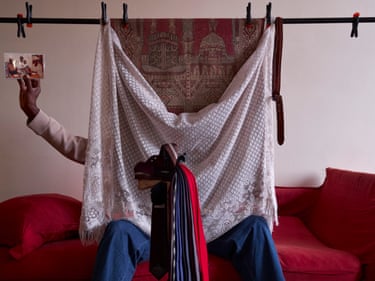
Performing the Transmission, Red Line, 2025
Holding a photograph drawn from a family album, the artist stages an attempt to embody the archive rather than simply look back at it. Around him, a prayer rug, lace tablecloth, belt and cluster of ties turn the domestic interior into a space where memory, faith and patriarchal masculinity are passed on through objects, gestures and display. By revealing the construction of the scene, the image also exposes identity as something assembled, inherited and continually performed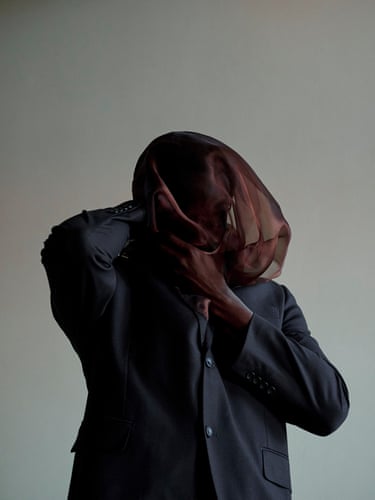
Self-Portrait in a Black Suit and Brown Silky Fabric, Black Belt, 2025
With the face veiled and the hand drawn towards the mouth, the figure appears caught in the act of silencing itself. The suit becomes less a marker of identity than a structure on the body, revealing how masculinity is sustained through restraint, self-surveillance and the fear of what might escape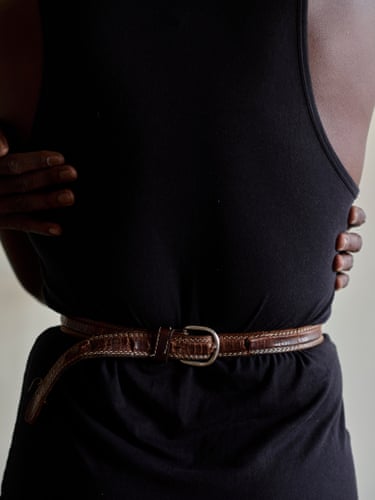
Self-Portrait in Black Tank Top and Brown Leather Belt, Black Belt, 2025
The belt pulls the body tightly inwards, while the hands answer with an embrace. Within the memory of domestic violence, the gesture becomes less an act of solitary repair than a way of recalling and carrying forward forms of care learned through others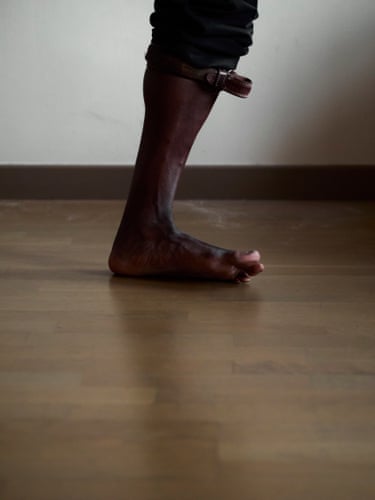
Self-Portrait in Black Suit Pants and Brown Leather Belt, Black Belt, 2025
Caught between one step and the next, the body appears to lose its balance as a leather belt tightens around the leg. Displaced from its expected position, the belt turns movement into frictionExplore more on these topics