2 months ago
52
2 months ago
52
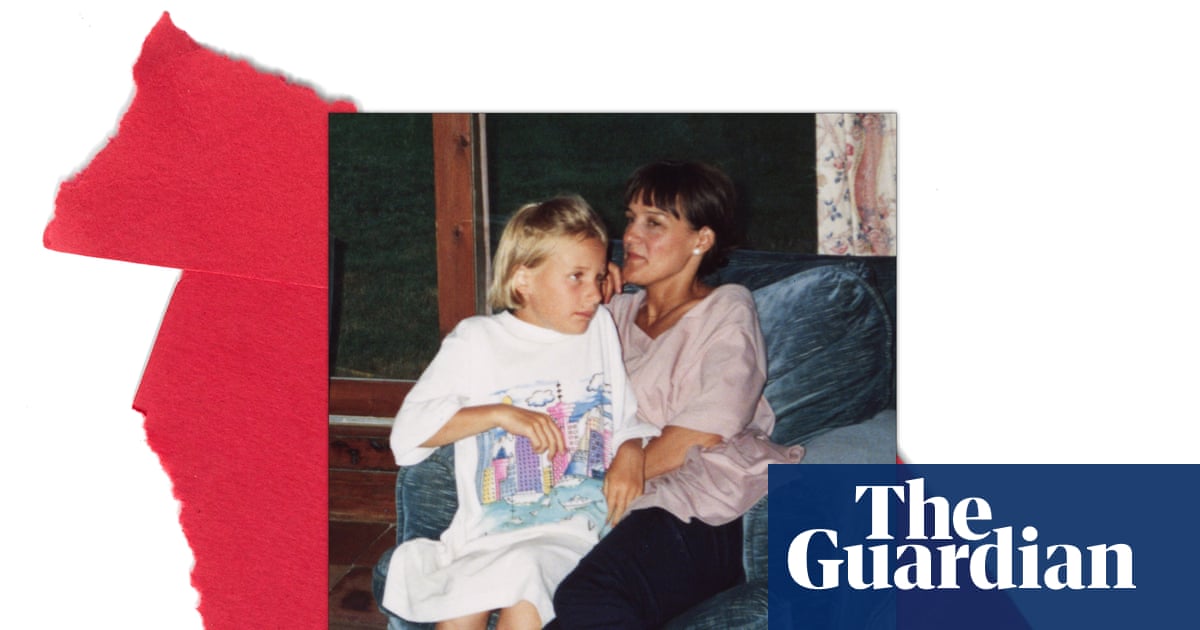
An image of his great-grandmother stayed with James Adams for years and strengthened his faith: she was withered, nearly blind, touching his cheeks when they sat together, as if the feel of his face gave her sight. A working woman whose husband, a police officer, killed himself, she raised four children; her faith was a rock against life’s travails. She died at 98, when Adams was 28, about to marry.
Many years later, in 2020, Adams, a New Orleans banker, was president of the Catholic Community Foundation, the archdiocese’s fundraising arm, when Archbishop Gregory Aymond ousted him – as he’s recounted from a witness stand in court and in multiple media interviews. Overnight, Adams became a church enemy because of what a priest did to him as a boy. His story mirrors the legal saga that has tarnished Aymond’s career.
Under Aymond and several predecessors, the New Orleans archdiocese concealed a criminal sexual underground that at one time or another saw a pedophile priest in every city parish and many outlying areas, according to voluminous legal documents and information from victims’ attorneys reviewed by the National Catholic Reporter.
Since 1 May 2020, when the New Orleans archdiocese claimed chapter 11 protection under federal bankruptcy law, the church has faced withering media coverage over lawsuits, many of which involve decades-old abuse by priests, brothers, lay workers and several nuns. The archdiocese lists 79 clerics who were accused of or admitted to sexual abuse of a minor; few were prosecuted. Ramon Antonio Vargas of the Guardian, who has broken major stories about this issue, calculates 310 clergy predators and an untold number of nuns and lay workers – a vast discrepancy with the archdiocese’s list.
In 1980, Adams was 10, an altar boy at St Ann church, a family-friendly parish in Metairie, a suburb of nice houses and well-tended lawns. Spiritan Fr James Collery, an Irishman, abused him for months. The purity he pictured of his soul tilted like a shaky skiff in the storm of that priest’s warnings and lust.
“No, Father, I will not tell.”
But one day in the car after school, he told his mom: “Father kissed me.”
She said, “That’s nice.”
He said, “Like this,” taking her hand, French-kissing a finger.
She pulled back. “That’s the way a man kisses a woman!”
At home, in his bedroom, he yanked the blanket over his head. His dad got home; his parents asked questions. “I didn’t give many details,” he says today. They told him to avoid the priest. He did. And his parents avoided a confrontation, lacking a vocabulary to grasp what it all meant.
Collery soon left, becoming a hospital chaplain in Pennsylvania. He died in 1987.
The road that led Adams, a loan officer at ease with spreadsheets, to study the transfers of his abuser winds back to a faith he carried into the Jesuit high school of New Orleans. The school had a rigorous blend of religion, academics and athletics. “I got through Jesuit by listening to people, not making much about myself – a coping mechanism. But I made lasting friendships,” he said.
Jesuit’s baseball coach, mindful that Adams’ older brother played for the school’s team, and that his grandfather and uncle had played in the pros, suggested he try out. He balked.
“I had this ever-present feeling. If anyone knew my secret, they’d have nothing to do with me. I carried my shame, good at masking – how to tell jokes and stories with clever delivery to deflect anyone asking about the real me,” he said.
After graduation in 1988, Adams went to the University of Alabama; he attended an Episcopal church for a while but, on return to New Orleans with a bachelor’s degree in political science, Adams drifted back to mass, navigating around black memories. He landed a job at a bank and married in 1998.
“The first person I told about the abuse, besides my parents, was my brother, the night of the rehearsal dinner,” he said. He avoided telling his wife. In time, the couple had three girls and a boy.
In 2011, his oldest daughter turned 10. He became so overprotective that friends joked he wanted to put her in bubble wrap. Adams turned inward; his wife told him: “You need help.” He found a therapist and confided about Collery, telling the therapist he wanted to go back in time and protect the child he had once been. Realizing how trauma had twisted him, Adams and his wife met with a therapist.
Manifesting the Jesuit high motto, “Men for others”, he volunteered with the Catholic Community Foundation. Helping parishes plan assets from estate inheritances, he found rapport with Aymond, a genial native of New Orleans’ Gentilly neighborhood, the only locally born archbishop in the city’s long history.

Trailed by depression, Adams moved up as secretary, vice-president, then president of the Catholic Community Foundation. In December 2012, after paying therapy bills out of pocket, he met with Aymond, revealing Collery’s abuse. Aymond apologized and offered to pay for therapy, Adams says, adding: “Every so often he’d call and ask how I was doing. He’s a micromanager but good at remembering people.”
In 2018, reacting to coverage of several clergy prosecutions, the church released a list of 57 “clergy (priests and deacons) who have been removed from ministry for an allegation of sexual abuse of a minor”. Adams recalled that in 2002, Archbishop Alfred Hughes had listed only 10 priests: a jump of 47 men in 16 years came after investigative reports by the Associated Press, the Guardian and WWL-TV. Adams wondered if they were hiding more.
By 2019, his greater concern was a crumbling marriage as his son, the youngest child, was turning 10. Dark memories drove Adams’ overprotectiveness. “Chill out, dad,” he recalls his son telling him.
The therapy reimbursement had him feeling subservient. He said he asked Aymond for a lump-sum settlement. Since Adams did not have lawyers, Aymond referred him to the victims assistance coordinator, Marist Br Stephen Synan. Wanting to shield his children from any publicity, Adams met with Synan, but they reached an impasse over a settlement amount.
A few days later, his bank’s human resources officer showed him a letter from Dwight C Paulsen III, an attorney for the archdiocese. The letter included the line “Please note that by open copy of this letter and its enclosures that Mr Adams’ counsel has been notified of this request.”
Adams had no lawyer.
The letter demanded “all records regarding Mr Adam’s employment, including confidential personnel files. This should include, but is not limited to, complete and legible copies of any and all applications he may have submitted for employment, any and all payroll or wage records including hours and days worked and rates of pay applicable to that work, copies of pay stubs, copies of W-2 forms, medical records and reports, doctors’ notes and correspondence, policies of any short or long term disability benefits, and a copy of his health insurance policy, if any.”
The bank refused the request; his therapist refused a similar letter, as did his grammar school, Jesuit high and the University of Alabama. Adams saw himself as a target.
The lawyer
On 23 December 2018, an attorney referred Adams to Richard Trahant, a lawyer for clergy abuse survivors. When Adams arrived, Trahant recognized him. Adams’ older brother had been in Trahant’s class at Jesuit high. Trahant remembered Adams from early years at St Ann – and Collery.
As Adams subsequently told his story, the two men began to cry, memories of early innocence crashing against the suffering caused by the priest and, for Trahant, the pathological depths of the cover-up.
Trahant had followed his father and a great-uncle as a Jesuit high graduate. Since taking the cases of three men alleging abuse as youths at Jesuit, one a neighborhood boy not enrolled there, he has become persona non grata at the school he had once supported financially.
Adams, going through a divorce, wanted no lawsuit. Trahant agreed to seek a private settlement but warned: “Greg Aymond is not who you think he is.”
Trahant had a growing number of clergy cases with counsel from other firms: lawyers Soren Gisleson (a Jesuit high grad like Trahant) and Johnny Denenea, a cradle Catholic. Trahant sought a private settlement for Adams with the archdiocese – to no avail.
On 7 April 2020, Trahant filed the claim as a John Doe to preserve Adams’ anonymity. The archdiocese told the foundation board, which forced him out; the media found out. Adams had to tell his kids. Three weeks later – with Trahant primed to take Aymond’s deposition on another case – the archdiocese filed for bankruptcy. Aymond told the archdiocesan newspaper that bankruptcy would allow for more funds for victims. “We will be paying the people that we owe money to 100% of what we owe, because we are not bankrupt financially.”
“Then why’d you file for chapter 11?” Adams wondered.
Adams became a survivor in media coverage, scorned by some Catholics as out to get the church.
By filing for bankruptcy, Aymond averted a deposition with Trahant, a lightning rod among victims’ lawyers. Judge Meredith Grabill halted discovery with a shield on church records. Bankruptcy judges favor forestalling litigation that would hurt the debtor – a company, individual or church – trying to reorganize assets, negotiate debt and get back in business.
Bankruptcy proceedings rely on the work of a joint committee of debtors, those owed funds and lawyers to manage negotiations. Trahant and his colleagues Gisleson and Denenea joined the committee on behalf of survivors. Adams also joined that committee, with three other clergy abuse victims.
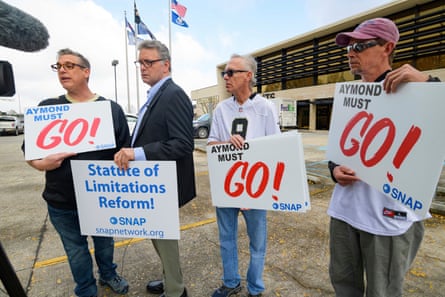
Parties accessing church files on pedophiles had to keep the secret documents confidential. The committee met biweekly in a slow-moving process that frustrated Adams. But on the court’s closed-service computer system, he peered into a past of hidden predators. The Collery file was “gut-wrenching”. Adams said the late archbishop Philip Hannan’s letter removing Collery after complaints against him from parents at St Ann’s had praised him as a good priest.
“I’d thought the world of Hannan, but in files I saw his encouragement, as if apologizing to these predators,” Adams said.
In late 2021, Trahant warned his cousin, the principal of Brother Martin high school, that the school chaplain, Fr Paul Hart, had a serious blot on his record. Trahant told Ramon Antonio Vargas, then with the Times-Picayune, to put Hart “on your radar”. On 18 January 2022, Vargas reported that Hart had admitted to a sexual act with a 17-year-old girl in the 1990s.
Vargas obtained records from a 2012 church review board that voted against reassigning Hart after finding out he abused the teenage girl. Aymond overruled his lay review board on a canon law technicality, regarding the age of consent at 17. He later sent Hart to Brother Martin high without telling the school about the board’s finding.
Years later, Brother Martin high school sent a letter to parents explaining that the school had asked Aymond to remove Hart over “distant past” allegations. Aymond removed him and apologized.
An angered Grabill saw a violation of the bankruptcy shield on internal documents. Church attorney Mark Mintz, who attended Tulane University Law School in overlapping years with Grabill, advocated punishing Trahant. Trahant argued that as an officer of the court, he was duty bound to report a child abuser – and that he did not disclose anything covered by the protective order.
Grabill ordered an investigation of Trahant by the US bankruptcy trustee, an official occupying a neutral role for the court. Vargas agreed to a brief interview with the trustee, stating he did not get the documents on Hart from Trahant and refusing to name his source – something the trustee could not force under constitutional freedom of the press protections. Vargas by then had gone on to became a New Orleans-based editor and reporter for the Guardian with deepening coverage of the bankruptcy.
Adams was thrilled that Trahant had gotten a predator removed.
The case dragged on. In an April 2022 conference with Grabill, Rick Kuebel, the attorney for the creditors’ committee, complained that the bankruptcy had lingered for two years “and I still haven’t seen a [church] reorganization plan”.
In June 2022, Grabill fined Trahant $400,000 for violating the secrecy order. The fine sent shock waves through the legal community. One seasoned bankruptcy specialist said, on background, that Grabill’s fine showed her “inexperience”.
Trahant appealed to the US court of appeals for the fifth circuit, which, after two and a half years, has yet to rule.
“Bankruptcy protective orders are an outrage that allow defense lawyers and the church to play the courts,” University of Pennsylvania professor Marci Hamilton, an attorney and the founder of the thinktank Child USA, told the National Catholic Reporter.
“Some judges have slowly learned through the media that survivors need a voice and have begun allowing victim impact statements into the record. Judge Grabill’s rulings make me concerned about undue deference to the church. This has been going on in US courts for decades, but most judges no longer automatically side with the church. The New Orleans bankruptcy has been riddled with unfair rulings against victims and untoward deference to the archbishop,” Hamilton added.
As Lindsey Simon writes in Bankruptcy Grifters, a Yale Law School Journal article, many church bankruptcies have “deprived victims of their day in court and forced them into the settlement process”.
“What sets the diocese cases apart … is the way they incorporate some of the most destructive practices that set up hurdles and deprive claimants of meaningful protections,” she writes.
Grabill banished Trahant, Gisleson and Denenea from the creditors’ committee, despite no evidence that the latter two had violated her secrecy order. Grabill purged Adams and three other survivors who had patiently attended two years of meetings, hours before they were to meet Aymond and read statements to him. That never happened.
The clergy files Adams read on the committee server disappeared from his desktop link to the court’s computer system. Under the bankruptcy shield, he knew that to go public with all that he knew courted Grabill’s wrath.
Kuebel defended the survivors, emphasizing they “have never had their abusers brought to any type of justice”, according to a publicly available transcript of the hearing. Rather, they served “for two years without compensation” in long conferences – and, without his saying so, they honored the bankruptcy shield on secret documents. “They are frustrated that, unlike other cases, this archdiocese has chosen to be opaque or not transparent with all these various documents. They’re very frustrated that this [leak] has become the focus of the case instead of trying to get [the church] reorganized and get through” to a resolution.
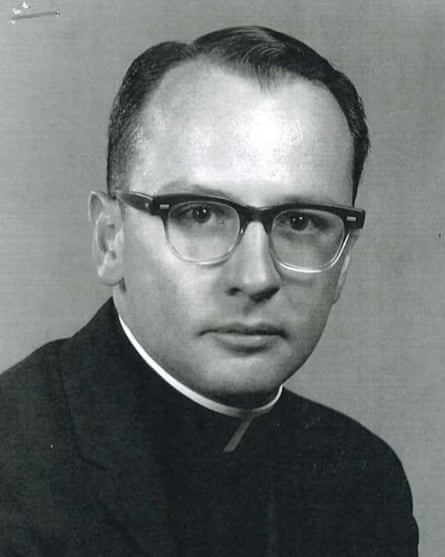
But in gutting the creditors’ committee, Grabill emboldened media scrutiny. Victims became more outspoken on several clerics whose prosecutions lay outside the bankruptcy. For instance, in the late 1990s, the church sent Lawrence Hecker to St John Vianney, a clergy hospital in Pennsylvania, as reported by the Guardian and WWL-TV. Hecker returned a diagnosed pedophile.
Nevertheless, Hecker became a monsignor before the archdiocese took him out of ministry into retirement. He was 92 last year when convicted by the Orleans parish district attorney. He died a few days into a life sentence.
The time it took to prosecute Hecker sent a powerful signal to law enforcement. In 2023, anonymous attorneys provided a 48-page document to the FBI and state police, detailing church cover-ups, citing victims’ statements in prosecutions and civil cases. One priest named in the memo, William O’Donnell, was not on the church’s list, yet as Vargas reported in the Guardian, “Aymond authorized separate financial settlements of $125,000 and $100,000 for out-of-court resolutions with two people” who accused O’Donnell of abuse.
Based on legal documents viewed by the National Catholic Reporter, the archdiocese paid an estimated $11.7m to victims over a roughly 10-year period in private settlements before bankruptcy. Several victims later stated they signed nondisclosure agreements, contravening the 2002 US bishops’ youth protection charter calling for transparency and “zero tolerance” of pedophiles.
Push for a resolution
Bankruptcy, like therapy, succeeds when it ends.
Attorneys specializing in bankruptcy, who function as a bridge between defense and plaintiff counsel, bill lucratively and are paid out of church coffers. In a 2023 report for New Orleans WWL-TV, investigative reporter David Hammer scrutinized how bankruptcy judges in Buffalo and Rockville Centre, New York, had questioned the dioceses’ attorneys on high billing and stall tactics. “Grabill, on the other hand, has repeatedly ruled in favor of the New Orleans Archdiocese in its disputes with creditors,” Hammer reported.
Unlike bankruptcy specialists, and the church defense, lawyers for survivors get paid at the end. According to Jeff Anderson, a major plaintiff attorney in these cases over many years, a key church strategy is to stretch out proceedings that force plaintiffs’ lawyers to swallow costs, often borrowing against credit lines at their banks.
By spring of 2025, with chapter 11 in year five, Grabill saw that to dismiss the bankruptcy would spring a tide of cases swamping state courts. She approved several high-dollar specialists in mediation to push for a resolution.
As the negotiations continued through summer, Grabill faced new issues. At a June bankruptcy hearing, attorneys for investors behind a $41m bond issue the archdiocese had taken out in 2017 accused the church of “securities fraud” for defaulting on a $930,206.25 interest payment, citing the bankruptcy as an issue.
But as negotiations continued among the survivors’ attorneys, the mediators and the church, a package emerged in September. The church pledged $230m, including $29m from smaller insurers.
The survivors in late October voted overwhelmingly to accept the financial terms the archdiocese proposed. Grabill later held a trial on the terms’ fairness and heard testimony from abuse survivors, including Adams. On 8 December, she approved the settlement.
Travelers, the archdiocese’s largest insurance company with relevant policies, soon agreed in principle to add another $75m to the settlement. Assuming Grabill approves that, it would bring the settlement total to $305m.
Adams, who voted for the package, was recently at dinner with some buddies from high school when someone asked his thoughts after enduring the church’s five-year bankruptcy.
He recalls saying: “Knowing what I know now, seeing what my family and I have gone through, I probably would have kept my mouth shut. Suffering in silence would have been more tolerable than the emotional and spiritual toll this has taken.”
Aymond, having submitted his resignation at age 75 to the Vatican, is now phasing out; Coadjutor Archbishop James Checchio will in due course become archbishop.
“The more you delve into the financial crimes, the sex crimes, priests breaking their vows,” Adams told the National Catholic Reporter, “it’s caused me to question if I’m in the right church. My son’s baptismal certificate was signed by two priests; both are now in prison for sex crimes.
“If I genuinely believe that the true presence of Christ is in the Eucharist and the sacraments given to us by Jesus, there’s no place else to go. That doesn’t make going into church any easier. My great-grandmother was a daily communicant. I think her words would be ‘Put your faith in Christ and in the Eucharist, and not church leaders who have normalized deception and abuse.’ I remain hopeful that my love for God and his church is greater than the pain and anger caused by his priests and bishops.”
Editor’s note: This is the first of a miniseries exploring the lives of some of the survivors of clergy sexual abuse in the New Orleans archdiocese’s bankruptcy saga spanning more than five years. The series was supported by the Fund for Investigative Journalism and was published by the Guardian in partnership with the National Catholic Reporter.