3 months ago
72
3 months ago
72
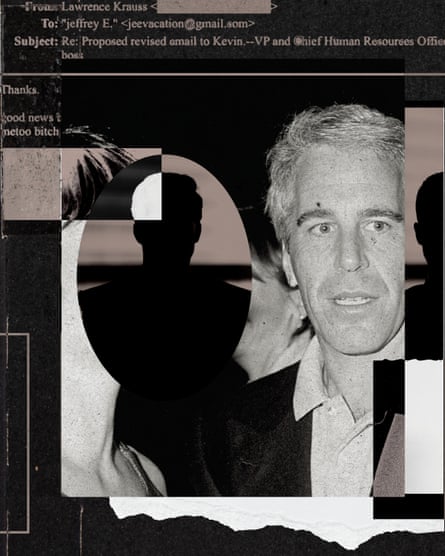
In August 2018, as the #MeToo movement spread across social media and women around the world demanded justice from sexual predators, Michael Wolff, a journalist, forwarded Jeffrey Epstein a plea for help. Wolff wanted Epstein to support Stephen Elliott, a writer looking to sue the creator of the Shitty Media Men List, a crowd-sourced Google Doc that detailed anonymous allegations of misconduct against dozens of men who worked in the media industry.
“I have always thought that the way back from this climate is through specific instances of individuals successfully challenging their persecution,” Wolff wrote to Epstein, according to emails released in a tranche from the so-called Epstein files. “If his story is solid he might be worth supporting.”
Initially, Epstein was unmoved. In a single-word, no-punctuation email, the convicted sexual offender replied: “tough.”
“Give it some further thought, if you would,” wrote Wolff, who had originally received Elliott’s pitch through Lorin Stein, the former editor of the prestigious Paris Review and another name on the Shitty Media Men List. “I think there is an opening here. What you need is an excuse – or opportunity – to make the public argument.”
Epstein relented: “ill help anyway i can. if you like.”
Weeks later, Elliott sued Moira Donegan, the Shitty Media Men List’s creator.
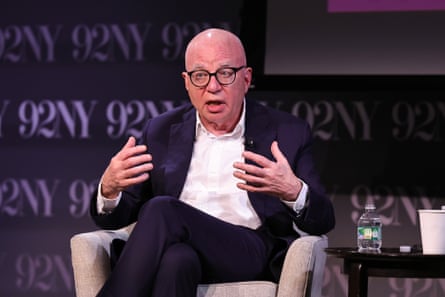
This chain of communications – from Elliott to Stein, from Stein to Wolff, from Wolff to Epstein – is just one of several exchanges, unearthed through the Trump administration’s staggered releases of the Epstein files, involving Epstein and men who’d been accused of sexual misconduct.
There is no evidence that Stein or Elliott knew that their communications had been forwarded to Epstein or that Wolff would attempt to enlist Epstein’s support, nor that the pair personally communicated with Epstein.
But when taken together, the emails, texts and other documents contained in the releases reveal Epstein’s engagement with the #MeToo movement and the men felled by it. In some cases, the convicted child sex offender and a coterie of elites strategized over how to blunt the power of the #MeToo movement and the women who fueled it.
“So many guys caught in the me too . reaching out to me. asking when does the madness stop,” Epstein wrote in December 2018 to a recipient whose identity is redacted. (The Guardian is quoting his emails and texts, and those of his contacts, largely as written, with adjustments only for clarity.)
Epstein added: “Funny.”
Elliott didn’t respond to requests for comment. In a September 2018 essay, Elliott said he was shocked to find himself accused of rape in the Shitty Media Men List, denied allegations of wrongdoing and denied having had sex with anyone who works in media. Elliott and Donegan, who now works as a columnist for the Guardian, reached a settlement in 2023.
“I had not known that Epstein had been aware of the case; I came to know of his exchange about it yesterday morning,” Donegan said in an email. “But having now read the exchange between Epstein, Wolff, Stein and Elliott, I can say that it is no mystery to me why someone like Mr Epstein would take an interest in the lawsuit against me, or why he would wish to help with it. I think the emails speak for themselves.”
Stein, who was not involved in Elliott’s lawsuit and declined to speak on the record, resigned from his job at Paris Review in 2017, after a workplace inquiry stemming from the Shitty Media Men List. At the time, Stein said his sexual activities were consensual, but his behavior was “an abuse of my position”.
Some of the exchanges between Epstein and his vast circle of wealthy, famous associates had previously been disclosed. However, the release last Friday of another 3m records related to the financier, who died in jail in 2019 while awaiting trial on sex trafficking charges, widens the window into Epstein’s efforts to track and respond to the #MeToo movement. It also offers a stunning glimpse into the many prominent people who wanted to complain to Epstein – who had pleaded guilty to soliciting prostitution from a minor in 2008 – that the movement had gone too far.
In a November 2017 series of emails, Epstein and famed publicist Peggy Siegal marveled over the speed at which #MeToo had destroyed the reputations of men like Charlie Rose, Harvey Weinstein, Brett Ratner and Louis CK.
“charlie, harvey , brett. louis. . jeffrey is looking better and better L:)” Epstein wrote to Siegal.
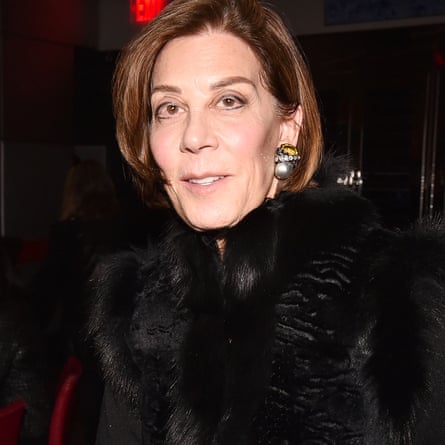
“I know!!!! The world is topsy turvey. That has been going on since the beginning of time (and that is not an excuse) has suddenly erupted in our day of massive global information as a new moral code of behavior,” Siegal replied. She added: “You suffered for a few years and now you are the least of this witch hunt.”
In another email exchange between the two, Epstein complained he didn’t understand why the reporter of a Page Six story – which called Epstein a “reviled billionaire pedophile” – was “so hostile”. Siegal advised Epstein to make donations to women’s causes.
“The Me Too crazies want blood and death. It is a barbaric over reaction to behavior that just ran its course,” she wrote. She continued: “I had conversations with you to give back. Did you ever set up scholarships? Help woman’s health? Care for single mothers? Anything? That would make you a hero.”
A request for comment sent to Siegal’s company email address bounced back, while the company’s phone number has been disconnected. In 2020, Siegal claimed in an interview with Vanity Fair that she didn’t know Epstein well.
“I was never privy to his private life,” she said. “I knew nothing about the girls. Nothing at all.”
Noam Chomsky, one of the foremost public intellectuals in the US, in 2019 advised Epstein to ignore “the horrible way you are being treated in the press and public”, according to a signed email that Epstein sent to a publicist. Epstein sent the email in February 2019, about three months after the Miami Herald published an investigation into Epstein’s 2008 conviction that thrust his name into the wider public consciousness.
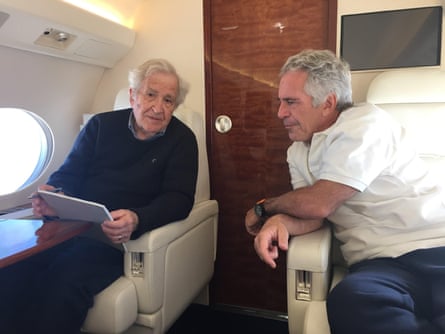
“What the vultures dearly want is a public response,” Chomsky wrote in the text attributed to him. “That’s particularly true now with the hysteria that has developed about abuse of women, which has reached the point that even questioning a charge is a crime worse than murder.”
Neither Chomsky, who is 97, nor his wife replied to requests for comment. When the Harvard Crimson asked Chomsky about his association with Epstein in 2023, Chomsky said, in part: “I’ve had no pause about close friends who spent many years in prison, and were released. That’s quite normal in free societies.”
Wolff and Epstein also seemed to correspond about the #MeToo movement in December 2017, as Wolff worried that “this new Woody round” – ostensibly in reference to resurfaced allegations against Woody Allen – would “pull him into the general Harvey pool of the despised and shunned”.
“Strange time,” Epstein replied. “I have two more friends up to bat.”
Wolff did not immediately respond to a request for comment.
Wolff’s apparent suggestion, that accused individuals file lawsuit proved prescient, since defamation lawsuits have become a major feature of the backlash to #MeToo. As of last year, nearly a fifth of the 400-plus cases supported by the Time’s Up Legal Defense Fund, a post-#MeToo organization that helps people who survived sexual harassment at work, were in defense of someone sued for defamation.
Epstein also emailed with Joi Ito, a famed technologist, about #MeToo. “with all these guys getting busted for harassment , i have moved slightly up on the repuation ladder and have been asked everday for advice etc,” Epstein bragged in a November 2017 email.
Ito, who didn’t immediately respond to a request for comment, lost his job leading the Massachusetts Institute of Technology Media Lab in September 2019 after admitting that he had accepted more than $1m from Epstein.
“In all of my interactions with Epstein, I was never involved in, never heard him talk about, and never saw any evidence of the horrific acts that he was accused of,” Ito said in an August 2019 statement. “That said, I take full responsibility for my error in judgment.”
Epstein was perhaps most involved in celebrated scientist Lawrence Krauss’ efforts to defend himself after a Buzzfeed News investigation reported that Krauss – who was a star within atheist circles and working as a professor at Arizona State University – had forcibly kissed a woman, groped a woman and made sexist jokes. Krauss denied all of the accusations against him, telling the outlet that they were “false and misleading defamatory allegations”. People’s obsession with celebrity, he suggested, was to blame for the accusations.
Krauss forwarded Epstein emails from Buzzfeed News reporters and Arizona State University professors, discussed his conversations with university officials and even wanted Epstein to effectively vet a lawyer Krauss was planning to hire.
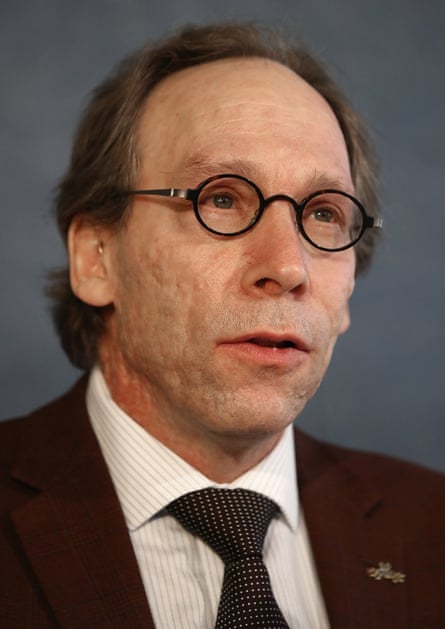
“I have been advised through much of the BuzzFeed experience, both before and after, by a friend, who is also somewhat infamous. His name is Jeffrey Epstein, and you may know who he is already,” Krauss wrote the lawyer, Justin Dillon, in March 2018. “Bottom line is that Jeffrey is not only friends with most of the famous people from finance, to business, to Hollywood, who have either been brought down during #metoo and he also speaks regularly with people ranging from the awful white house people, who he is friends with, to ken starr etc.” (Starr, who spearheaded efforts to investigate Bill Clinton over his affair with Monica Lewinsky, later served as president of Baylor University. He left the Texas school following accusations that he had mishandled several sexual assault allegations at the university, and died in 2022. He and Epstein did, in fact, email.)
“I know who he is, and I am willing to have a short conversation with him,” Dillon replied. It’s unclear if they ever spoke. Citing ethical obligations, Dillon declined to say.
After Epstein suggested to Krauss that Krauss avoid hiring a lawyer to directly represent him, Dillon pushed back – hard. “You are getting terrible advice from smart people who have never done this work and have no idea what they’re talking about,” Dillon wrote.
Dillon declined to comment further on the emails. “I just hope you will quote the part where I told Dr Krauss that Jeffrey Epstein has no idea what he was talking about!” he said in a text. “I, ah, stand by that opinion … ”
Krauss did not reply to requests for comment. When some of his communications with Epstein surfaced last year, he told the New York Times that he had never hidden his ties to Epstein. When he was accused of sexual misconduct, Krauss said he “sought out advice from essentially everyone I knew”.
“As should be noted, none of the communications with Epstein relate in any way to the horrendous crimes he was accused of in 2019,” Krauss said. “I was as shocked as the rest of the world when he was arrested.”
In September 2018, Krauss wrote Epstein with some good news: A woman on a university committee, he said, “seems like a sweetie.. she is old.. not some young metoo bitch.”
Weeks later, Krauss announced his retirement from Arizona State University. The university had concluded that he had grabbed a woman’s chest. In a statement posted to the platform now known as X, Krauss said: “To be clear, I have never harassed or assaulted anyone and have most certainly not exhibited gender discrimination in my professional dealings at the university or elsewhere.”
Krauss had workshopped the statement with Epstein.