3 months ago
66
3 months ago
66
European governments have been accused of fuelling Vladimir Putin’s war in Ukraine as new data shows the Kremlin earned an estimated €7.2bn (£6.2bn) last year from exporting its liquefied natural gas (LNG) to the EU.
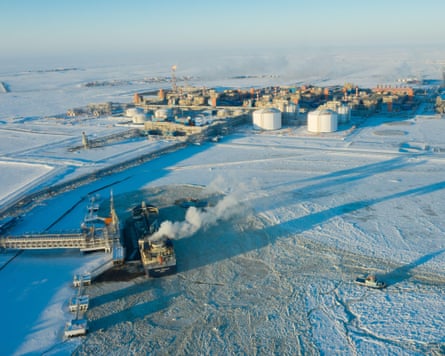
Brussels has pledged to ban imports of Russian LNG – natural gas that is supercooled to make it easier to transport – by 2027 but an analysis suggests there is yet to be any letup in the vast quantities being received at European ports from Russia’s LNG complex on the Yamal peninsula in Siberia.
More than 15m tonnes of Yamal LNG was transported through the Arctic ice to reach EU terminals in 2025, according to the human rights NGO Urgewald, earning the Kremlin an estimated €7.2bn.
While Europe has cut supplies of pipeline gas from Russia since the full-scale invasion of Ukraine, the EU’s share of global shipments from Yamal increased in the last year, the fourth of the war in Ukraine, rising to 76.1%, up from 75.4% in 2024, the report said.
The imports remain legal and the EU has been reluctant to ban Russian shipments of LNG, particularly due to the dependency of central and eastern Europe on the energy source.
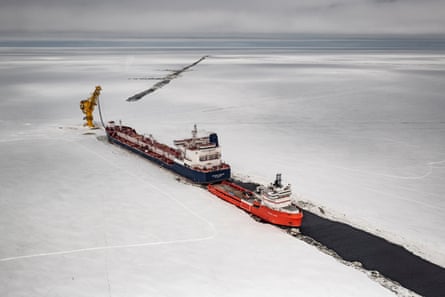
One of the two European shipping companies who are said to form the logistical backbone for Yamal LNG is Seapeak, which is based in the UK.
The latest analysis suggests Seapeak transported 37.3% of Yamal LNG on its ships, while Greece’s Dynagas transported 34.3%. The two companies have been contacted for comment.
Eleven of the 14 specialist ice-breaking Arc7 tankers that transport LNG from Yamal are owned by Seapeak, which is owned by the American investment firm Stonepeak, and Dynagas.
The UK has said it will transition towards a ban this year on the provision of maritime services for vessels carrying Russian LNG.
Sebastian Rötters, an energy and sanctions campaigner at Urgewald, said: “While Brussels celebrates the latest agreement to phase out Russian gas, our ports continue serving as the logistics lung for Russia’s largest LNG terminal, Yamal.
“In the current geopolitical situation, we cannot afford another year of complicity. We are not just customers, we are the essential infrastructure keeping this flagship project alive. Every cargo that offloads at an EU terminal is a direct deposit into a war chest that fuels the slaughter in Ukraine. We must stop providing the oxygen for Russia’s energy profits and shut the Yamal loophole now.”
Russia’s Yamal plant is dependent on access to EU ports and the use of ice-breaking LNG tankers of the Arc7 class, which were built specifically for the project.
The ships would have to accept significantly longer transport routes if they did not have the unloading or reloading opportunities in EU ports including Zeebrugge in Belgium.
According to Urgewald, 58 ships reached the Belgian terminal in 2025, delivering 4.2m tonnes of LNG. During the same period, only 51 ships reached Chinese ports, delivering 3.6m tonnes.
A total of 87 ships delivered 6.3m tonnes of LNG to the French ports of Dunkirk and Montoir in 2025, making France the largest importer. France’s energy major TotalEnergies remains a key investor in Russia’s Yamal project.
Access to the European ports enables the ice-class tankers to quickly return to the Arctic to pick up more gas, rather than being tied up on weeks-long voyages to Asia.