3 months ago
68
3 months ago
68
Though it aired almost two months ago, fans are still angry about the Stranger Things finale.
So disappointing was the wrap to the five-season sci-fi that its cast are still having to deny that there is an upcoming secret final episode. I was not remotely disappointed, however. I thought the show ended perfectly: when I stopped watching it after season one, episode eight.
I’m going to come out and say it, so that we can start fighting straight away. I believe that almost all recent TV shows should have been one season long.
Stranger Things had a perfect eight-episode arc: a little boy disappeared into a hellish parallel dimension and his mum (who was Winona Ryder!) fought tooth and nail to bring him back. The show’s creators, the Duffer Brothers, seemingly knew this, as they originally pitched the series as an anthology featuring a different cast of characters each season. Netflix, naturally, said no – after all, you need a franchise with familiar faces if you want to sell customisable Stranger Things terrariums at two for £30. And so by the end, the show was stretched out beyond recognition and stripped of everything that made it groundbreaking and original. By all accounts, Ryder was left with nothing to do.
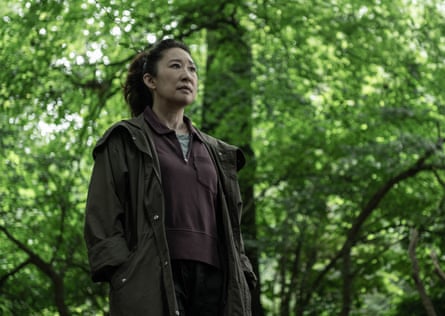
But didn’t I say almost all recent shows? I did, thanks. Let me list them for you quickly, so the red mist can descend upon you and distract from everything that’s important in the world. TV shows that I believe should’ve been a one-and-done include: Industry, Killing Eve, Bad Sisters, Am I Being Unreasonable?, Your Friends and Neighbors and Nobody Wants This. But let me ruin my own credentials upfront: I am so committed to my stance that I haven’t even watched the second season of Fleabag.
First, you must understand that I am not claiming that every show ever made should only have one season: The Simpsons should have 12; Mad Men, seven; Buffy, five. Largely, it’s only shows made in the last decade. The problem has arisen due to our unreliable and unpredictable media ecosystem. Commissions are being cut, budgets are being slashed, risks are being aversed. There’s more competition than ever before, and showrunners simply have no idea if their shows will be renewed.
This environment encourages some creatives to bring everything to the table with the first season of their show, creating something original, tight and self-contained. Christopher C Rogers, co-creator of the tech drama Halt and Catch Fire, has almost admitted as much: “I think uncertainty reinforced a hold-nothing-back mindset in the storytelling that got us to our best work quickly,” he said in 2017. Conversely, “When you hold story back or try to draw it out, the audience can tell. Not knowing if there would be a metaphorical ‘tomorrow’ really saved us from that mistake.”
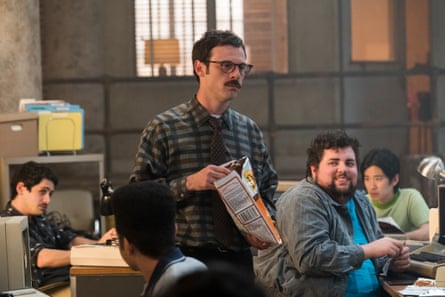
In the case of Halt and Catch Fire, this all worked out in the end: the show’s fourth and final season is considered its best, with a 100% approval rating on Rotten Tomatoes. But this can’t always be the case. Because while budgets continue to buffer, something else is happening that results in diminishing returns.
“We live in a world of IP [intellectual property], where the safest thing to do is reboot something that has an audience,” Breaking Bad creator Vince Gilligan said last year. Meanwhile, fellow critically acclaimed writer David Simon (The Wire) has complained he “can’t get anything made now” because “I’ll never write anything that’s going to be a franchise”. The media’s obsession with IP means that once something is successful, it’s not allowed to die. Shows must be stretched out for maximum profits, regardless of what’s best for storytelling. Stranger Things is not just a terrarium: it has also been turned into a Broadway play and series of novels, and will soon have an animated spinoff.
In this environment, is it any wonder that one-off shows that prove successful are renewed for season two? It doesn’t matter that the central mystery of your murder mystery was solved – there’s money to be made! “It was set out as a limited series and, you know, it has an end,” Bad Sisters creator Sharon Horgan once said of the first season show – she even called its finale a “lovely, satisfying end”. I couldn’t agree more, which is why I didn’t bother pressing play when the show somehow suddenly returned for season two.
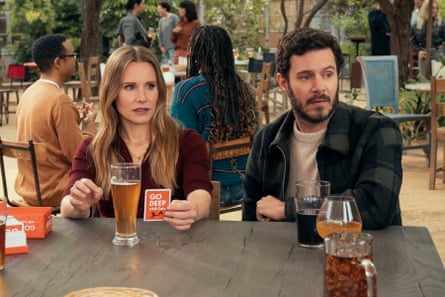
I’m not alone in thinking less can often be more. Killing Eve’s first series ended with an episode IMDb users rated 8.3 out of 10, but its finale – three seasons later – scored just 3.4. Meanwhile, a headline on Cracked reads: ‘‘‘Nobody Wants This’ Didn’t Need a Second Season”. I’m probably alone in not wanting more Industry – but again, I felt I watched a satisfying and complete arc in season one. A graduate wanted a job and then she got it; I was invited to ponder at what cost. I personally don’t need three more seasons of cost-pondering, even if it’s fun to watch beautiful people be bad.
Listen, I don’t want you to have a heart attack, so it’s probably time to admit: I haven’t seen Succession. From what I can tell, its four seasons were all equally successful at storytelling – so maybe it’s the exception I can use to prove my rule (don’t ask me how. I told you I haven’t seen it). But because life is nothing without strong opinions you can spout across the dinner table, let me reiterate: almost all recent TV shows should have been one season long. And if you think my opinions are stupid, you’re in luck: I’m only giving you one of them. You won’t have to suffer through two.