3 months ago
73
3 months ago
73
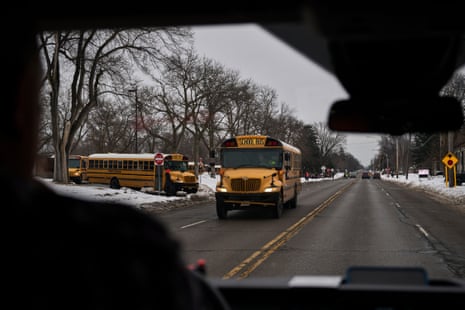
In St Paul, Minnesota, Brittany Kubricky pulled into a school parking lot. Normally, she was there just to pick up her daughter. But today, two of her daughter’s schoolmates also climbed into the backseat. Their mother had been sheltering at home for weeks, afraid of a run-in with federal immigration agents. So friends coordinated school pickup for her.
In December, the Trump administration launched Operation Metro Surge, deploying a reported 3,000 agents to Minnesota to target undocumented immigrants with criminal records, officials said. But in two months, agents have instead detained thousands of people, regardless of legal status, including US citizens pulled out of their cars, taken from their homes and picked up while working. Agents have also killed two Minneapolis residents – and US citizens – Renee Good and Alex Pretti, while they were monitoring Immigration and Customs Enforcement (ICE) activities.
Federal agents’ presence, and their often abrupt and aggressive handling of residents, has left the Twin Cities on edge. Protests have become part of the metro area’s daily rhythm. So have community networks patrolling and documenting agents’ interactions with neighbors. Many people have been sheltering at home, fearful of being detained over the color of their skin. Daily lives have been interrupted: fewer errands, fewer social visits, fewer routines that once felt ordinary and a greater dependence on their neighbors.


“People are scared to work,” Kubricky said, “or even if they are going to work, people are missing from the household that were contributing to the household income.”
Community networks, created in response, have become a lifeline. On Kubricky’s dining room table lay a college-ruled notebook with pages of dollar amounts, phone numbers and notes about families and what they need. Beneath the television, boxes of canned food and household supplies waited to be delivered through a network largely made up of strangers and social media connections.
Kubricky has also raised more than $40,000 over the past several months, distributing the money to families in her community, largely for rental assistance and basic needs.
“I haven’t really ever done something like this before,” Kubricky said. “This is just something I tried, and it happens to be working.”
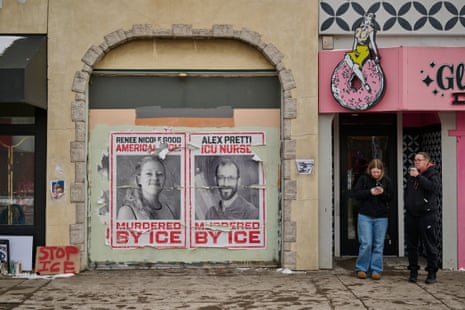
In the Twin Cities, businesses have struggled or closed. Many that remain open, like Mexican restaurant Oro by Nixta in Minneapolis, leave their front doors locked, letting in customers one by one by an employee.
On Lake Street in south Minneapolis, a five-mile stretch that hosts many immigrant-owned businesses, the effects are visible in storefront windows. Taqueria Los Ocampo has a note on the door that reads: “Due to current conditions in the Twin Cities, we will be temporarily closed until further notice. This decision was made with safety in mind.”
The Lake Street Council estimates a $46m loss for December and January for the corridor’s 1,000 immigrant-owned businesses. This number reflects not just missed sales and altered routines for families avoiding shopping trips, but also lost wages for workers.
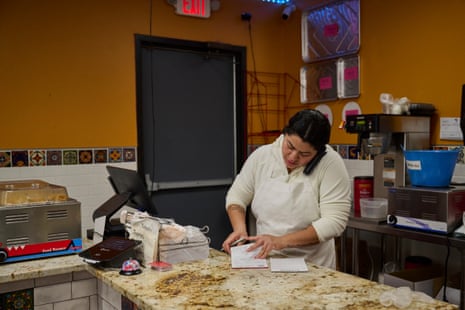


Panaderia San Miguel, a bakery known for its sweet breads that’s been in the neighborhood for more than 15 years, closed for three weeks in January out of concern for its employees’ safety. When the bakery reopened, daily operations looked different. They now do deliveries and arrange rides for their employees. One of the owners is always there, said Vanessa Rubio, whose family owns the bakery.
The presence of community watch groups, paired with customers’ requests, played a major role in the bakery’s decision to reopen. “There was a need for our bread,” Rubio said.
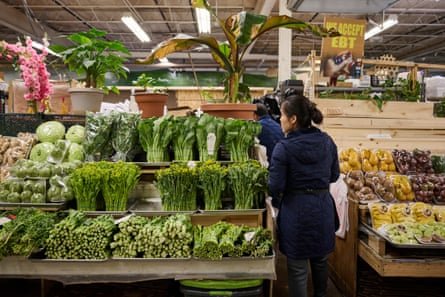
The changes are visible in quieter ways at Hmong Village, a large indoor market serving south-east Asian communities from across Minnesota and neighboring states. Lee Vang, a produce vendor who rents multiple stalls, said sales have dropped sharply. Vendors still arrive, arranging their stalls, but customers are fewer. Joe Chanthhee, a customer who stopped for lunch, said his relatives in southe-astern Minnesota have stopped making their regular weekend trips to the market altogether.

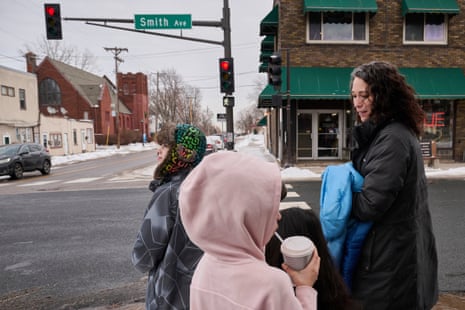
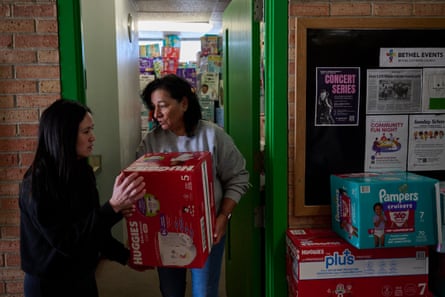
On a cold January morning at Bethel church in south Minneapolis, volunteers with Community Aid Network MN unloaded vehicles packed with supplies. A U-Haul, a box truck, hatchbacks and sedans lined the curb, overflowing with donations. Volunteers with whistles dangling from their necks, ready to alert neighbors if they saw immigration agents nearby, lifted boxes. They pushed carts through the parking lot, where snow and ice were compacted by shoes and tires, onto a shoveled sidewalk edged with slight banks of snow, to get donations indoors to sort. Inside, boxes of diapers were stacked to the ceiling.
In the last week of January, Community Aid Network MN served an estimated 575 families with food and household goods, nearly double its November numbers. Tom Kachelmacher, a co-founder who works full-time as an event planner, has taken paid time off to keep up. His weekly volunteer hours jumped from about 10 in November to more than 30.
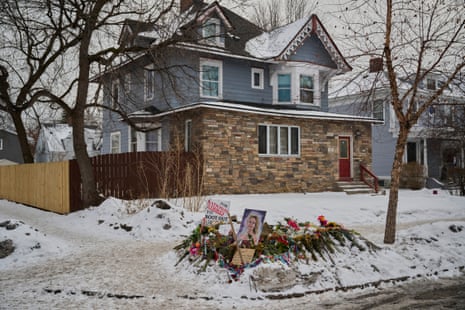
Meanwhile, community members have jumped in to help. By early February, the organization announced a two-week pause on donations after reaching capacity. Volunteer slots are filled through April.
For many families, mutual aid has become part of their weekly routine.
Z, who asked to be identified only by her first initial for her safety, has been sheltering at home for about a month. Friends drop off groceries and, occasionally, art supplies, and days are spent indoors. She finds herself scrolling on social media. “All you see online are protests,” she said. “I can’t go out and protest, but I feel the anger. I’m like, what can I do?”

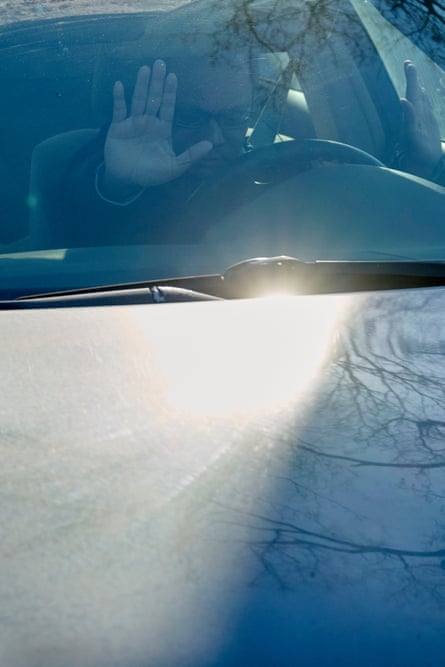
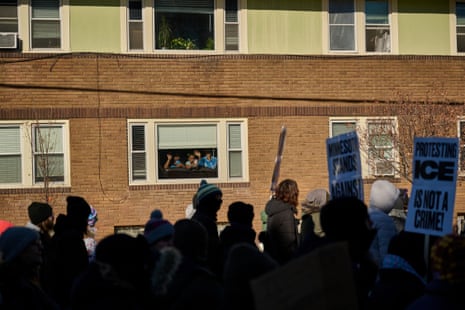
She’s been able to keep her job, which has been vital in financially supporting her family and connecting them with resources. Some family members have lost jobs, one was deported, and many continue to shelter in place.
Respite comes in small doses. “I love watching YouTube videos to decompress,” Z said. “Just watching somebody else have a normal day.”
This story and photo series was supported by the journalism non-profit the Economic Hardship Reporting Project.