3 months ago
69
3 months ago
69

-
Location Manesar, India
-
Disaster Indian heatwave, 2024
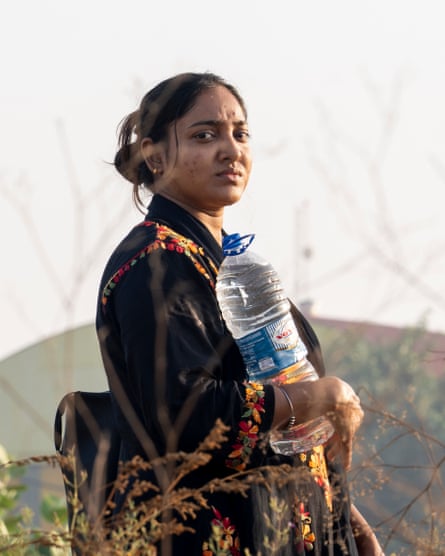
Neha is 25 years old and works for a large multinational company at a warehouse in Manesar, Haryana state, so she can send money back home to her family. In 2024, her working conditions worsened after a deadly heatwave spread across northern India. Climate breakdown is increasing the frequency and intensity of heatwaves in India by warming the Atlantic and Indian Oceans.
Every morning, I am up by 5.30am-6am because I have to cook, get ready, and leave on time for our shift, which begins at 8.30am. But this summer – May, June, July and August – the temperature always stayed around 46C, sometimes even hitting 50C (122F). My routine changed.
I live in a rented room with a friend on the top floor of a two-storey building. We had frequent power cuts in our rural neighbourhood those days, with lights often going off at 3am.
We would not get a good night’s sleep but would still get up by 6am to try to have a bath early before the water in our tank on the roof would become very hot. We would not feel like cooking because our top-floor room was so hot. I would have a cold drink instead of a cup of tea.
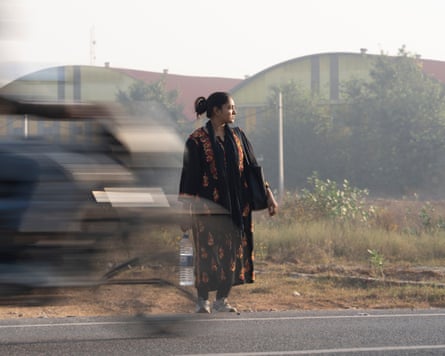
The company is around 3km from where I stay and getting an auto [autorickshaw] is difficult. So, I walk to work. The streets would be deserted, with shops closed and everyone inside their homes. Our 30-minute walk has no shaded area, no place to sit and rest. We just walk and walk, the sun directly on us, till we reach the company drenched in sweat.
Inside, there is some cooling. There was a difference of almost 10C. And I would drink the cold water available here since at home we did not have a filter and drank the tank water, which was very hot. Then I did my shift.
At the “inbound” department at the warehouse, my job is to store items according to a list given to me. My target is to store 150 items in an hour in 600 small cabins lining 400 narrow corridors across four floors. I walk up and down the stairs, carrying damaged goods to the fourth floor, small items to cabins one to 100 [and] small groceries to 100 to 120.
The storage area does not have fans and, beyond a point, the air conditioning does not help. In the entire day, the 10 hours that I work, I walk a minimum of 25km (16 miles). I always maintain a fast pace to be able to finish my assigned target and am drenched in sweat by the end of it.
After my shift, I would fill a two-litre bottle with cold water from the company before walking back home. Opening the door and entering the room felt like I had jumped into a fire. The floor would be burning. There is no fridge in our room. We would pour water from the tank, which was also hot, to try to cool the floor since we don’t have a bed and sleep on the ground. This lasted for months.
Moving in and out between hot and cold environments in my company affected my health. I first lost my voice, then caught a bad cold. I was not able to meet my work targets and would get pulled up by the manager. One day, I was feverish and told him I was not keeping well but he spoke rudely and yelled at me in front of other workers for not working properly.
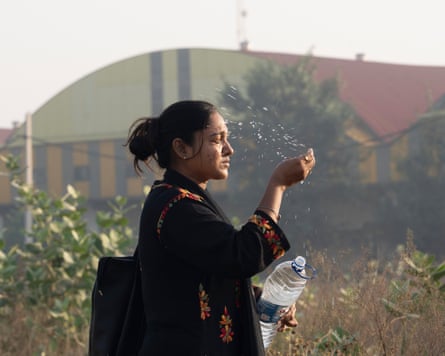
When I finished my shift and walked home that evening, my feet were hurting badly. I had a fever; I couldn’t speak, couldn’t breathe, and was in tears. My roommate took care of me because I did not want to call my family. They would have worried and asked me to come back home, but I needed to keep the job.
Even if we fainted at the company, we couldn’t take a day off and go home. If we took that day off, our pay would be cut, and if we took three days off, the company would fire us.
The relentless heat resulted in so many people I know falling ill, just like I did. So many workers fainted. Some workers left their jobs and went back to their villages out of compulsion. They thought they could do some farming at home. They were worried that if anything happened to them, who would come to see them?
About the series
This is climate breakdown was put together in collaboration with the Climate Disaster Project at University of Victoria, Canada. Read more.
Production team
Health issues became a big concern. We were not eating on time, only drinking aerated drinks, and it affected our wellbeing. We felt so weak we could not work efficiently at the company. My roommate also fell ill, and her weight dropped from 45kg (7st 1lb) to 38kg.
Because of the intense heat, we had to buy a cooler, which had financial implications for us. We work hard to save some money to send home but had to buy a cooler instead, which resulted in our electricity bill shooting up. These additional expenses and wage cuts for taking too many days off impacted our earnings throughout the summer.
I think such summers will repeat. Something should be done to help workers, particularly migrants. The rooms we rent don’t have too many facilities because our incomes are low. Our workplaces need to be more flexible, have better ventilation in many spaces, and take into account such weather conditions.
We should be provided with conditions that keep us fit enough to work. Workers who stay fit can work better, right? The work we do should be proportional to what we can handle. No extra pressure should be placed on us.
I want something to be done for workers, especially migrant labourers. We had to take care of each other since no one in the neighbourhood would help us. So, we looked after each other.
This testimonial was produced with the help of the Climate Disaster Project; thanks to Sean Holman, Aldyn Chwelos and Morgan Krakow.
-
Design and development by Harry Fischer and Pip Lev.