3 months ago
69
3 months ago
69
With well over 5 million listeners a week tuning in to hear whether another tongue-tied minister will fall foul of its legendary 8.10am interview slot, Radio 4’s Today programme continues to be one of the BBC’s flagship news shows.
It has also traditionally been the pinnacle for broadcasters, producers and editors alike, keen to be associated with a show that has strived to set the daily news agenda since the 1950s.
Yet, as the programme searches for a new editor and presenter, BBC insiders say an “existential moment” has emerged over its direction and status, as Today grapples with the podcast age. Some are also asking whether it continues to have the allure that once made it the ultimate prize for top talent.
“There’s one feeling that the Today programme is too staid and too structured,” said a BBC insider. “The counter-argument is that’s exactly what people expect and that’s why 5-6 million people are listening to it.”
The soul-searching began in earnest in January, when Amol Rajan announced he was leaving the show to head into online content creation, keeping his treasured podcast, Radical.
It highlighted a growing issue for the show – in a media landscape now filled with opportunities, a presenter felt able to move on after five years, in the process finding more time for family and retaining a BBC platform.
“Amol is a really good case in point of somebody who’s smart and good and has got this enormous audience on Radio 4, but is actually just more interested in his podcast and doing [other things],” said another BBC source.
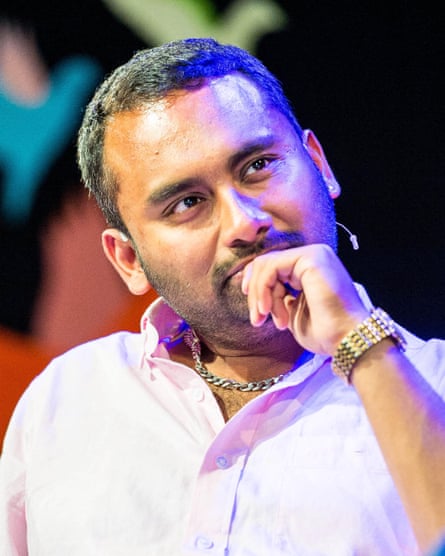
“Of course interviewing celebrities on a podcast is more interesting than getting up at 3am and interviewing a junior minister.”
Some also point to a generational shift in attitudes towards the status of the show among presenters and staff. “For John Humphrys, the Today programme was probably everything,” said one BBC figure. “He had Mastermind of course, but it was all about Today.
“That isn’t necessarily true now. They all have their own projects that they get a lot from and also balance parenting.”
While moving to Today would once have been an easy decision for presenters, that is no longer the case for everyone. It is understood executives were keen to bring in Matt Chorley, whose 5 Live show has revitalised afternoons on the station. However, it is understood Chorley has chosen to stay at 5 Live.
Other presenters have said the hours and abuse that come with the Today presenter’s chair make it a tougher sell in a media world full of rival opportunities.
“If you’re a broadcast journalist, the opportunities have massively widened,” said Matt Deegan, a radio industry commentator and host of the Media Club podcast. “Historically there has been nowhere else to go, but suddenly there is. That can be doing a podcast, a Substack.”
On top of that, there is a tension over whether the show should stick to its news-agenda formula or become more conversational and personality-led.
Some insiders believe Emma Barnett, who joined the presenting team in 2024, has been the victim of that tension. She was lured to Today having excelled at 5 Live, where she presented her own show driven by her personal style.
She was seen as someone bringing personality to the Today programme, but has since faced criticism. “Today is the biggest gig in speech radio, but she was at her best on 5 Live, gently skewering people and going viral,” a BBC source said.
Deegan said: “Emma is not going to be short of an offer or two if she wanted to do something else. You can be at the top of the game now doing other things.”
The appointment of Anna Foster, a former Middle East correspondent steeped in radio news programming, has been seen as a successful replacement for Mishal Husain, who left to head a newly created show at Bloomberg.
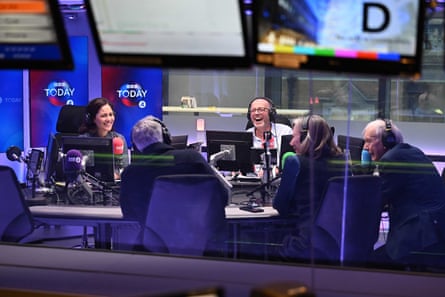
Foster’s success has led some to conclude that the show’s longevity lies in its tried and tested status as the vehicle for set-piece interviews and a rundown of the day’s news agenda.
To add to the churn, Today’s highly regarded editor, Owenna Griffiths, is leaving this month. Sources close to the process of replacing her say there has been significant interest, though it is seen as an increasingly tough job.
Griffiths did make changes, but they were small; such as binning the racing tips and reducing the paper reviews. Her departure, however, is not being seen as a moment to reinvent the show.
“That’s the problem with the editor’s job,” said a BBC source. “It is a massive show, but there’s not much you can do with it.”
Nick Sutton, who had a long career at the BBC before moving to Sky, is seen as the frontrunner to be the next editor.
In searching for Rajan’s replacement, another consideration is finding someone with experience covering politics. When the former BBC political editor Nick Robinson is not presenting, there is said to be angst over big political interviews.
Katya Adler, the Europe editor who has previously been pipped to the job, is seen as being in the running again to replace Rajan. Dharshini David, the BBC’s deputy economics editor, is a name being mentioned, as is Faisal Islam, the economics editor. Katie Razzall, the BBC’s culture editor, is also seen as a contender.
Adam Fleming is being talked up internally as someone who can bring news knowledge and a personal touch. “If they’re not talking to him, I don’t know why they wouldn’t be,” said an internal admirer.
Ultimately, even in a time of such media transformation, the show still has a commanding audience, with the figure falling only slowly.
“Today was just the de facto news programme, whereas people are now exposed to lots of different types of current affairs broadcasting, from LBC and Times Radio to the rise of The News Agents and The Rest is Politics,” said Deegan.
“It’s fine to carry on as it is. But you need to have a recognition that it’s probably past that high-water mark to deliver on the original concept.”