3 months ago
68
3 months ago
68
Jake Harvey remembers vividly the moment he was told in a Balinese hospital that he had just two hours to remove his father’s dead body from the intensive care ward.
He had just watched his father, Wayne, die, but within minutes he was told he had to “unplug” him – leaving him to work out how to remove a catheter and a tube that was still down his father’s throat.
“Straight away, they said you have got two hours to get him out of here,” he says. “I still had my hand on him.
“I unplugged him all. Pulled the hose out of his throat, I had to remove his catheter out of him too. We wrapped him up in the sheets and then sat there for a while, and then they organised [someone] to come and pick him up.”
“It was horrible. Fucking horrible.”
Wayne had quickly deteriorated at the Puri Raharja hospital in Denpasar in the days before his death on 7 January 2023.
The hospital was shockingly unhygienic; Jake had watched stray cats defecating in a ward and a surgeon with bloodied sleeves moving between patients. After arriving from Australia, Jake slept for two nights under a thatched roof in the hospital’s courtyard.
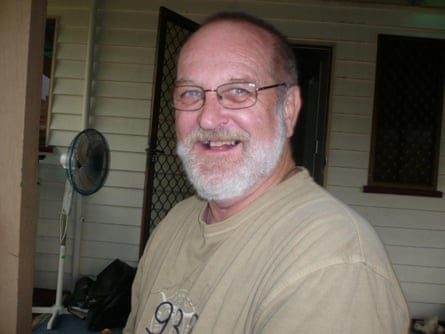
Wayne’s death certificate lists his cause of death as “non-contagious illness”. But Jake believes his father, who was just 69, died with septicaemia after his bowel was ruptured during a botched appendix removal.
The infection was so bad that when Jake removed the tubes from his father’s body, they were dark green.
“His throat was green. When I looked down the back of his throat, it was green, his skin was grey. He was on hardcore antibiotics,” Jake says.
“It was obvious he was septic.”
He and a friend of his father then had to carry the body into a waiting ambulance.
Most galling for Jake is that the traumatic experience – and perhaps his father’s death entirely – could have been avoided.
Six days earlier he had contacted the Department of Foreign Affairs’s 24-hour consular emergency centre for foreigners abroad, pleading with them to help facilitate Wayne’s transfer to a nearby hospital that was recognised as being up to Australian standard.
Doctors at the hospital where Wayne had been operated on had recommended that he should be transferred to the Prof Ngoerah public hospital as a result of surgery complications. But in order for this to happen, they needed his Australian passport – which nobody could locate.
With his father unconscious, Jake had believed that the consulate would be able to assist.
He says on 1 January 2023, once he realised how serious his father’s condition was, he immediately called the consulate for help.
“That was the first thing I did after I worked out what was going on,” he says.
“Who do you call? One of the only people I could. I got on to the consulate straight away saying, ‘Hey, what’s the process with this? This is what’s happening’,” Jake says.
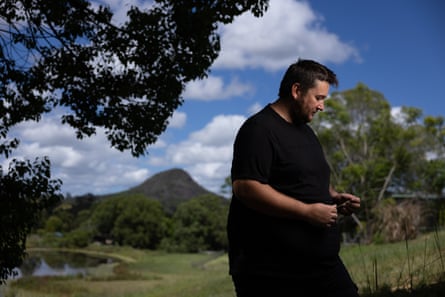
He explained to the consulate that he had received a message from the hospital saying Wayne “needed to be moved and they needed a passport”.
“His condition had deteriorated to a point where the doctors were saying, ‘We need to move him to this hospital because we can’t look after him here anymore … We can’t move him without his passport. Can you get the passport?’ [I said] I’m trying.”
On January 3 – two days after first contacting the consulate – Jake sent an email asking whether staff had yet been able to visit Wayne.
“This is taking too long”, he said.
The consulate had refused to discuss Wayne’s condition because of the Privacy Act, sending Jake only a link to the SmartTraveller website which had general information on travel to Indonesia.
Jake says after a tense conversation with a member of staff, multiple follow-up emails went unanswered, including when he requested information on how to obtain the passport for a possible transfer “if his condition worsens”.
He also sent a “distressing” video and photos of his father in hospital to consular staff in a desperate bid to get assistance.
He received no reply.
The Australian consulate in Denpasar is a 15-minute drive from the hospital where Wayne Harvey died. He was never visited.
After Jake arrived in Bali on 5 January, Wayne’s passport was found, but the window for transferring his father had passed. The hospital advised he could no longer be moved.
Wayne died on 7 January.
Jake says following Wayne’s death, the consulate provided him with a contact number for someone who assisted with funerals for tourists. At the funeral, he watched as the burnt remains of his father’s skeleton, including his collapsed skull, were smashed with a hammer by six men and scraped into an urn.
“The whole thing was just surreal,” he says.
“None of it felt real, time did not feel real, things that were happening did not feel real.”
It was while he was attending the cremation that he received a call from the consulate offering help.
“They called me up and said, ‘Please let us know if there’s anything we can do – let us know and we’ll help.’ That was the cruel part,” Jake says.
“I just told them: It’s too late now. I needed your help when I first called. This offer for help now is useless, it’s worthless.”
In the days following Wayne’s death, Jake says he was in severe shock. On one day, he could not get out of bed because of the mental overload.
He decided to lodge feedback with the department on 9 January, complaining about how Wayne’s case was managed.
“Your 24-hour consulate emergency line could easily be replaced with an answering machine that just says ‘Sorry, there is nothing we can do to help you in any practical way during an emergency, if you have a serious problem pray,” he said in the email.
It was more than two years later before Jake received any acknowledgement of his letter, with the department belatedly launching an internal review and sending him an apology in October 2025.
The letter from the department’s assistant secretary, Paula Brewer, stated that the department “did not initially have a clear understanding of the seriousness of his condition”.
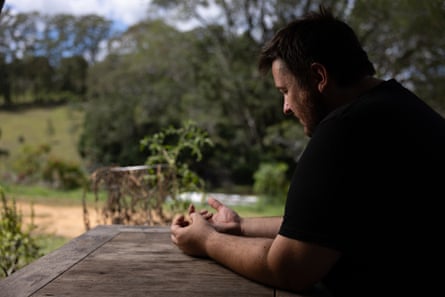
“I acknowledge that the process and timeframes involved – particularly around public holidays – were not clearly explained to you at the time,” she said.
“I am truly sorry for any additional distress this may have caused during an already painful time.”
Jake says he was shocked to be told that the consulate had not understood the seriousness of Wayne’s condition.
“I want people to be warned, that when the going gets tough, the consulate will not have your back. Even if they can, they will choose not to. And that’s a scary thought.”
A DFAT spokeswoman said an internal review “found the case was managed in line with established consular procedures.”
“It also identified areas to improve communication with family members and changes to DFAT processes have since been implemented. The review found these issues were not related to the medical outcome in this case.”
Jake does not know if a hospital transfer would have saved his father’s life, but he knows that it would have given him the best possible shot.
“If he had been transferred to that hospital when they were going to transfer him, he would have been in a better hospital in better conditions; the odds are better,” he says.
“Anything can happen. It’s possible the outcome would have been exactly the same. But the best chance he had was out of this hospital. And that’s not me saying that, that that was his own doctor saying that multiple times.
“He would have had a much better chance.”
Three years on, Jake has been left deeply traumatised by his father’s death. He misses Wayne, saying that while he was not always the best dad throughout his childhood, he was “a very, very charming man who made friends wherever he went”.
“My dad had a lot of flaws, but I did love my dad. My dad was a good man.
“Maybe if they [the consulate] knew that he was a good man they would have been inclined to help, but he was just another retiree in Bali.”
“I’m glad he went to Bali. I’m glad he got to go over there, do his thing, live his life the way he wanted to do over there,” says Jake. “I think that was awesome. But I wish he was still around.”