1 month ago
45
1 month ago
45
Two women who have lived almost all their lives in the UK have had their lives thrown into chaos due to the new border control rules for British dual nationals because their French mothers were not married to their British fathers.
Both women have been forced to prove their right to British passports as a result of archaic laws, which did not accord automatic citizenship to the children of unmarried British fathers in dual national relationships until the law was changed in 2005.
The women are among hundreds of people who have been hit by the new border rules for British dual nationals requiring a British passport or certificate of entitlement of abode costing £589 that must be shown to enter the UK.
Simon Cox, immigration barrister at Doughty Chambers, said parliament abolished other kinds of discrimination against the children of unmarried parents in 1987, but didn’t change the law for British citizenship until 2005.
“Since then, children of unmarried parents have been able to rely on their father’s British citizenship, but it wasn’t until 2022 that parliament created a remedy for children of unmarried British fathers born before 2005.”
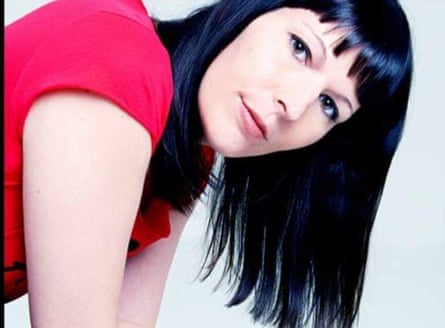
Dawn was born to an unmarried British father and French mother in 1977 and had British passports until 2018, when her renewal application was turned down because she could not provide a French passport with her married name. France, like Greece, issues passports with birth names.
The woman has lived in the UK since she was five, and worked at the Ministry of Defence. She didn’t think any more of her passport until she read about the border control rules that came into force at the end of February.
Fearing she would lose vital disability payments, she applied to the Passport Office and had her life “tipped upside down”.
“They put me through to the immigration section, and I was asked many questions surrounding my birth: when, where, and my parents’ circumstances, and concluded that I’m not British and the previous passports I had were issued in error. It’s pretty complicated and a lot to do with the fact I was considered illegitimate at birth,” she said.
Now, she has taken the “humiliating” step of going on social media to crowdfund her citizenship application, which will cost £1,735, and said she would gladly refund any donations if the Home Office fixed the problem.
“I have never questioned my nationality but suddenly I am being stripped of my right to travel and have my life potentially destroyed,” she said.
“I’ve been to my MP and I’ve been back to the Home Office, and all they’ve done is tell me to make a complaint. I made a complaint in 2018 and that didn’t work. Why can’t this just be sorted out?”
The other woman, who was born in Manchester and works as a mental health professional, has court documentation showing her right to abode, but has always held a French passport, which never posed any problems prior to the rule change.
Worried that she could face being stranded abroad if she went on holiday, she has been told to get her fingerprints taken and to attend a citizenship test in her home town to obtain a certificate that then allows her to get a British passport.
“Because my parents were unmarried in 1999, I am legally treated as ‘illegitimate’. If they had married, or if I were born just eight years later, my citizenship would be automatic. I am being financially penalised for an archaic marriage law,” she said.
“I want to highlight this for anyone who is in my position who has now been forced to pay hundreds of pounds or lose freedom to return to their home.”
Sarah, who did not want her real name used, said she had been forced to pay a £130 fee to “buy back a birthright”, which she called an “illegitimacy tax”.
“I have already submitted my 1999 high court paternal order, yet I am still being treated as a ‘new migrant’ in the city I have served my entire life,” she said.
Sarah must now fulfil a UK-F type of registration, a new provision for children of unmarried fathers before 2005, in order for the Passport Office to accept her application.
She has lived in Manchester her entire life, received an NHS number at birth, a national insurance number at 16, student finance to attend university and has paid tax since she was 17.
Cox said the Home Office could easily help people like Sarah and Dawn if it had the customer-facing authoritative helplines that could advise and navigate British citizens through the new rules.
“Heavy-handed immigration ministers and senior officials are once again disregarding the interests of British citizens. The Home Office has an anti-customer service culture that privileges bureaucracy, disregards the distress and disruption they choose to impose,” he said.
The Home Office have been approached for comment.