3 months ago
116
3 months ago
116
Staying up to date on wellness trends can be tough. What if you get sat next to an energy healer at a dinner party? What are you going to talk about? Raw milk is already sort of passé.
Don’t worry, we’ve got you covered. Here are the wellness trends everyone was discussing in 2025, and what you need to know about them.
Down in the dumps? Try putting together a “dopamine menu” – a list of activities designed to boost your mood. The term first popped up in 2020, and has since taken off on social media, with thousands of users sharing what they “order” when they feel low.
It’s helpful to think of a dopamine menu like a regular menu, Adrienne Matei explained, with “starters” that take little time and effort, more substantial “mains”, and “sides” that zest up the day.
Matei spoke to several happiness experts about the items on their dopamine menus. These included giving people compliments, sitting in your favorite green space, cuddling with a loved one and smashing objects to bits in a rage room. Whatever works for you!
‘Let them’
This year, millions of people realized they can’t control the actions of others – no matter how desperately they might want to. At the end of 2024, podcaster and self-help guru Mel Robbins published a book called The Let Them Theory. Its central thesis was simple: if someone is doing something that bothers you, let them.
The book made a splash. It jumped to the top of bestseller lists. There were news articles and podcast episodes about the theory, and Oprah called it a “gamechanger”. People even got “Let them” tattoos.
The theory was not without critics. Some claimed Robbins cribbed the idea from poet Cassie B Phillips, whose poem, Let Them, went viral in 2022. Others said the concept was obvious. But sometimes obvious advice is the most helpful. As one therapist said: “It’s a reminder that it’s OK to step back, let people be who they are, and stop carrying things that aren’t ours to carry.”
More about the ‘let them’ theory
Creatine
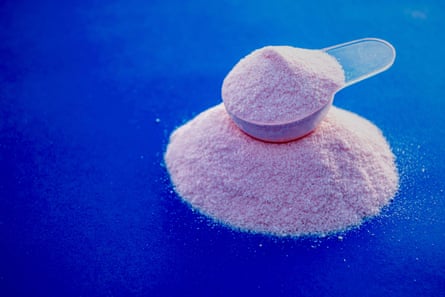
Strength training has been the darling of the fitness world recently (deservedly so), and as more people spend time moving heavy weights, there is an increasing demand for products and supplements that help maximize each lift. Enter creatine.
Long a favorite supplement among athletes and fitness professionals, creatine is a naturally occurring compound that helps power short bursts of high-impact activities – think sprints or heavy lifts. Synthetic creatine is often sold as a white, flavorless powder that one can mix with water or juice (some influencers take it dry as a stunt, but experts strongly discourage this as it could lead to choking).
Creatine is considered safe for most healthy adults. And while research doesn’t fully support popular social media claims that creatine helps build muscle, it might do so indirectly by giving you more energy during intense workouts.
Deep plane facelifts

In May, Kardashian matriarch Kris Jenner set the internet abuzz when she appeared at Lauren Sanchez’s Paris bachelorette party with a face that looked remarkably smooth and taut. (Is that the most cursed sentence I’ve ever typed? Who’s to say.) Online, many speculated that her youthful appearance was the result of a deep plane facelift – a technique that works with deeper layers of tissue than a traditional facelift. Searches for the term soared. (Jenner did not discuss or confirm any particular procedures.)
A deep plane facelift is pricey, because it is a more complex procedure, and also tends to last a few more years. It can set a patient back anywhere from $30,000 to $100,000. By contrast, the average cost of a regular facelift in the US is about $11,395.
More about deep plane facelifts
Psyllium husk
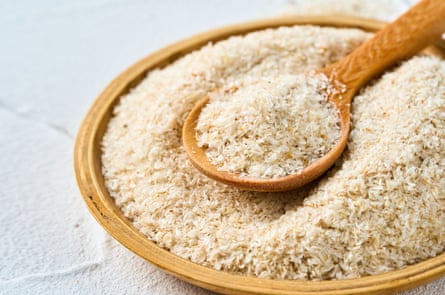
Psyllium husk has been touted by influencers as “nature’s Ozempic” – a cheap, non-prescription alternative to GLP-1 medications. But this comparison is “oversimplified and misleading”, warns Lena Beal, spokesperson for the Academy of Nutrition and Dietetics. Psyllium husk comes from the seed of a desert shrub, and is the leading ingredient in popular laxatives like Metamucil. When consumed with water, it’s simply a good source of soluble fiber, and has been found to help lower levels of “bad” cholesterol, slow down digestion and increase satiety.
If psyllium husk isn’t your thing (some people don’t enjoy the gloopy, gel-like texture it develops in water) don’t fear. There are plenty of other good sources of fiber, like fruits, vegetables and legumes.
Fibermaxxing
As protein mania reaches a fever pitch, consumers are already looking toward the next nutrition trend. According to some on social media, the future is all about “fibermaxxing” – a trendy term for “eating a lot of fiber”. As one wellness influencer put it, fiber is “super cool”. Indeed, one study found a fiber-rich diet can improve heart health and reduce the risk of type 2 diabetes and colorectal cancer. You could give psyllium husk a try – or just eat an apple.
Weighted vests

This year, everyone started wearing weighted vests – vests that strap across your torso and are weighed down with iron sand or small weights. Wellness media and influencers touted them as useful for helping pre-menopausal and menopausal women maintain bone density. The studies supporting this have been small, but experts say wearing a weighted vest on a walk can help increase strength and burn more calories. (Though wearing a vest for too long or wearing one that is too heavy can potentially lead to injury.)
Weighted vests are “potentially beneficial”, said Dr Abbi Lane, assistant professor of applied exercise science at the University of Michigan, but they are best thought of as the “cherry on top” of regular strength training and cardio exercise.
***
Executive dysfunction
It’s everywhere on social media. Our feeds are crammed with people complaining of so-called “executive dysfunction” – not being able to initiate tasks, getting overwhelmed by day to day obligations, and always being late.
But as writer Hannah Seo explained, this is not really a term used by mental health professionals. Executive function refers to a person’s ability to manage and organize tasks on a daily basis, and it’s true that there are people who struggle with this. It is not a solitary condition though; generally, it accompanies genuine conditions like ADHD. While there are no treatments for poor executive function, people can develop coping mechanisms and workarounds, like writing out to-do lists and setting reminders for yourself.
Little treats
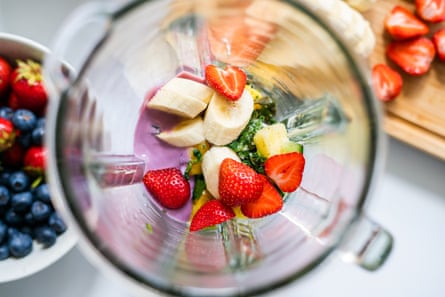
“Little treat” culture has exploded. The world is warming, the cost of living is skyrocketing, and jobs are harder and harder to come by – but a pleasant walk or an overpriced smoothie can serve as brief, accessible interludes of delight amid the chaos. But as reporter Adrienne Matei wrote, even these small joys have stopped feeling good to some. She spoke to experts about how to maximize the benefits of little treats: anticipate the treat, create a ritual and notice when you’re using treats as band-aids.
‘Bird theory’
The “bird theory,” which went viral on social media this year, posits that if your partner tells you they saw a bird and you keep staring at your phone and mumble a disinterested response, your relationship might be in trouble. But if you stop whatever you’re doing, turn to them, and ask a follow up question, your curiosity and investment shows you’re in a strong relationship.
The theory is based on studies from relationship researchers John and Julie Gottman. They found that couples who stayed together responded to each other’s “bids for attention” – like observing a bird – about 86% of the time, while those who divorced only responded about 33% of the time. But don’t forget to consider context, experts say: if your partner doesn’t respond to you during a work meeting or a season finale, that’s probably fair enough.