3 months ago
106
3 months ago
106
Many fictional characters are known by their catchphrases. Few are identifiable by a single exclamation alone. Among the exceptions are Lady Bracknell in The Importance of Being Earnest (“A handbag?”) and the venal Maryland state senator Clay Davis, who appeared in all five series of the acclaimed US crime drama The Wire between 2002 and 2008.
Senator Davis, played by Isiah Whitlock Jr, who has died aged 71, was notable for his unique pronunciation of a monosyllabic expletive. On his lips, its central vowel was bent out of shape and stretched as thin as pizza dough: “Sheee-it”.
David Simon created The Wire but it was Whitlock who originated that word’s distinctive delivery. It was a hangover from his performance in Spike Lee’s 25th Hour (2002). Whitlock played the DEA (Drug Enforcement Administration) agent Amos Flood, who utters the elongated word after retrieving cash and drugs stowed inside a suspect’s sofa.
It became an in-joke or call-back in his later performances as Flood in Lee’s films She Hate Me (2004) and Red Hook Summer (2012). In the latter, which found the character seemingly demoted to precinct detective, he gave what Slate called “arguably the longest, richest sheee-it to date”. It earned yet another reprise in Lee’s BlacKkKlansman (2018).
In each instance, the actor delivered the word in a sly, incredulous rumble. The exact pronunciation was borrowed from an uncle.
Senator Davis, initially a minor character in The Wire, featured so sporadically in the first two seasons that Whitlock initially turned down the offer to return for the third one. “I was doing Othello in Alabama, and I said, ‘No, I can’t be bothered. I’m not gonna go’ … They finally convinced me to because David Simon pulled me aside and said, ‘We’ve got this whole storyline set up where you’re going to be ripping off the drug dealers.’”
Simon, who claimed not to have seen 25th Hour until several years after The Wire premiered, was fuzzy about how “sheee-it” found its way into the series. “Maybe it started with [Whitlock], but I think we heard the southern drawl in his tone and went with it,” he said.
Whatever its beginnings, there seemed no end to it. Fans never tired of saluting Whitlock with mimicry, though he took some pride in the fact that he wasn’t as imitable as people thought. “They don’t quite do it the way I do it. They kind of butcher it.” After The Wire ended, he said: “What have I done? I’ve unleashed a monster.”
He could hardly complain once he launched in 2015 his own line of Bobblehead lookalike dolls which spoke the relevant word at the touch of a button. More than 10,000 were sold.
At times, the gimmick was in danger of overshadowing the work of this subtle, perspicacious actor. Whitlock had a special gift for exploring moral ambiguity, whether in comedies such as Armando Iannucci’s spiky television sitcom Veep, in which he starred between 2013 and 2015 as a defence secretary with ill-judged presidential ambitions, or in stage dramas, including Christopher Shinn’s Four, where he was a married teacher on a date with a 16-year-old boy.
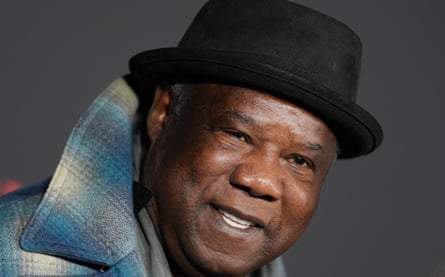
“On the page, this guy could be a monster,” said Jeff Cohen, who directed him in the play at the Tribeca Playhouse in New York in 2001. “You want to hate him, but you don’t because Isiah makes this character so immediate... It’s like he’s 18 and at the prom. You see his vulnerability.”
Whitlock doubted whether he could play outright villains but conceded that grey areas were his stock-in-trade. “A little shady? Yeah, I can handle that.”
He was born in South Bend, Indiana, the fifth of 11 children, to Isiah Sr, a steel mill worker by night who carried out house clearances by day, and Ruth (nee Moore), who worked in health care. He attended Southwest Minnesota State University on a sports scholarship, intending to become a football player until a string of injuries led him to reconsider. Stopping by the university’s theatre department, he found auditions for The Crucible were underway. “I’ve been working ever since,” he said in 2021.
Whitlock attended a summer programme at the American Conservatory theatre (ACT) in San Francisco. After finishing university, he returned to study there and to perform with the company. He spent four years in total at ACT, where Denzel Washington and Delroy Lindo were a few years behind him, then moved to New York. In 1989, he starred on Broadway in The Merchant of Venice with Dustin Hoffman.
Alongside frequent TV appearances, he had small roles in Martin Scorsese’s Goodfellas (1990), Woody Allen’s Everyone Says I Love You (1996) and David Mamet’s The Spanish Prisoner (1997).
He appeared on 10 occasions, as different characters, across the various iterations of the Law and Order television franchise. He starred in the first season of one spin-off, Law and Order: Criminal Intent, in 2001, only to be summoned a decade later to reprise his role on the finale. “The squalid part of this story is that I was still available after 10 years,” he said.
Lee was the director to whom he returned most often, starring in Chi-Raq (2015), a lively transposing of Aristophenes’s Lysistrata to modern-day Chicago, and the 2017 television version of Lee’s 1986 film She’s Gotta Have It.
His biggest role for Lee was in Da 5 Bloods (2020), in which he teamed up with his Wire co-star Clarke Peters and his fellow ACT alumnus Lindo to play Vietnam veterans. They return to the country decades after the war to retrieve the remains of their fallen sergeant as well as the gold they stashed there back in the day.
He made guest appearances in two episodes each of the well-regarded television comedies Louie (2012) and Atlanta (2016 and 2022). In two seasons of Your Honor (2020-23), he was the best friend of a judge (Bryan Cranston) whose son is responsible for a hit-and-run accident.
As well as playing a sheriff in a remake of the Disney adventure Pete’s Dragon (2016), Whitlock did voice work on several Disney-Pixar releases: Cars 3 (2017), the Toy Story prequel Lightyear (2022) and the forthcoming Hoppers (2026).
Achieving recognition in middle-age with The Wire vindicated him in his decision to play the long game, working diligently and trusting that it would pay off creatively. “I waited for the landscape to change,” he said. “And when the landscape changed, I was still there.”
Whitlock is survived by four sisters.