3 months ago
66
3 months ago
66
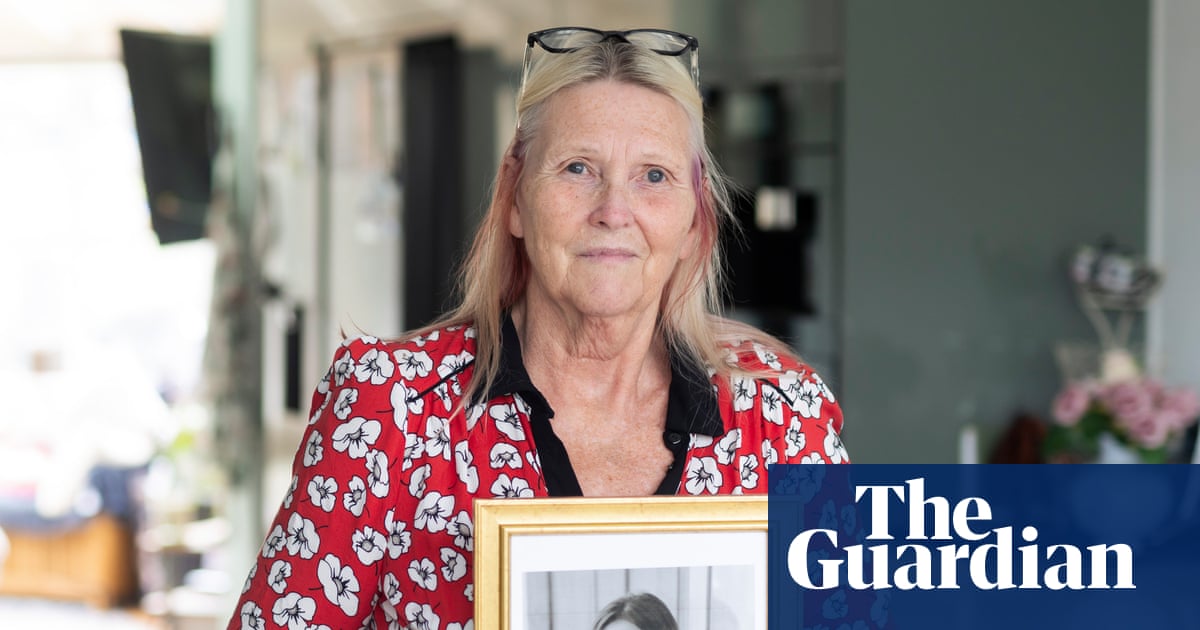
“It’s a doll,” Ineke Schmelter, 71, often says as she walks down the street with a pram and someone peers fondly under the hood, asking: “How old is the baby?” Then she pulls back the blanket and reveals the doll. She points out the craftsmanship – the little veins, the creases in the skin – and explains that it can take as many as 20 layers of paint to achieve such a lifelike finish. Sometimes, though, she can’t be bothered with the long version – the explanations, the strange looks. “As if I’m not quite right in the head.” Then she just says: “Two months,” and keeps walking.

-
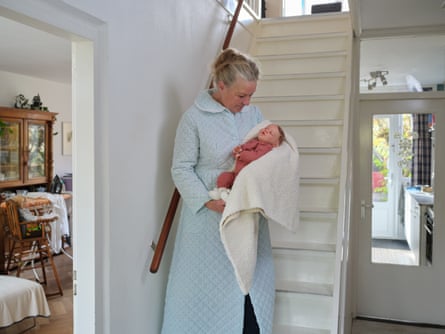
Ineke Schmelter in the kitchen with her reborn baby Ronin
Schmelter is one of many reborn doll lovers: dolls so realistic they are almost indistinguishable from real babies. She bought her first around four years ago, when she retired and didn’t know what to do with her free time. She had spent her whole working life with babies and children. First as a nurse in hospital, later as a maternity nurse. She missed the daily contact: the tiny grabbing hands, that warm little body in her arms. At first she mainly bought old dolls on Marktplaats and restored them, but when she saw a real reborn baby for the first time, she was hooked. She bought her first for €400 (£350) from a collector: a sleeping baby. She now has 10 dolls displayed around her home. The most expensive cost €1,200.

-
Schmelter with her reborn doll Norah in her home in Bilthoven
“I trawl charity shops looking for vintage clothes and baby bottles,” says Schmelter. “It’s often a trip down memory lane. When I dress a doll, I chat to it a little, and when I’m watching television I sometimes sit one on my lap. I don’t walk that easily any more and I really should be using a walker. But I’d rather take a little stroll behind the pram and put a doll in it. I’ve always worked very irregular hours, so I don’t have many friends now. It helps with the loneliness.”
The dolls originated in the US, where hobbyists in the 1990s began hand-modifying mass-produced dolls. Today, they have millions of enthusiasts worldwide: makers, collectors and carers who dress and cherish them. They gather in Facebook groups where they don’t just share photos or offer dolls for sale, but also exchange private stories. On TikTok and YouTube, “a day in the life” videos – in which dolls are cared for as if they were real babies – rack up hundreds of thousands of views.
According to Nicolle Lamerichs, a researcher of fan culture and lecturer at the Utrecht University of Applied Sciences, the dolls are popular because they bring together different kinds of play. “Children’s play is often mainly about storytelling, but with adults it works differently. You need multiple elements to make something appealing: creativity, role play, collecting, and a community of like-minded people. You see all of that with reborn dolls. And if you add emotion, the attraction becomes even stronger. With these dolls, that emotion is also very intimate. Some women use them as a way of remembering a child who died, or a longing for a child that never came true. In our culture, there is often little space for that darker side of motherhood – but in the Facebook groups there is.”
-
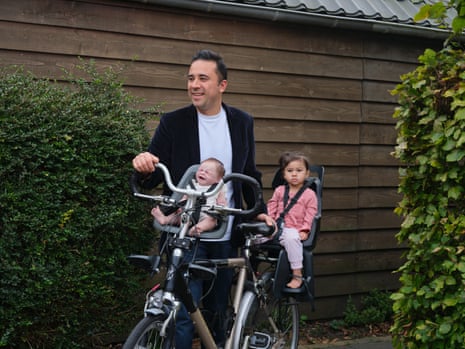
Enrique Alvarez with his youngest daughter, Alaia Belen, and his self-made reborn doll, Rainbow Yoshi, at their home in Hardinxveld-Giessendam. “My father is an artist,” says Alvarez, “so I literally grew up among paint and sculpting materials. I’d already worked with bronze, marble, glass and even silicone, but then, 13 years ago, when my first daughter was born, my wife said: ‘Could you make a baby doll – but completely lifelike?’ We had never even heard of reborn dolls. We took photos of the doll when it was finished and posted them on Facebook. Only then did we see that artists in South Africa and Australia were also making lifelike dolls. Since then, I’ve exhibited my dolls in the Netherlands, the United States, Australia and Belgium, and I’ve won various international awards and distinctions.”

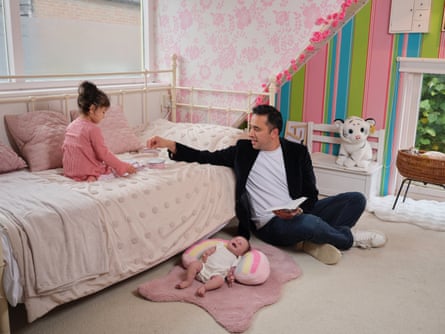
Prices vary widely: from a budget doll of about €300 to several thousand euros for one by a well-known artist. Everything is handmade. The head, arms and legs are usually vinyl; more expensive dolls are made of silicone. First a mould is sculpted in clay, then it is cast. After that, the doll is painted in many layers and baked. Often, real human hair is rooted into the head one strand at a time. The body is filled with glass granules so that it weighs the same as a real baby. Online, unpainted kits are also for sale – ideal for hobbyists.
Still, love for these dolls is not without its downsides. Anyone who takes a doll out on the street quickly attracts strange looks or blunt reactions. Online, enthusiasts receive hateful messages, and the hobby is often dismissed as bizarre, or even sick. In Brazil, where “a day in the life” TikTok videos now generate substantial advertising revenue, a rush has begun – to the point where some women even take their dolls to hospital and, mainly for social media, pretend they are real babies. Authorities are considering legislation, the media are full of the commotion, and many people say these women are “crazy” because they think the doll is real. For Dutch enthusiasts, this is a recognisable caricature of the hobby: an image that often ignores the genuine love people have for the dolls.

-
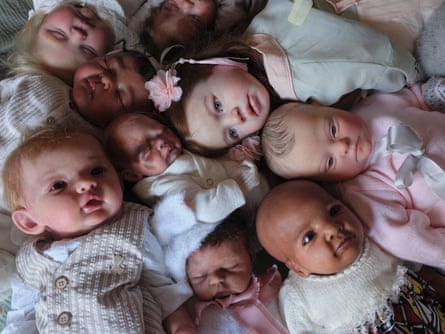
Margriet Shein plays with her reborn doll Ronin in her house in Gouda. “Five years ago I had a miscarriage,” says Shein, “and I didn’t know how to give my grief a place. My husband and I had spent weeks fantasising about our baby, and suddenly there was nothing to hold on to. I tried making a memory box, like I’d seen others do, but it didn’t work. Then I came across reborn dolls online. I thought it would be beautiful to have a doll that looked like our baby – but because my husband is Asian, and at the time only dolls with white skin were available, I couldn’t find one. So I bought a doll on Marktplaats and started repainting it. I already painted portraits of children, so I thought: I can do this. When the doll was finished, we dressed it together in the little outfit we had bought for our own baby. It comforted me.”
-
The reborn dolls of Margriet Shein
Lamerichs is not surprised. “Hobbies that are popular with women often carry less status. I’m a gamer, for example, and I have Lego – lots of people think that’s cool. But my Barbies and dolls, they find weird and childish. That’s because women’s hobbies often have a strong emotional component, and emotions are still brushed aside in our culture. Just look at how women who show emotion are still labelled hysterical. It’s deeply woven into our culture.”
The fact that reborn dolls also disturb the idealised image of motherhood and babies does not help, she says. “Motherhood is still seen as the highest achievement a woman can reach. It’s almost revered in our culture. So if you show up with a kind of ‘fake baby’, you immediately start poking at that ideal, and that makes people uncomfortable – and sometimes even angry.”

-
Lucinda Asraf with her niece Melody and her reborn doll. “Since I was 21, I had a strong desire to have children, but despite trying naturally and through medical treatment, it never happened. A few years ago, that sent me into a deep slump. I began to lose hope, and I didn’t really know how to shape my life without children. Then I came across reborn dolls online, and I was immediately struck by how lifelike they look. I thought: ‘I’ll just make one myself’. I’ve always been creative, and there were lots of step-by-step videos on YouTube. From that moment on, I was hooked. Every day, when I come home from work and have eaten, I work on a doll. With every layer of paint, she comes more to life. In our culture, motherhood is still seen as something self-evident, something that comes with being a woman, and it felt like failure that it didn’t work out for me. But watching a doll come more to life with every layer of paint makes me proud. I may not be able to create a baby, but I can do this.”
Lamerichs believes we often underestimate how important play is – not just for children, but for adults, too. “A hobby with a role-play element can help people process things. You see it in all kinds of therapy and coaching programmes. Look at the popularity of family constellation work, where you literally act out scenes from your childhood. By playing out emotions, you learn how to live with them.”
Various studies have also found that the dolls can have a positive effect on older people with dementia: among other things, they reduce aggressive and obsessive behaviour, encourage communication, and improve mood. Some psychologists also use the dolls as a form of therapy for people with, for example, an anxiety disorder or autism. Looking at the dolls triggers the release of “feelgood” chemicals in the brain, and because they feel like a real baby, holding them can be comforting – comparable to the effect of a weighted blanket.
“When I walk through the park with my doll, I sometimes take a photo and post it in a Facebook group,” says Schmelter. “Women will say: I can’t believe you dare. Lots of people are ashamed of their hobby and keep it secret. That’s such a shame. As a nurse, I sometimes saw grown men being wheeled into an operating theatre with a teddy bear in their arms. So why shouldn’t we be allowed to watch television with a doll on our lap? I’m proud of the hobby I have. The first doll I made myself, I gave to a girl I knew through the Facebook group. She desperately wanted one, but couldn’t afford it. She was so happy she named the doll after me.”