1 month ago
29
1 month ago
29
When Ireland redeveloped a swathe of central Dublin in the 1990s, the idea was to create a version of Paris’s Left Bank, a cultural quarter of cobbled lanes, art and urban renewal.
Planners and architects transformed the run-down Temple Bar site by the River Liffey into an ambitious experiment that drew throngs of visitors and won awards.
Three decades later, there are some withering verdicts on what happened next.
“It seems that Temple Bar is becoming a violent post-apocalyptic place,” a judge said last year after sentencing a man who bludgeoned a victim with a can of cider. “It’s shocking to see it, that people can’t be safe down there. It makes it a no-go area for people.”
Frank McDonald, who writes about urban planning for the Irish Times, recalled how he moved into the area in 1995, full of optimism, but fled in 2022 amid hordes of pub-crawlers and thumping nightclub music. “I feared that our home would become uninhabitable,” he wrote in July.
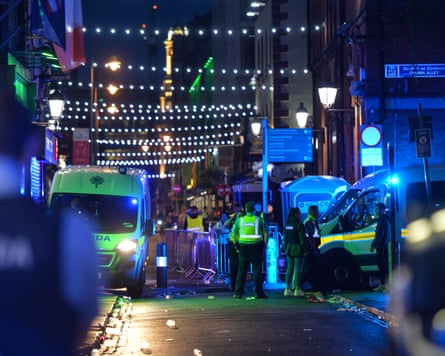
Since then, there have been more grim headlines, including the alleged mugging of a visiting NFL quarterback and an assault on an English tourist who later died. A study of online reviews rated Temple Bar the world’s third biggest tourist trap, reinforcing the perception of a raucous, brawling district best left to stag parties.
It adds up to a crushing indictment of the original vision: instead of art and culture, crime and overpriced Guinness.
There is, however, an alternative view that Temple Bar is a victim of outdated stereotyping and that a renaissance is under way, making the area a vibrant and a worthy home for organisations such as the Irish Film Institute, Project Arts Centre, Smock Alley Theatre and Graphic Studio Gallery.
“It is Dublin’s cultural quarter,” said Martin Harte, the chief executive officer of the Temple Bar Company, a business association. “The era of massive drinking – it’s not that now. Temple Bar is an entirely different place. It’s the front room of Dublin city.”
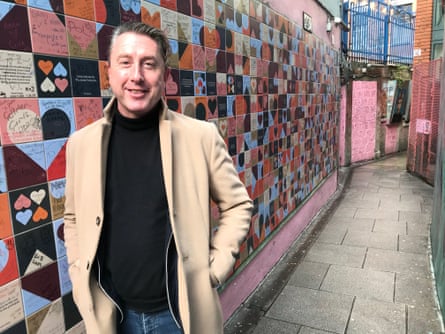
Violent incidents garnered publicity but set against an annualised footfall of 24m visits they were very rare, said Harte. “To say Temple Bar is unsafe is not accurate. Walk around, it has everything from small art galleries to coffee shops, tattoo parlours, vintage clothes shops, hotels. It’s where people come, it gives it that electricity.”
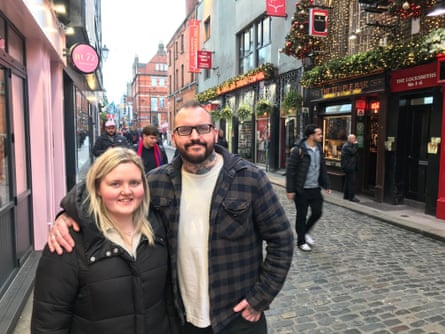
Tom Roo, 39, and Heather Mitchell, 28, a couple from Leeds, agreed. “I was expecting young lads and drinking everywhere but it’s really nice to walk around, it’s relaxed,” said Roo. Mitchell found the pubs picturesque – more so even than their images on Instagram.
In the 1980s, much of this web of lanes and streets was derelict and due to become a bus terminus. Instead, in 1991 the government decided to channel Dublin’s year as European city of culture into a showcase project driven by a state agency and tax incentives. Renovated historic buildings and new contemporary structures and art installations created a landmark in urban renewal.
The decade also brought cheap flights, laddish culture and superpubs that turned Temple Bar into a boozing destination. “That’s where it got its initial stripes, its brand,” said Harte. “You had to queue behind 30, 40 people to get in anywhere to have a drink.”
The supposed culture hub was nicknamed the Temple of Bars and likened to Ibiza. Bacchanalia continued through the 2008 economic crash and prompted another judge – ruling in a 2017 assault case – to brand Temple Bar a vomit-splattered “disgrace to Ireland”.
The Covid pandemic brought more challenges. Gangs marauded through under-policed streets, stealing and vandalising. “All the zombies came out,” said Ángel Luis González, director of PhotoIreland, which runs exhibitions and a bookshop called The Library Project.
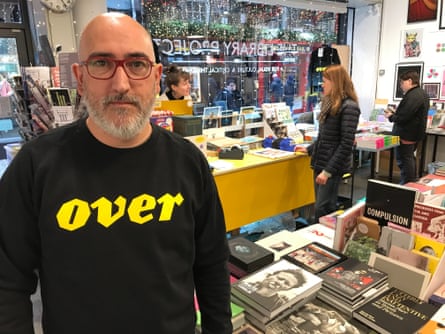
However, improved policing has restored safety, confidence and an eclectic vibe, said González, echoing a widespread view among stakeholders. People who come to take selfies outside famous pubs end up visiting galleries and discovering artists.
John Cullen, who runs a jewellery shop and stall in a refurbished square, said the outdoor market drew in families with children. “It civilises the place.”
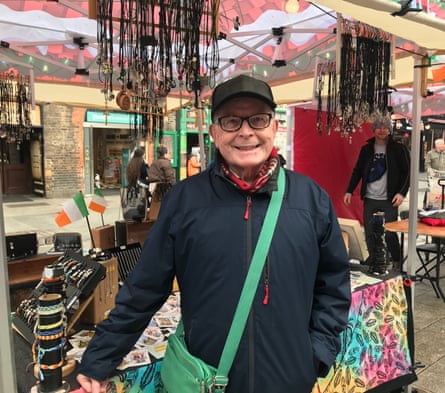
Pubs such as the Palace, Gogarty’s and the Norseman still drew big crowds but the number of late night licences – which allow venues to serve alcohol until 3am – had plunged from 25 to seven and fine dining was making inroads, said Harte. “Every single pub now serves food. People are still drinking but nowhere near at the old levels.”
Will Wollen, who moved to Temple Bar two years ago to run the Gaiety School of Acting, said the area’s reputation for excess was unfair. “There is an energy but it’s not a hen party hellscape. It’s a pub culture with warmth and friendliness.”
Stephen Kennedy, who runs the Copper and Straw cafe and chairs the Aston Quay and Temple Bar Business and Residents’ Alliance, said there were plans for more street art, seating, lighting and perhaps an outdoor cinema. “I would tell any tourist coming to Dublin that Temple Bar is a must.”
Other Dubliners, in contrast, urge visitors to steer clear unless they like crowds, price gouging and ersatz Irishness. Critics also accuse platforms such as Airbnb of driving up rents and driving out people.
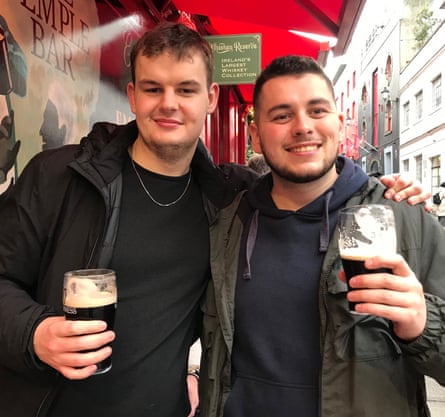
Perry Share, a sociologist and co-editor of a book on Irish pubs, said Temple Bar was a “pub theme park” that offered a degree of authenticity. “Tourists come to replicate an Irish pub experience they have perhaps seen online. The music and drink is essential to that.”
A vox pop of early evening drinkers last week yielded toasts to Temple Bar. “TikTok said it was too touristy but the buzz is great,” said Tom Salter, 22, from London. Dave Howard, from Derbyshire, had a caveat. “It can be quite fun watching a stag party. But not for the locals, obviously.”