3 months ago
64
3 months ago
64
Kyiv zoo’s most famous resident lays on his back watching television. On screen: a nature documentary.
For a quarter of a century, Toni has been the star attraction, drawing tens of thousands of visitors. He is Ukraine’s only gorilla. At 52 – old by western gorilla standards – he needs warm conditions similar to the lowlands of central Africa.
In recent weeks, heating Toni’s spacious enclosure has become a logistical headache. The zoo receives only three or four hours of regular electricity a day. Russian strikes have battered Ukraine’s energy infrastructure, leaving more than half a million people without power. In January, ballistic missiles destroyed a thermal plant on the left bank of the Dnipro River.
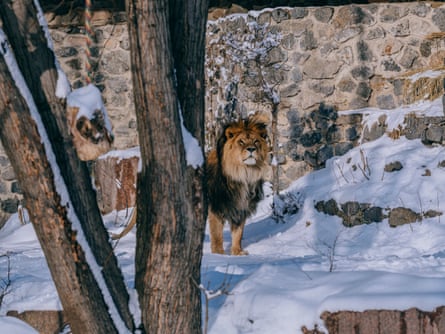
Like the rest of Kyiv, the zoo has endured repeated and prolonged blackouts during one of the coldest and longest winters in years. Temperatures have fallen to -22C (-7.6F). Heavy snowfall this week blanketed the city, causing several car crashes and transforming the zoo’s lion enclosure into a surreal, Narnia-like scene.
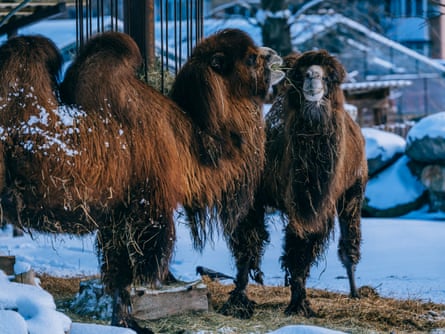
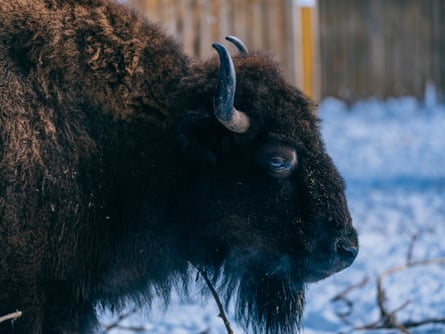
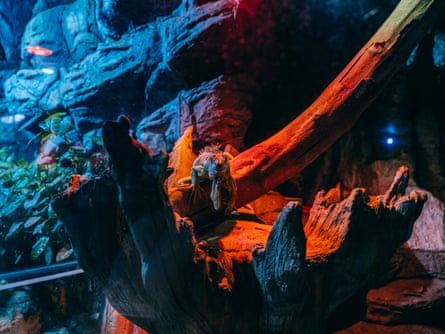
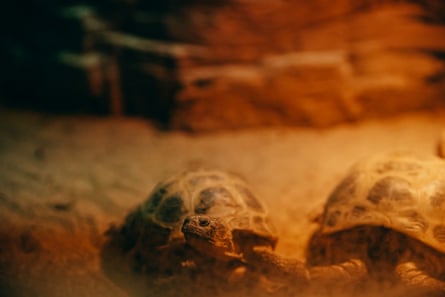
Some of the zoo’s inhabitants are well adapted to the cold. Bison, yaks and camels remain outside, seemingly unbothered by the sub-zero temperatures as they graze across a brilliant white landscape. Others, including Toni, are more vulnerable. He shares a building with tortoises, lizards, a boa constrictor and a ginger cat that dozes by the entrance.
To cope, the zoo has installed generators and wood-burning stoves. A large barrel-shaped convection heater, known as a Bullerjan, blows warm air into Toni’s enclosure, keeping it at about 17C. Staff feed the stove with logs gathered from the zoo’s 40-hectare (100 acres) grounds, even during midnight shifts. Additional stoves warm monkeys and exotic birds.
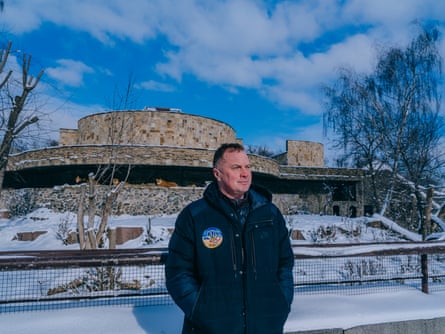
The zoo’s director, Kyrylo Trantin, said he had studied accounts of how zoos in Berlin and Soviet-era Leningrad struggled to survive the second world war, when most of their animals perished.
“We use the same techniques as these zoos did. Already in summer, we started preparations for the coming winter season,” he said.
“It’s a difficult situation. War and a zoo are not compatible at all. But we are doing everything we can to ensure that for the animals in our zoo, the war stays outside the fence. People work around the clock. At night, they maintain the temperature. We have 20-40 employees constantly on duty, including keepers and electricians.”
European zoos had donated 40 tonnes of dried food, while well-wishers had bought tickets online. The zoo has installed solar panels and a new ventilation system for the flamingos that uses less diesel to run than a conventional generator. “It’s been extremely cold for a month and a half. We’ve survived. But it’s been tough,” Trantin said.
As well as maintaining critical facilities, the zoo has to deal with frequent Russian attacks. Lukyanivka, one of Kyiv’s most targeted districts, is nearby. An explosion recently shattered panels in the terrarium next to Toni’s quarters. Flying shards hit a crocodile and turtle, while a muntjac deer sustained a broken jaw. Damaged sections were patched with plywood.
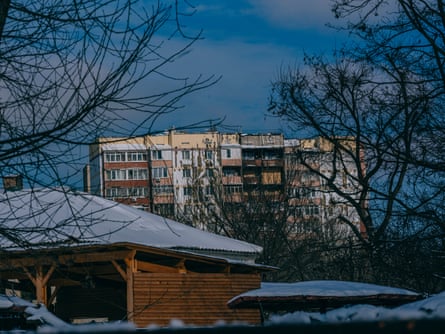
“We managed to save the animals. They were injured but not severely. The main problem for us is when something is shot down above us, or there is a blast wave. Half of the zoo’s glass is already gone,” Trantin said.
“It only takes three or four hours for a room to cool down. We cannot allow that to happen. In general, we are hanging on by our teeth. Now the task is to ensure that when there is shelling, when the air raid alarm sounds, there are always employees nearby. Because we also have a small amount of time to prevent stressful situations.”
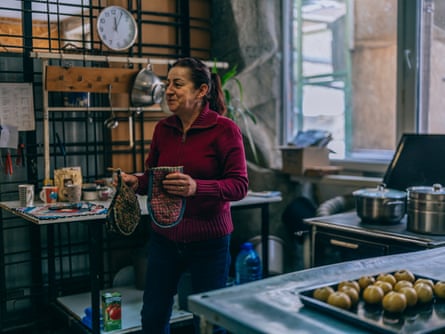
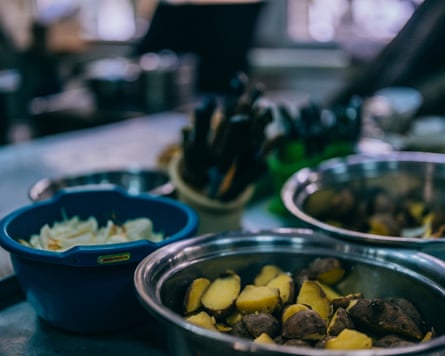
Food for the zoo’s 3,000 animals is cooked in a wood-burning stove during blackouts. The kitchen manager, Olha Yanchuk, laid out Toni’s lunch: quail and chicken eggs, fresh fruit and several litres of juice. She said preparation carried on as normal: “We are used to these conditions. If there is no power our electric cooker won’t function, so we rely on an old-fashioned stove.”
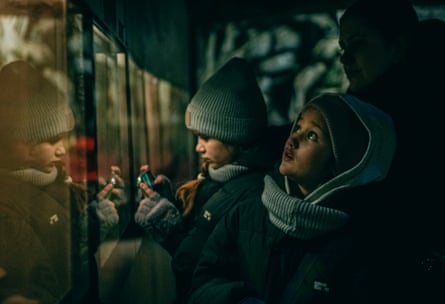
The zoo still attracts more than half a million visitors a year, including children evacuated from frontline areas and Ukrainian soldiers released from Russian jails who visit as part of rehabilitation programmes.
“We have got used to power cuts. Ukrainians are strong people,” said Daria, visiting with her son Valentyn, as they stood before the gorilla enclosure.
One longtime employee, Ihor Oliynyk, showed off the snow-covered island used in summer by the zoo’s ring-tailed lemurs. Nearby, ducks and geese had gathered next to a small ice-fringed pond.
“Were it not for the war, this winter would have been wonderful. It’s beautiful outside,” he said. “It’s been a long time since we have had a winter this cold and this bright, with sun and blue sky.”