2 months ago
52
2 months ago
52
María Corina Machado 'safe' and 'will be' in Oslo, Nobel committee says, but will miss prize ceremony
The Venezuelan opposition leader María Corina Machado is “safe” and “will be” in Oslo after “a journey in a situation of extreme danger,” although she will not attend the Nobel peace prize ceremony this afternoon, organisers have said.
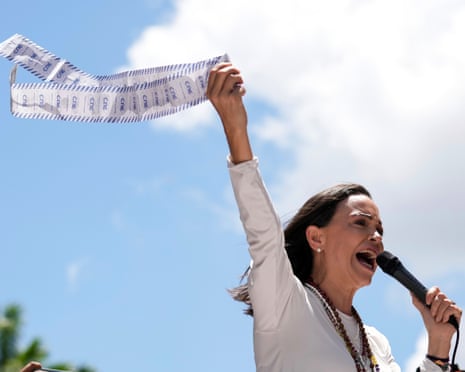
Machado has been seen only once in public since going into hiding in August last year amid a tense showdown with the president, Nicolás Maduro. Venezuela’s attorney general has said Machado, 58, would be considered a “fugitive” if she left the country to accept the award.
Machado has accused Maduro of stealing Venezuela’s July 2024 election, from which she was banned. Her claim is backed by much of the international community.
The Oslo ceremony coincides with a large US military buildup in the Caribbean in recent weeks and deadly strikes on what Washington says are drug smuggling boats. Maduro has said the goal of the US operations – which Machado has said are justified – is to topple the government and seize Venezuela’s oil reserves.
After confusion about whether she would get to the Norwegian capital or attend the event – with earlier reports saying she would not, and the award would be accepted by her daughter – the Nobel committee said this morning that she “will be with us in Oslo”, without specifying the timeline or confirming any details.
In a statement, the committee said:
“The Nobel Peace Prize laureate, Maria Corina Machado, has done everything in her power to come to the ceremony today. A journey in a situation of extreme danger. Although she will not be able to reach the ceremony and today’s events, we are profoundly happy to confirm that she is safe and that she will be with us in Oslo.”
The ceremony will begin at midday UK time, 1pm local time in Oslo, and I will follow it for you here.
Key events Show key events only Please turn on JavaScript to use this feature
Coalition of the Willing meeting on Ukraine planned for Thursday, France says
Meanwhile, we are getting a line from France, with the government spokesperson confirming that the Coalition of the Willing will meet on Thursday virtually to discuss the next steps on Ukraine.
María Corina Machado 'safe' and 'will be' in Oslo, Nobel committee says, but will miss prize ceremony
The Venezuelan opposition leader María Corina Machado is “safe” and “will be” in Oslo after “a journey in a situation of extreme danger,” although she will not attend the Nobel peace prize ceremony this afternoon, organisers have said.
Machado has been seen only once in public since going into hiding in August last year amid a tense showdown with the president, Nicolás Maduro. Venezuela’s attorney general has said Machado, 58, would be considered a “fugitive” if she left the country to accept the award.
Machado has accused Maduro of stealing Venezuela’s July 2024 election, from which she was banned. Her claim is backed by much of the international community.
The Oslo ceremony coincides with a large US military buildup in the Caribbean in recent weeks and deadly strikes on what Washington says are drug smuggling boats. Maduro has said the goal of the US operations – which Machado has said are justified – is to topple the government and seize Venezuela’s oil reserves.
After confusion about whether she would get to the Norwegian capital or attend the event – with earlier reports saying she would not, and the award would be accepted by her daughter – the Nobel committee said this morning that she “will be with us in Oslo”, without specifying the timeline or confirming any details.
In a statement, the committee said:
“The Nobel Peace Prize laureate, Maria Corina Machado, has done everything in her power to come to the ceremony today. A journey in a situation of extreme danger. Although she will not be able to reach the ceremony and today’s events, we are profoundly happy to confirm that she is safe and that she will be with us in Oslo.”
The ceremony will begin at midday UK time, 1pm local time in Oslo, and I will follow it for you here.
Trump's comments 'trying to break apart' alliance between Europe and US, Pope Leo warns
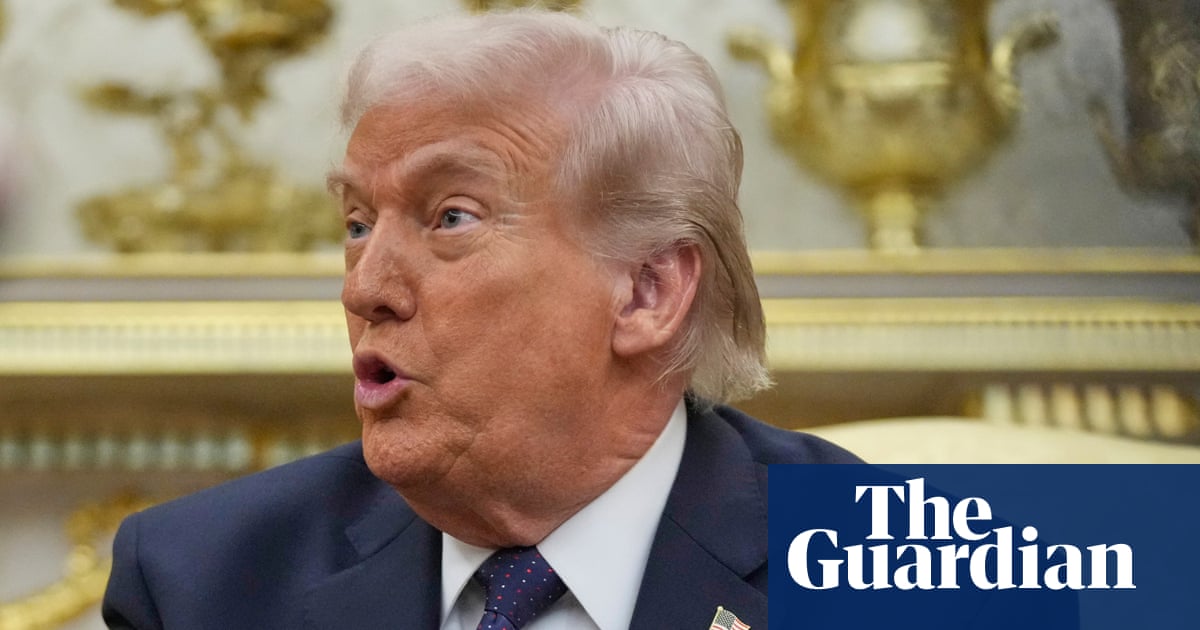
Among reactions to Trump’s recent comments, there is also a strong line from Pope Leo, who briefly spoke with reporters last night, after meeting with Ukraine’s Volodymyr Zelenskyy earlier in the day.
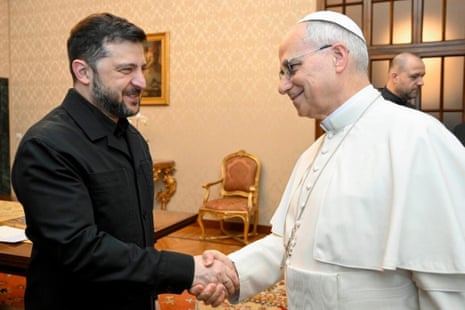
While he declined to comment on the US peace plan pursued by Trump, he said:
“Unfortunately, I believe that some aspects of what I have seen would bring about a huge change in what has, for many, many years, been a true alliance between Europe and the United States.”
He added:
“Remarks that are made about Europe, also in interviews recently, I think, are trying to break apart what I think needs to be a very important alliance today and in the future.”
“It’s a programme that President Trump and his advisers put together. He’s the president United States, has a right to do that. … While perhaps many people United States would be in agreement I think many others will just see things in a different way.”
Trump's comments on Ukraine align with our view, Kremlin says
Meanwhile, the Kremlin said US President Donald Trump’s latest statements on Ukraine – in which he said Moscow will win the war and that Kyiv will have to cede land – align with Russia’s view, AFP reported.
Kremlin spokesman Dmitry Peskov told reporters that Trump’s recent comments were “very important” and added:
“In many ways, on the subject of Nato membership, on the subject of territories, on the subjects of how Ukraine is losing land, it is in tune with our understanding.”
Peskov was also cautious in responding to Zelenskyy’s move on elections, saying “we will see how the events will unfold.”
The US is not just Europe’s unwilling ally, but an adversary steeped in far-right ideology — opinion

Cas Mudde
The Stanley Wade Shelton UGAF professor of international affairs at the University of Georgia, and author of The Far Right Today.
As Europeans reflect on Trump’s latest comments on Europe and the new US national security strategy, here is analysis from Cas Mudde, a leading academic working on far-right movements in Europe.
On the same day that Donald Trump received his made-to-order “peace prize” from his newest pal, Fifa president “Johnny” Infantino, his administration published an equally gaudy national security strategy. The relatively short document oozes Trump and Trumpism. It starts out with the typically modest claim that the president has brought “our nation – and the world – back from the brink of catastrophe and disaster”.
Even if the strategy mostly formalises the ongoing actions and statements of Trump and his administration, it should be heeded as a warning for the world, and Europe in particular.
The document espouses an aggressive form of foreign-policy interference in which the US explicitly sets itself the goal of “promoting European greatness”. Its language could have been directly lifted from Viktor Orbán’s speeches during the so-called refugee crisis of 2015-16: “We want Europe to remain European, to regain its civilisational self-confidence.” Even more ominously, the document claims that Europe’s “economic decline is eclipsed by the real and more stark prospect of civilisational erasure”.
The whole section on Europe is steeped in decades of European far-right ideology and propaganda.
None of this is necessarily new – think of JD Vance’s speech at the 2025 Munich Security Conference in which the vice-president launched an ideological attack on Europe’s democratic model.
But perhaps now that it is published in an official document, European leaders will finally understand that “daddy” is serious. And, if the document is too long or vague for them, let me summarise it in terms that are clear and concise: the current US government believes that its national security is best served by the destruction of liberal democracy in Europe. In other words, the US is not (just) an unwilling ally, it is a willing adversary.
Time to act accordingly.
Starmer, Frederiksen urge Europe’s leaders to curb ECHR to halt rise of far right
Separately, there is also an important meeting in Strasbourg, with ministers from 46 countries discussing the interpretation of the European Convention of Human Rights when it comes to migration.
As Pippa Crerar and Rajeev Syal say in our story:
Ahead of the meeting, UK prime minister Keir Starmer and Danish prime minister Mette Frederiksen have called on European leaders to urgently curb joint human rights laws so that states can take tougher action to protect their borders and see off the rise of the populist right across the continent.
Before a crucial European summit on Wednesday, the prime ministers urged fellow members to “go further” in modernising the interpretation of the European convention on human rights (ECHR) to prevent asylum seekers using it to avoid deportation.
But writing for the Guardian, they said that updating the interpretation of the convention was urgently required to confront the challenges posed by mass migration – and far-right forces that sought to divide mainstream opinion across Europe.
“The best way of fighting against the forces of hate and division, is to show that mainstream, progressive politics can fix this problem,” Starmer wrote in a joint article with the Danish leader, Mette Frederiksen.
“Listening to legitimate concerns and acting on them is what our politics is about. That’s not empty populism, it’s democracy. We are determined to show that our societies can act with compassion while upholding law and order, and fairness.”
Morning opening: Zelenskyy’s election gambit
Jakub Krupa
Volodymyr Zelenskyy has said he is ready to hold a wartime election within the next three months, if Ukraine’s parliament and foreign allies will allow it, after Donald Trump accused him of clinging on to power.
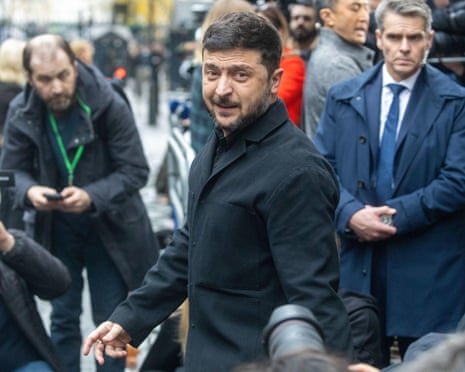
As Shaun Walker writes from Kyiv, Zelenskyy, clearly irritated by Trump’s intervention, said that “this is a question for the people of Ukraine, not people from other states, with all due respect to our partners”.
However, he promised to explore avenues for holding a vote in the coming months. “Since this question is raised today by the president of the United States of America, our partners, I will answer very briefly: look, I am ready for elections,” Zelenskyy said on Tuesday evening.
Zelenskyy’s five-year term expired in May last year, but the Ukrainian constitution prohibits elections in wartime, and even his political opponents have said repeatedly that the security and political considerations do not allow for holding an election during wartime.
Zelenskyy’s move also seeks to put more pressure on allies to offer extensive security guarantees as the US-led peace talks progress slowly, with guarantees among the issues yet to be decided.
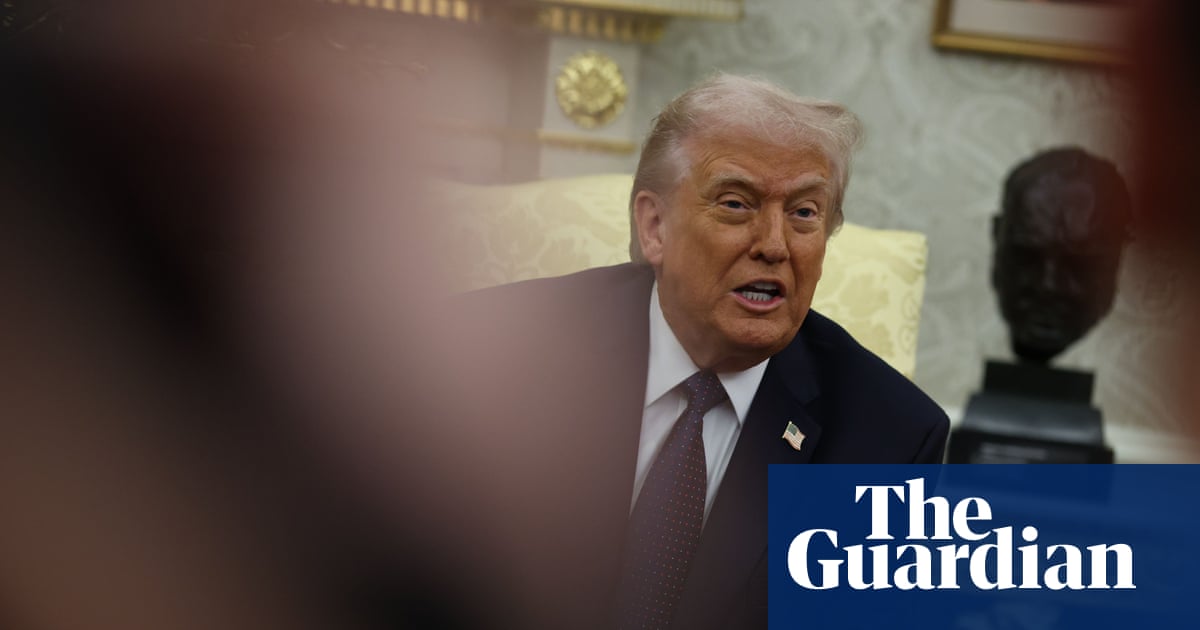
His comments come in the aftermath of an explosive interview by Trump with Politico, in which he repeatedly criticised EU leaders as “weak” and Europe as “decaying” as a result of their policies. Expect more leaders to respond to his claims in the coming days.
Finally, EU’s European ministers are meeting in Lviv for an informal meeting, which will cover talks about Ukraine’s ambitions to join the bloc.
I will bring you all the key updates throughout the day.
It’s Wednesday, 10 December 2025, it’s Jakub Krupa here, and this is Europe Live.
Good morning.