2 months ago
60
2 months ago
60
Iran endured a day of unprecedented military and diplomatic pressure on Tuesday as US airstrikes pushed the death toll in the country above 800 and the offices of Assembly of Experts, the body due to select a replacement for the assassinated supreme leader Ali Khamenei, were bombed.
It would be an extraordinary security lapse if it emerges that many of the 88 elderly clerics on the assembly had been in the building in Qom voting at the time. “There was another hit today on the new leadership, and it looks like that was pretty substantial,” Trump said at a White House event, although it was unclear what specifically he was talking about.
In Tehran, a building that is home to a body that mediates between Iran’s parliament and the Guardian Council of clerics and lawyers was also attacked.
In a bid to instil some stability, it had become an imperative for Iran’s authorities to try to rapidly install a new clerical figure to replace the 86-year-old Khamenei. He was assassinated along with his wife and granddaughter on Sunday.
Reports the defence minster, installed only two days earlier, had been killed were not confirmed. The offices of the supreme national security council had been bombed. It is not known whether Ali Larijani, the council’s secretary general, was present. The chaos suggests Iran’s government is struggling to function at all in the middle of a war that is turning into an existential struggle for survival.
Behind the scenes a power struggle between officials is under way over whether to adopt a more flexible approach to the west, a debate that irevolves around the choice of the new supreme leader, underlining the need for the political elite to make a decision.
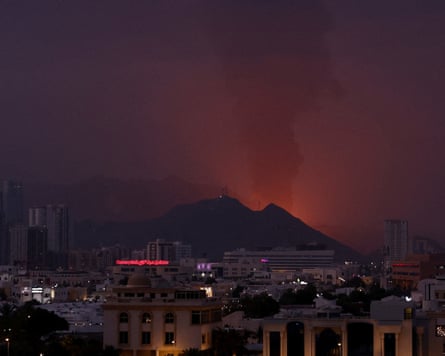
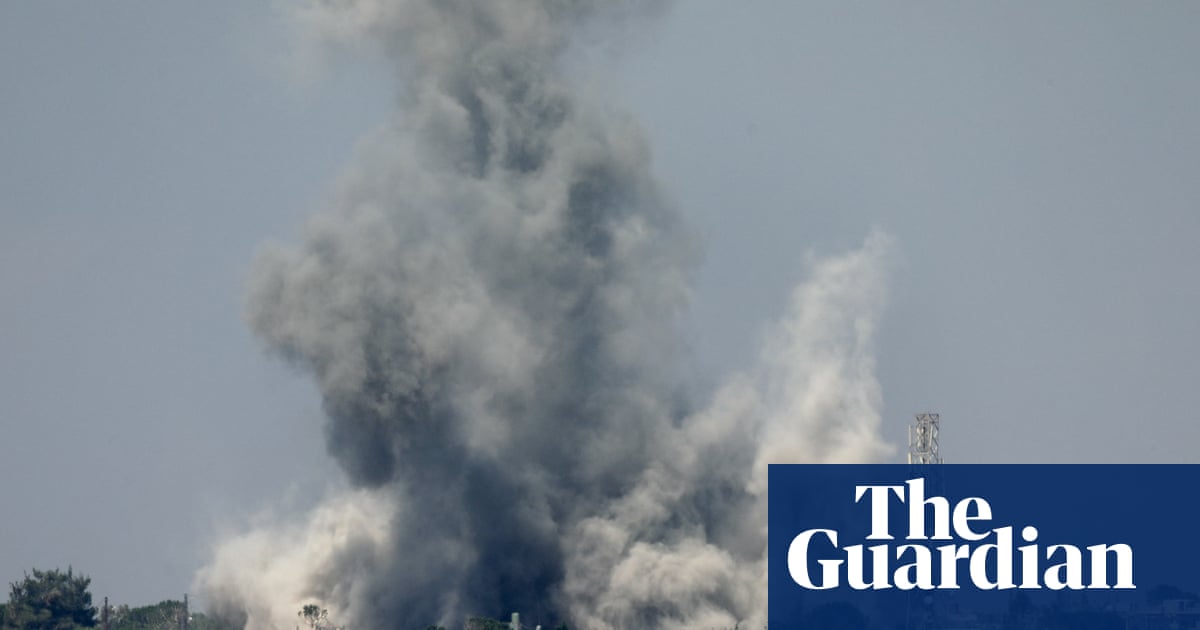
Israel’s war planes appear to have near-complete control of the skies over Tehran and can pick off Iran’s leaders and security officials at will. Vast swathes of black smoke and fires were shown across the Tehran skyline, as more residents sought to flee to the countryside.
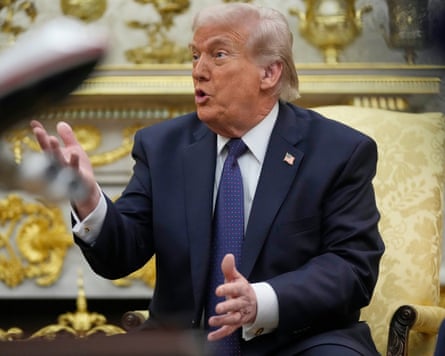
Donald Trump has admitted the airstrikes on Iran’s leadership have been so effective that at least two government members he had prospectively earmarked to lead Iran had been killed in airstrikes. With Trump’s objectives in the war shifting almost daily, it is not clear if he wants Iran to scrap the concept of clerical rule, and whether he believes a secular politician will be more malleable. The supreme leader in Iran has an authority no politician can match, and effectively can overrule any democratic institution in the country.
Trump showed no interest in diplomatic efforts led by Turkey to restart talks, sending a message on Truth Social that: “Their air defense, their air force, their navy, and their leadership are gone. They want to negotiate, I said it’s too late!”
Iran’s officials denied they are seeking to resume talks that ended on Thursday, followed 24 hours later by the first airstrikes on Tehran. Iran had thought the talks were due to continue at a technical level this week.
In a sign of the tragedy unfolding across Iran, thousands turned out in Minab, southern Iran for the funeral of more than 170 school girls killed in a bombing on Sunday. The US has not accepted responsibility, but the UN human rights commission has asked Washington to mount an urgent inquiry into its role, including whether the US mistook the school for an Islamic Revolutionary Guards Corps building.
Highlighting the destruction of civilian property including schools and hospitals, Esmail Baghaei, the foreign ministry spokesperson, held his weekly press conference in a damaged school in Tehran.
Baghaei insisted Iran was not interested in resuming the talks that fell apart last week, saying: “Now is the time for war and defending the homeland. Anything that tries to distract us must be avoided and rejected. Deception is part of the US behavioural pattern.”
Photograph: Mark Schiefelbein/AP
He described the US special envoy Steve Witkoff’s description of the negotiations as lies. Baghaei explained Witkoff had claimed in US TV interview that the US had four demands: “An end to the nuclear and missile programmes, any kind of support for friends in the region and an end to the Iranian navy. Of course, none of these were raised in the negotiations. These are lies they are making up to justify their actions.”
Picking up on claims by Marco Rubio, the US secretary of state, the US had acted largely because it knew Israel was about to attack and that would make the US a target for Iran the foreign minister, Abbas Araghchi, said this seemed a case of Israel and not America First.
He added: “Trump was fed false information by the Israeli prime minister Benjamin Netanyahu about Iran’s military defence and deterrent capabilities. The question is whether Israel, with deliberate miscalculation, made the US a victim of its own interests.”
He warned European powers not to help the US launch airstrikes against Iran, saying: “It would be an act of war. Any such act against Iran would be regarded as complicity with the aggressors.”
The UK has said it is willing to allow the US to use its airbases in the UK and the base at Diego Garcia to attack Iran as long as the attacks on Iranian missile sites are part of a defensive operation to protect the economies of the Gulf states.
Tensions with Gulf allies continued as Tehran pursued its long signalled plan to create chaos in global markets by attacking US assets right across the region. The move is leading to a collapse in relations with Gulf states and pushing the price of oil towards $85 a barrel.
The foreign ministry urged angry Gulf states to act with reflection and patience. Ministry sources said they believed Israeli the Mossad agents were working in Saudi Arabia and Qatar in a bid to run operations that might turn the states against Iran.
In a rare admission of the diplomatic damage the strategy may be causing, the son of the Iranian president Masoud Pezeshkian, Yousef, said: “I know how much my father tried to improve relations with neighbours and Muslim countries in the region, and how important it was and is still to him.
“How bitter it is that to defend ourselves we have to strike American bases in our friendly countries. I do not know if they understand or not. I wish none of our neighbours’ soil was under the control of the US army.”