3 months ago
81
3 months ago
81
Many of us decline into our dotage. Actors slip into their anecdotage. Two of the best programmes in the rather arid TV Christmas schedules featured Judi Dench touchingly reminiscing about her love of Shakespeare. The great dame is also one of the glittering ensemble in The Twelfth Night Reunion, a one-off event conceived and hosted by Gyles Brandreth and recorded at the Orange Tree in Richmond, London, a year ago, where a group of actors share their memories of the play.
Now available on YouTube, it is like an upmarket version of The Graham Norton Show with two heart-stopping moments.
The format is simple. Each actor is invited to describe his or her first encounter with the play and their experience of being in it. Simon Callow vividly recalls the “melancholy magic” of John Barton’s legendary 1969 RSC production. When cast as the drunken Sir Toby in a later National Theatre production, Callow reveals that he discovered “that the character was basically my father”. Dame Judi, Viola in the Barton version, describes a famous bit of comic business created by the Malvolio, Donald Sinden. In the garden scene, Sinden glanced at a sundial and then at his fob watch and realised the two showed different times. After looking up at the sun, Sinden effortfully heaved the sundial into a new position until it showed the correct Malvolio time.
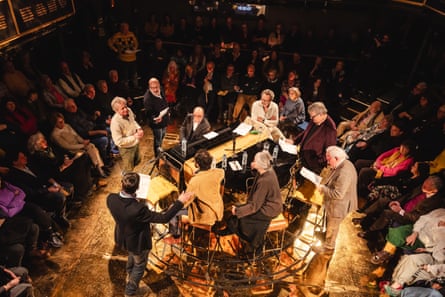
Stephen Fry, Malvolio at Shakespeare’s Globe, in the West End and on Broadway, rightly pays tribute to the play’s flawless structure and to Mark Rylance’s unearthly skill as Olivia. But Fry also reveals that he and Rylance had fierce arguments about the authorship of the plays and says that, although Rylance claims to keep an open mind, “his mind is so open his brain has left him”. Even Fry, however, concedes that he found the scene where Malvolio is imprisoned impossible to learn and was later told by Ian McKellen that every actor has the same problem and that Donald Wolfit concluded that Shakespeare could not possibly have written it.
What emerges is everyone’s passion for the play and joy at being in it. Tam Williams, Viola in an all-male Propeller production, says that it’s like “a Liverpool football team of the 1970s” in that everyone has to be at the top of their game. Penelope Wilton describes how, when playing Maria, she countered a crudely bottom-smacking Sir Toby by adopting an increasingly upper-class accent until she sounded “like an announcer on Radio 3”.
But while the film is full of fun, including one of the best Olivier stories I’ve ever heard from Robert Lindsay, it is only at the end that it touches the heart. The first moment comes when Judi Dench performs the soliloquy where Viola realises that Olivia has fallen in love with her. You can play that speech for comedy but there is an intensity of sadness to Dame Judi – especially on the line “What thriftless sighs shall poor Olivia breathe!” – that makes you realise Viola’s sympathy for another victim of passion.
The second moving moment comes when Stefan Bednarczyk, who was a piano-playing Feste in the Orange Tree’s Twelfth Night in 2024, gets the cast and audience to join together in singing the last few lines of the play: “A great while ago the world began / With hey-ho, the wind and the rain / But that’s all one, our play is done / And we’ll strive to please you every day.” Maybe it is because they evoke the transience of mortal things but those simple lines make the ideal ending to the greatest comedy ever written.