3 months ago
70
3 months ago
70
Jacqui Smith defends prime minister following resignation of Morgan McSweeney amid Mandelson scandal
LIVE Updated 8m ago
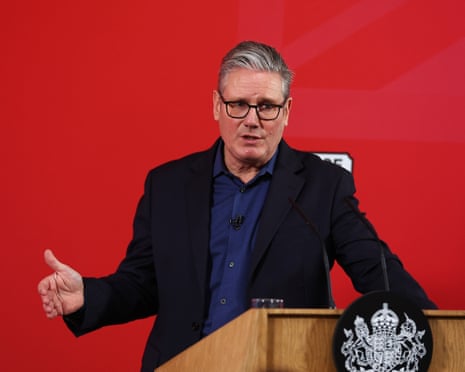
Keir Starmer last week. The prime minister will address Labour MPs this evening. Photograph: Peter Nicholls/PA
Show key events only Please turn on JavaScript to use this feature
Good morning. One of the staples of political journalism these days (for better or for worse) is the “how damaging?” question. With Westminster preoccupied with the question of how long Keir Starmer can last as prime minister following the resignation of Morgan McSweeney, his chief of staff, yesterday in the light of the Peter Mandelson/Jeffrey Epstein scandal, here is a summary of how long other prime ministers were able to stay on after key advisers quit.
-
Margaret Thatcher stayed in office, after the resignation of Alan Walters, for one year and one month.
-
Tony Blair stayed in office, after the resignation of Alastair Campbell, for three years and 10 months.
-
Gordon Brown stayed in office, after the resignation of Damian McBride, for one year and one month.
-
Theresa May stayed in office, after the resignation of Nick Timothy and Fiona Hill, for two years and one and a half months.
-
Boris Johnson stayed in office, after the resignation of Dominic Cummings, for one year and 10 months.
-
Johnson stayed in office, after the resignation of Munira Mirza, for seven months.
None of these are exact parallels. Most of these advisers were forced out because of pressure from MPs in the PM’s party, at least one (Mirza) was admired and her departure was a shock, but with McSweeney the picture is mixed. Many Labour MPs are glad to see him gone, but others credit him with winning them their seats and worry how the PM will manage without him.
The Cummings precedent is similar in some ways, because Cummings was the mastermind behind Johnson’s 2019 general election victory. McSweeney also gets credit for the Labour’s 2024 landslide. But only last night Prof Jane Green, who runs the British Election Study project, said “the major factors that contributed to the unique seats-votes outcome were outside Labour’s direct control” and the claim that McSweeney’s decision to focus on appealing to former Tories was a crucial factor has been shown by election analysis to be wrong. Besides, unlike Cummings, McSweeney remains hinged.
In some respects McSweeney is more similar to Nick Timothy and Fiona Hill. They were decisive in enabling Theresa May to become PM, just as McSweeney was instrumental in showing Starmer how he could win the Labour leadership. But Timothy and Hill were even more dominant in No 10 than McSweeney ever was. And they were forced out because they wrote a manifesto that lost an election, whereas McSweeney did the opposite.
In short, there is no way of knowing how this will turn out. But previous experience suggests that even a damaging resignation like McSweeney’s doesn’t make the PM’s resignation imminent.
But we have got an inkling of what might happen today. Starmer is due to address Labour MPs this evening and Jacqui Smith, the former Labour home secretary who is now a peer and skills minister, has been giving interviews this morning. Speaking on Times Radio this morning, she said Starmer deserved credit for “taking responsibility” for the Mandelson appointment.
The prime minister is taking responsibility. He took responsibility for the decision that was made about Peter Mandelson, although to be clear here it was of course Peter Mandelson that, in consistent lying and engagement with Jeffrey Epstein, let down the party and the government and the country. And I think that will become clearer as the information around the appointment is put out into the public domain.
According to Sam Blewett and Bethany Dawson in their London Playbook briefing for Politico, Labour First, the right-leaning Labour group that supports Starmer, has been urging its MPs allies to make this point at tonight’s PLP meeting. They say:
One riled MP forwarded Playbook a message the right-leaning Labour First faction has sent to backbenchers it reckons are loyal to Starmer, urging them to speak up in support at the PLP meeting. Talking points include how the PM “accepts his mistakes and apologises,” compared to the carousel of Tory leaders forced from office … and how the government is delivering on “many areas of incremental change.”
Here is our overnight story by Pippa Crerar summing up all yesterday’s developments.
And here is an analysis by Kiran Stacey.
Today we will be focusing mostly on this crisis. Here is the agenda.
Morning: Kemi Badenoch is on a visit in Surrey.
11.30am: Downing Street holds a lobby briefing.
2.30pm: Shabana Mahmood, the home secretary, takes questions in the Commons.
3pm: Nigel Farage, the Reform UK leader, gives a speech in Birmingham.
6pm: Keir Starmer addresses Labour MPs at a private meeting of the PLP in Westminster.
If you want to contact me, please post a message below the line when comments are open (between 10am and 3pm), or message me on social media. I can’t read all the messages BTL, but if you put “Andrew” in a message aimed at me, I am more likely to see it because I search for posts containing that word.
If you want to flag something up urgently, it is best to use social media. You can reach me on Bluesky at @andrewsparrowgdn.bsky.social. The Guardian has given up posting from its official accounts on X, but individual Guardian journalists are there, I still have my account, and if you message me there at @AndrewSparrow, I will see it and respond if necessary.
I find it very helpful when readers point out mistakes, even minor typos. No error is too small to correct. And I find your questions very interesting too. I can’t promise to reply to them all, but I will try to reply to as many as I can, either BTL or sometimes in the blog.
Key events Show key events only Please turn on JavaScript to use this feature
Badenoch says Starmer's position now 'untenable'
Kemi Badenoch, the Conservative leader, has said that Keir Starmer should resign given his decision to appoint Peter Mandelson as ambassador to Washington.
In an interview on the Today programme this morning, Badenoch said:
[Claiming] ‘I was badly advised’ is not a good excuse for a leader. Advisers advise, leaders decide. He made a bad decision, he should take responsibility for that … this man said that he was the chief prosecutor for the country, when did he start believing everything that people told him?
Peter Mandelson had been sacked twice for unethical behaviour. [Starmer] is allowing someone else to carry the can for a decision that he chose to make. But the real problem is that this country is not being governed.
Keir Starmer promised a government that would be whiter than white. His position now is untenable, because if he thinks that bad advice is enough for Morgan McSweeney to go, then, yes, I think that makes his position untenable.
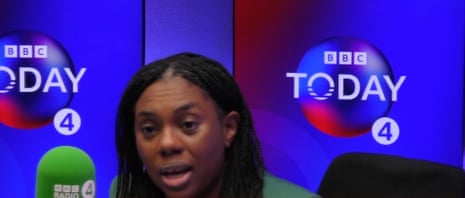
Skills minister Jacqui Smith says she is sure Starmer won't resign
In interviews this morning Jacqui Smith, the skills minister, insisted that Keir Starmer will carry on as PM.
She told Times Radio:
I think that the prime minister absolutely is determined to [carry on]. He’s determined and has taken responsibility for the mistakes made in appointing Peter Mandelson.
On the Today programme Nick Robinson told Smith that Pat McFadden, the work and pensions secretary, gave an interview yesterday morning saying it would be pointless for Morgan McSweeeny to resign. Only a few hours later McSweeney did just that. He asked Smith if she could be sure that Starmer too wasn’t about to resign.
Smith replied: “I am sure, yes.”
But when Robinson asked her if Starmer had told her that personally, Smith said she had not spoken to him directly. “I don’t believe he will [resign], I don’t think he should,” she said.
Good morning. One of the staples of political journalism these days (for better or for worse) is the “how damaging?” question. With Westminster preoccupied with the question of how long Keir Starmer can last as prime minister following the resignation of Morgan McSweeney, his chief of staff, yesterday in the light of the Peter Mandelson/Jeffrey Epstein scandal, here is a summary of how long other prime ministers were able to stay on after key advisers quit.
-
Margaret Thatcher stayed in office, after the resignation of Alan Walters, for one year and one month.
-
Tony Blair stayed in office, after the resignation of Alastair Campbell, for three years and 10 months.
-
Gordon Brown stayed in office, after the resignation of Damian McBride, for one year and one month.
-
Theresa May stayed in office, after the resignation of Nick Timothy and Fiona Hill, for two years and one and a half months.
-
Boris Johnson stayed in office, after the resignation of Dominic Cummings, for one year and 10 months.
-
Johnson stayed in office, after the resignation of Munira Mirza, for seven months.
None of these are exact parallels. Most of these advisers were forced out because of pressure from MPs in the PM’s party, at least one (Mirza) was admired and her departure was a shock, but with McSweeney the picture is mixed. Many Labour MPs are glad to see him gone, but others credit him with winning them their seats and worry how the PM will manage without him.
The Cummings precedent is similar in some ways, because Cummings was the mastermind behind Johnson’s 2019 general election victory. McSweeney also gets credit for the Labour’s 2024 landslide. But only last night Prof Jane Green, who runs the British Election Study project, said “the major factors that contributed to the unique seats-votes outcome were outside Labour’s direct control” and the claim that McSweeney’s decision to focus on appealing to former Tories was a crucial factor has been shown by election analysis to be wrong. Besides, unlike Cummings, McSweeney remains hinged.
In some respects McSweeney is more similar to Nick Timothy and Fiona Hill. They were decisive in enabling Theresa May to become PM, just as McSweeney was instrumental in showing Starmer how he could win the Labour leadership. But Timothy and Hill were even more dominant in No 10 than McSweeney ever was. And they were forced out because they wrote a manifesto that lost an election, whereas McSweeney did the opposite.
In short, there is no way of knowing how this will turn out. But previous experience suggests that even a damaging resignation like McSweeney’s doesn’t make the PM’s resignation imminent.
But we have got an inkling of what might happen today. Starmer is due to address Labour MPs this evening and Jacqui Smith, the former Labour home secretary who is now a peer and skills minister, has been giving interviews this morning. Speaking on Times Radio this morning, she said Starmer deserved credit for “taking responsibility” for the Mandelson appointment.
The prime minister is taking responsibility. He took responsibility for the decision that was made about Peter Mandelson, although to be clear here it was of course Peter Mandelson that, in consistent lying and engagement with Jeffrey Epstein, let down the party and the government and the country. And I think that will become clearer as the information around the appointment is put out into the public domain.
According to Sam Blewett and Bethany Dawson in their London Playbook briefing for Politico, Labour First, the right-leaning Labour group that supports Starmer, has been urging its MPs allies to make this point at tonight’s PLP meeting. They say:
One riled MP forwarded Playbook a message the right-leaning Labour First faction has sent to backbenchers it reckons are loyal to Starmer, urging them to speak up in support at the PLP meeting. Talking points include how the PM “accepts his mistakes and apologises,” compared to the carousel of Tory leaders forced from office … and how the government is delivering on “many areas of incremental change.”
Here is our overnight story by Pippa Crerar summing up all yesterday’s developments.
And here is an analysis by Kiran Stacey.
Today we will be focusing mostly on this crisis. Here is the agenda.
Morning: Kemi Badenoch is on a visit in Surrey.
11.30am: Downing Street holds a lobby briefing.
2.30pm: Shabana Mahmood, the home secretary, takes questions in the Commons.
3pm: Nigel Farage, the Reform UK leader, gives a speech in Birmingham.
6pm: Keir Starmer addresses Labour MPs at a private meeting of the PLP in Westminster.
If you want to contact me, please post a message below the line when comments are open (between 10am and 3pm), or message me on social media. I can’t read all the messages BTL, but if you put “Andrew” in a message aimed at me, I am more likely to see it because I search for posts containing that word.
If you want to flag something up urgently, it is best to use social media. You can reach me on Bluesky at @andrewsparrowgdn.bsky.social. The Guardian has given up posting from its official accounts on X, but individual Guardian journalists are there, I still have my account, and if you message me there at @AndrewSparrow, I will see it and respond if necessary.
I find it very helpful when readers point out mistakes, even minor typos. No error is too small to correct. And I find your questions very interesting too. I can’t promise to reply to them all, but I will try to reply to as many as I can, either BTL or sometimes in the blog.
Explore more on these topics