3 months ago
76
3 months ago
76
It sounds like a fundamental principle. A tenet. But, in reality, press freedom is more of a practical and relentless daily struggle.
I’ve been asking colleagues from across the Guardian to tell me about one of the things they have done to protect press freedom this past year – from our international correspondents and investigative reporters to our visual journalists and commercial and technology departments.
The range and scope of their responses will probably surprise you. But as the threats to independent journalism multiply, so must the measures taken to defend it.
Each of the tangible actions listed below illustrates the tireless commitment and resolve of our Guardian colleagues to protect a free and independent press. However, they couldn’t have done all this without our readers, whose support makes our work possible.
So, here’s one thing they did to defend press freedom – and here’s one thing you can do: support the Guardian
Juliette Garside, European financial affairs editor
“I worked with a team of journalists to piece together what happened to Viktoriia Roshchyna, a Ukrainian journalist who died aged 27 while investigating Russia’s ‘black sites’, where some of the worst human rights abuses take place. The Viktoriia Project was an investigation by a consortium of international media partners including the Guardian and Ukrainska Pravda, and was led by the French newsroom Forbidden Stories. In November, prison bosses at the Taganrog Sizo-2 detention centre were added to the EU sanctions list, after being identified by the Viktoriia Project.”
Alex Mellon, art director

“I produced an artwork to accompany an investigation into the Russian prison in Taganrog and the Ukrainian journalist Viktoriia Roshchyna. Working with very sparse images of the prison and the story, I tried to give our readers a sense of the place and highlight the abuses being carried out by the Russian state.”
Luke Hoyland, product manager, investigations and reporting

“I launched Secure Messaging, a new way for sources and whistleblowers to securely and anonymously reach out to the Guardian or any other news organisation that implements this free technology into their apps. Every copy of the Guardian app provides cover for these important communications, so simply by downloading the Guardian app you will help people safely speak truth to power.”

“In the past year, I’ve sought to amplify the voices of independent Hungarian journalists, who have long worked in some of the EU’s toughest conditions. Their story is one of tremendous resilience, as they have steadily laid bare the accusations of corruption and cronyism that have swirled around the former government of Viktor Orbán, while fending off smear campaigns, bureaucratic hurdles designed to tie up their time and even court charges.”

Paul Lewis, head of investigations
“We successfully defended our investigation into the actor and director Noel Clarke in a high court libel trial.”

Sirin Kale, investigations correspondent
“I gave evidence in the high court in support of public interest journalism, and my sources who had bravely gone on the record with their allegations against actor Noel Clarke.”
Luke Harding, senior international correspondent

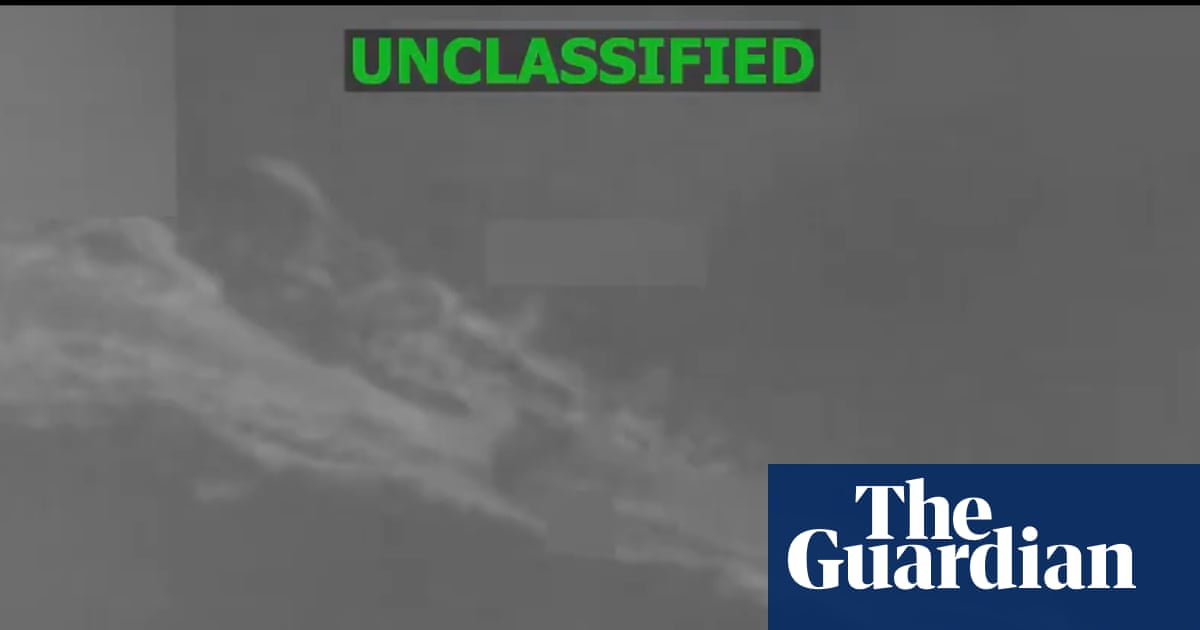
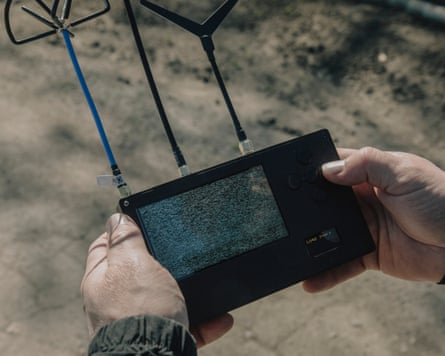
“I’ve covered the war in Ukraine for nearly five years and was in Kyiv in February 2022 when Vladimir Putin’s forces invaded. The conflict is now a war of drones and technology. The Guardian recently bought a $400 drone detector, which we take with us on trips to the frontline. It shows live video of the drone’s view. If it’s your vehicle you need to run. The detector is a practical contribution to press freedom: the freedom to report from dangerous areas, talk to soldiers and civilians, and return safely. Such trips are expensive. We are grateful for your support. It allows us to cover the biggest and most consequential war in Europe since 1945.”
Imogen Fox, global chief advertising officer

“Many advertisers are scared to advertise against news journalism in case news events somehow reflect badly on them. It has become a huge threat to the business model of news. I spent the year encouraging more than 500 advertisers to fund real and vital reporting. In addition, we don’t take fossil fuel and gambling advertising. So when you notice ads on the Guardian, you’re supporting our mission too.”
* * *
Melissa Hellmann, senior reporter on the Guardian’s US race and equity team

“Last December, I wrote a story about journalists of colour being laid off in the wake of Trump’s attacks on DEI. I granted several of my sources anonymity out of fear that they would be harassed or might have difficulty finding future employment. It was important for the public to learn their stories.”
Fiona Shields, head of photography

“Since international journalists have been excluded from Gaza for the entire duration of the Israeli offensive, it was an important moment when Alessio Mamo, one of the first photographers to fly over the territory in an aid plane, captured these apocalyptic scenes with journalist Lorenzo Tondo.”
Lorenzo Tondo, international correspondent

“When I flew over Gaza on a Jordanian aid mission last year, I thought of the more than 200 Palestinian journalists buried below us since the start of the war in Gaza. The Guardian’s Malak Tantesh messaged from her camp: seeing our plane brought joy – the feeling that a colleague was near despite the ban on international reporters. Her words deepened my sense of guilt. I was privileged in the sky while she was trapped. Malak has since been evacuated. But may history remember all those reporters who, homeless and dispossessed, delivered the truth to the world.”

Matt Storey, director of information security
“One thing I did this year to defend press freedom was help strengthen the systems, policies and safeguards that protect journalists, sources and the public interest work they rely on within the Guardian.”
Rachel Leingang, US Midwest political correspondent

“I reported in the field for months on the US federal government’s crackdown on immigrants and their defenders in my home state of Minnesota – despite risks to my physical safety and intimidation of the media, including arrests of some journalists. I then highlighted the criminal charges against one journalist who covered the surge, showing how the Trump administration is curbing the freedom of the press.”
Ajit Niranjan, Europe environment correspondent

“AI chatbots are driving a surge in energy-hungry datacentres but tech companies won’t tell us how much pollution they really spew. As part of a joint investigation with European media partners, we revealed how US tech giants lobbied the EU to hide the environmental toll of their datacentres – and hid it so successfully that it can’t even be accessed through freedom of information requests. Now we’re exploring other ways to uncover the extent of the pollution.”
Emma Graham-Harrison, chief Middle East correspondent
“At the start of this year I interviewed Sami al-Saei, a Palestinian journalist from the occupied West Bank who defied extreme social stigma to speak out about violent sexual abuse he endured in Israeli detention. Held without charge or trial for over a year from early 2024, he is the only survivor to speak publicly about what human rights group B’Tselem calls a ‘grave pattern’ of sexual violence in Israeli jails. Al-Saei said he can no longer work in media, but wants other journalists to report on his ordeal and the torture of other detainees.”

Sarah Martin, senior correspondent, investigations, Guardian Australia
“This year I have stared down denials, threats and obfuscation to expose the patronage of the political party One Nation by Australia’s richest person.”
Tom Levitt, commissioning editor for the Guardian’s Rights and Freedom series

“We have repeatedly reported on the horrifying surge in executions of poor and marginalised foreign nationals in Saudi Arabia, a country where restricted press freedoms have muted such coverage. Most of those killed are convicted of minor drug crimes and have little resources for lawyers to defend themselves.”
Vikram Dodd, police and crime correspondent

“A constant obstacle to our ability to report the truth is the expansion of the UK’s privacy rulings. Like other reporters here, I’ve had to be mindful of this while doing our work holding the powerful to account. And too often journalists have lost stories that would have been in the public interest to publish. It may have been well intentioned, but too often it hampers public interest reporting.”
Mark Townsend, senior global development reporter
“Covering Sudan’s catastrophic war requires the many virtues of a free press. Scores of anonymous sources, who will be hunted down and killed if identified, need to know we’ll do everything we can to protect them. By contrast, the nefarious role of states like the United Arab Emirates needs exposing through journalism that is invulnerable to front-footed lobbyists and lawyers.”
Ellen Wishart, digital art director

“I created this image replacing TV host Jimmy Kimmel’s mouth with Donald Trump’s for a feature about the deterioration of free speech in the US. I wanted to show how things have gone beyond censorship. Trump’s aggressive legal threats against the press, combined with his constant attacks on broadcasters, journalists and news organisations, seem to be creating a climate of fear that makes people increasingly cautious about what they say. It feels as though some outlets are being intimidated into self-censorship – as if Trump is gradually shaping the media narrative so directly that he may as well be holding the microphone himself.”
Ben Smee, Queensland correspondent, Guardian Australia

“As journalists we get support from editors, lawyers and colleagues. We get paid to do work we believe in. But for the whistleblowers who are fundamental to some of our most important work – like our Broken Trust investigation – the personal toll can be immense. Our work with these whistleblowers is about more than just protecting their identities; it’s about supporting them as they speak up.”
-
There has never been a more critical time to support the survival of independent journalism, which is why we’re running our annual press freedom appeal. If you are already a Guardian supporter, thank you for backing our journalism and helping to protect a free and independent press. If you’d like to support us today or increase your existing monthly support, it will help us reach our target of 60,000 acts of support. Thank you.