1 month ago
44
1 month ago
44
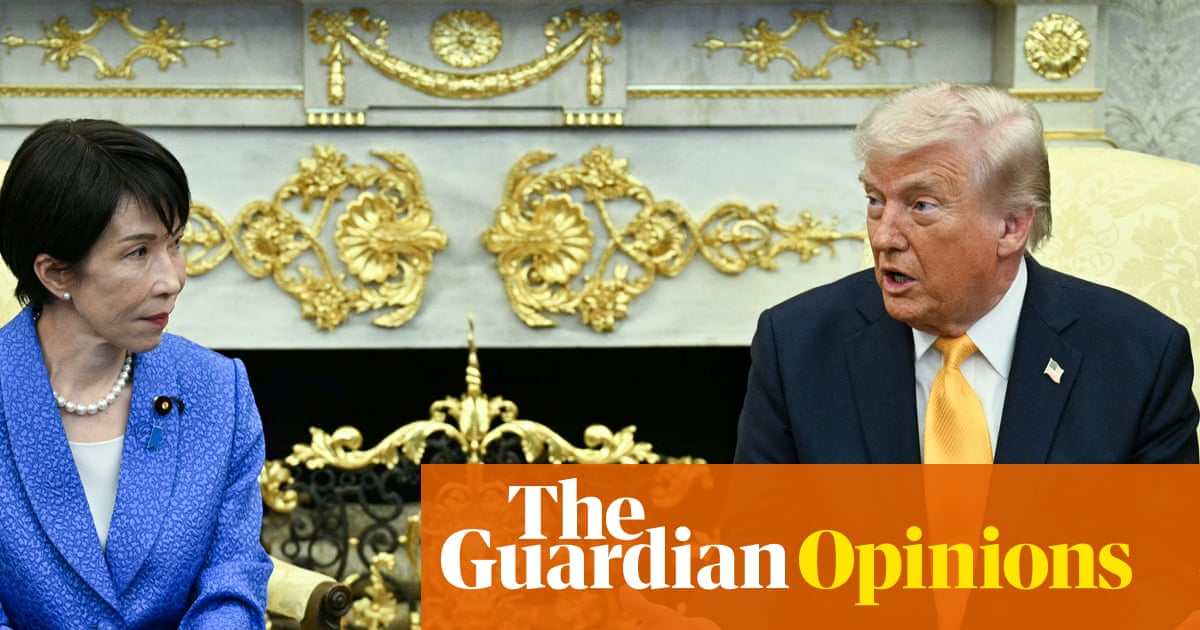
Spain’s prime minister, Pedro Sánchez, called his 2019 political memoir A Manual for Resistance: a fitting title for a centre-left leader known for his survival skills and willingness to hold the line under pressure. So it was hardly surprising that he stood firm on Wednesday when Donald Trump threatened Spain with a trade embargo over his opposition to the US-Israeli bombing of Iran.
“We are not going to be accomplices to something that is bad for the world – and contrary to our values and interests – simply out of fear of reprisals,” Sánchez insisted. Having already stated that the strikes were “a violation of international law”, he summarised his government’s position simply as “no to war”.
His defiance of US-Israeli aggression did not stop at words. On Monday, it had emerged that his administration was refusing the US use of the air bases at Rota and Morón – prompting the withdrawal of 15 US aircraft from Spain. The only precedent for a Spanish government blocking US use of these jointly run installations was with respect to Ronald Reagan’s 1986 strikes against Muammar Gaddafi’s Libya.
Yet unlike his 1980s predecessor Felipe González, Sánchez’s stance places him apart from his European peers. With Trump threatening economic retaliation, and his fellow Nato leaders signalling different degrees of accommodation with Washington’s war plans, Sánchez’s position can appear a principled but perilous stand.
The Spanish prime minister’s sense of morality has been referred to more than once over the past week but, in reality, it would be more accurate to describe him as a pragmatist. His defiance over the Iran conflict reflects a calculation that the geopolitical risks are manageable, the potential electoral rewards significant, and that the broad alignment with Trump’s militarism will not hold.
Sánchez’s standoff over Nato defence spending targets last year already demonstrated his government’s willingness to break ranks with Trump. Spain was alone in refusing to commit to spending 5% of GDP on defence, but because trade policy is handled at an EU level, it was shielded from direct White House retaliation, despite Trump’s talk of imposing punitive tariffs.
That episode also illustrates the domestic political logic behind many of Sánchez’s recent foreign policy interventions. Faced with a fragile parliamentary majority following inconclusive elections in 2023, as well as renewed pressure from an ongoing corruption scandal within his Spanish Socialist Workers’ party (PSOE), he has increasingly turned to the international stage to generate political momentum at home. From his outspoken criticism of Israel’s slaughter in Gaza to his confrontation with Trump over defence spending, Sánchez’s international stances have allowed him space from an adverse domestic agenda, as well as positioning himself as a progressive counterpoint to Washington.
Sánchez is now betting that his outspoken stance on Iran can resonate with voters ahead of next year’s local elections, much as the PSOE’s 2004 campaign promise to withdraw Spanish troops from the Iraq war did. With conservative opposition leader Alberto Núñez Feijóo openly defending military action against Iran, Sánchez can frame the party divide in terms likely to resonate with Spain’s anti-militarist public opinion, while portraying his rival as supportive of a conflict likely to drive up inflation at home.
Yet his high-profile moves on foreign policy have not only been for domestic advantage, but also to stake out how Spain and the EU should position themselves in a moment of acute geopolitical upheaval. Sánchez has been among the EU’s most vocal proponents of closer commercial and diplomatic ties with China, as a counterweight to the US. Indeed before other European leaders travelled to Beijing in recent months, Sánchez assumed the risk of meeting with the Chinese president Xi Jinping the same week that Trump unveiled his sweeping “liberation day” tariffs – a move that US treasury secretary Scott Bessent warned was tantamount to Spain “cutting [its] own throat”.
Sánchez has also championed the EU-Mercosur free trade deal as part of an effort to diversify Europe’s commercial partners, amid aggressive US protectionism – even though sections of his base, and leftwing coalition partner the Sumar party, have criticised its inadequate environmental and social protections. Sánchez is willing to be ahead of the curve on certain issues but without drifting too far from the changing boundaries of the European mainstream.
Such a balancing act has become increasingly hard to maintain as the EU has lurched to the right in recent years. During the pandemic he played a central role in negotiating the EU’s NextGeneration recovery funds. However his exclusion from last month’s informal European summit organised by German chancellor Friedrich Merz and Italian prime minister Giorgia Meloni to push a new agenda of deregulation and competitiveness in Brussels underscores his growing isolation.
This was the backdrop against which Merz declined to defend Spain, a fellow EU member, in the face of Donald Trump’s threats over Iran. If Merz’s response might suggest Madrid has this time overreached in its confrontation with Washington, Sánchez’s administration remains confident it will ultimately be vindicated. His ministers suggest that, as with the EU’s stance on Gaza and relations with China, the consensus in Europe will shift in the direction Spain has charted, as the dire consequences of the war become evident.
In case of further escalation from the Trump administration, Sánchez also has a final card he can play: the jointly run US-Spanish naval base at Rota, which since 2014 has hosted US missile-defence destroyers. While the US has already been prohibited use of the Rota airbase, Spanish media reports this week suggested that warships based at Rota had been deployed to the eastern Mediterranean, and may have been involved in intercepting Iranian missiles aimed at Israel. The base remains a cornerstone of US forward deployment between the Atlantic and Mediterranean, giving Spain a strategic importance difficult for Washington to ignore.
Right now, the Spanish government looks ever more confident in its stance. Few other centre-left leaders have shown Sánchez’s instinct for seizing political moments in recent decades: his 11 years at the helm of PSOE have been marked by repeated political reinventions, as the terrain around him has shifted. Having recently become the third-longest-serving prime minister since Spain’s transition to democracy in the 1970s, his wager is that he has found the next opening through which to advance his position, both at home and abroad.
-
Eoghan Gilmartin is a freelance journalist who has covered Spanish politics for Jacobin Magazine, Tribune, Novara Media and Open Democracy