3 months ago
74
3 months ago
74
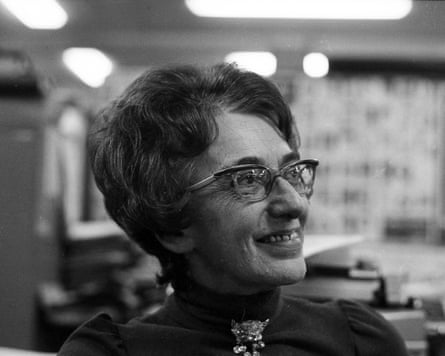
Celia Brayfield was at her desk in the Femail section of the Daily Mail’s Fleet Street office when an editor called her over. It was July and Wimbledon had started. “He said: ‘We want you to go down and get into the women’s changing rooms and report on lesbian behaviour.’ One didn’t normally swear at that time but I declined. That was the attitude then,” she told me.
From the late 1960s until the early 70s, Brayfield was one of a small group of female journalists working on women’s pages in newspapers. “We were dealing with everyday sexism on an unbelievable scale,” she said. “You learned to wear trousers or take the lift because if you took the stairs someone would try to look up your skirt. But then you couldn’t go to a lot of press conference venues in trousers. In the Savoy, for example, women in trousers weren’t allowed.”
Today, Brayfield is an author and lecturer living in Dorset. She started aged 19, as an assistant to Shirley Conran – then women’s editor of the Observer. When Conran moved to the Daily Mail, Brayfield went, too. “The Daily Mail was a very sexist organisation,” she told me. “I can’t tell you how awful women’s pages were, except for Mary Stott’s at the Guardian. All the news of the women’s movement in America was flooding across the Atlantic, but editors were profoundly uninterested. I always thought you couldn’t mention anything to do with equality before the fifth paragraph. You were radicalised by your workplace.”
Brayfield found her own way of reporting on developments in the women’s liberation movement (WLM), as the resurgent feminism of those years was known. She would set up interviews with the movement’s big hitters and then, when editors rejected them, offer them to the underground press instead. A piece on the radical feminist author Kate Millett was published by Frendz magazine, which Rosie Boycott co-edited before launching the women’s movement journal Spare Rib.
Along with Conran, Brayfield also joined Women in Media, a pressure group set up in 1970 to challenge sexism in the industry and beyond. Its activities have been largely forgotten, and many of those involved have died. But it played a key role in the campaign to outlaw sex discrimination and enforce equal pay – as well as lobbying bosses for equal opportunities at work. One policy that especially riled them, and became a focus, was the broadcasters’ refusal to let women read the news. The public would find this “unnatural”, the BBC executive Robin Scott told the Daily Mirror in 1972. “There’s always bad news about and it’s much easier for a man to deal with that.”
Fifty years on, such brazen sexism appears comically old-fashioned. But the women’s libbers who confronted it have also often been the butt of jokes. While achievements such as equal pay and the establishment of women’s refuges are recognised, the movement that fought for them has uncertain status. Second-wave feminists, as this generation is known, have been derided as man-hating harridans but also as entitled princesses – with their unrealistic demand for 24-hour nurseries and insufficiently intersectional politics. Their suffragette grandmothers, by contrast, are held up as courageous heroines.
There had been a women’s movement pressing for employment rights since the 19th century, when pioneering female trade unionists campaigned for safer conditions and higher wages in shops and factories, and middle-class women fought for access to the professions. But even after the second world war, during which millions of women took on roles previously reserved for men, sexism was baked into workplaces. It was standard practice for women to be paid around four-fifths of what men earned for the same job, and sexist attitudes meant that women were routinely refused promotion. Senior and leadership positions were largely off-limits. Powerful politicians, employers and some trade unionists were determined that it should stay that way. When the House of Commons supported an amendment calling for equal pay for female teachers in 1944, Winston Churchill, the prime minister, was so determined to block it that he made the next vote on the issue a vote of confidence in the wartime government – effectively threatening to resign if it became law.
That same year a woman called Jean Winder became the first female Hansard reporter, taking shorthand notes in parliament for the official record. Winder was a widow whose husband had been killed on active service, and a trained secretary. But her salary was less than that of her male colleagues, and in 1951 she complained. A Conservative MP, Irene Ward, became Winder’s champion and in 1954 they prevailed. But Ward and colleagues including Labour’s Barbara Castle, and feminist lobby groups including the Fawcett Society, argued that such discrimination must be made illegal across the board – not a matter for an employer’s discretion.
A decade later, 187 sewing machinists at Ford’s Dagenham plant forced the issue. Their 1968 strike for equal pay has become legendary due to the role played by Castle, the first female employment secretary, who met the women and negotiated with them directly, bringing an end to the four-week strike. But the pay rise they accepted (92% of the male wage instead of 85%) was not the “sex equality” they had demanded. The Equal Pay Act that went through parliament two years later was a compromise, too, with a five-year gap before implementation and equal pay only for employees doing work deemed to be “the same or broadly the same” or of “equal value” under the terms of a job evaluation process. Women inside and outside parliament wanted to go further, faster.
On 7 March 1968, the Labour backbencher Joyce Butler challenged the prime minister, Harold Wilson, directly in the House of Commons: “Is my right honourable friend aware that women are fed up with being exploited as pretty birds when they are young, and as silly moos when they get older?” She wanted to know if he planned to mark the 50th anniversary of the 1918 women’s suffrage bill with a law against sex discrimination. Wilson had been PM when the Race Relations Act, outlawing discrimination on grounds of colour, race and nation origins, had passed three years before.
As the MP for Wood Green, Butler had received letters including one from a bus conductor who had been denied training because she was a woman. Between 1968 and 1971, Butler tried four times to introduce an anti-discrimination bill that would make it illegal for employers to treat male and female workers differently. William Hamilton, a Labour MP from Scotland, made a similar attempt in February 1972 while Nancy Seear, a Liberal peer who was also president of the Fawcett Society, put her name to a bill in the House of Lords.
Women’s liberation activists were also mobilising. Newsletters from the time report on efforts to gather half a million signatures on a petition demanding a sex discrimination bill (a target that later grew to 1 million), alongside initiatives including abortion rights, self-defence classes and a campaign to ensure that family allowances (child benefit paid to mothers) would not be replaced by tax credits paid to fathers.
Lobbying MPs was not everyone’s cup of tea. For the radicals in the movement, tinkering with the statute book was a paltry distraction from their ambition to reorder public and private life along feminist lines. An article in Spare Rib expressed fears that the broader aims of women’s liberation could be obscured by an anti-discrimination bill, in the same way suffrage activism was sidelined during the 1920s, after some women had won the vote, but not all.
But Women in Media – which drew in young journalists like Brayfield and Mary Kenny, as well as an older generation including Mary Stott, who was Guardian women’s editor from 1957-72 – was determined to push a bill through. The group’s anti-discrimination bill action group (shortened to Adbag) became its centre of operations and pursued the issue energetically.
Shirley Conran used a “Laura Ashley voice” with politicians, to avoid putting them off, and came up with the idea of decorating letters with red, heart-shaped fabric cut-outs. Brayfield was not convinced by this ploy, and some MPs were annoyed rather than charmed by letters warning them that lists were being kept of those for and against the bill. Replies to Women in Media complained of “press threats” and even “blackmail”.
There were differences of opinion about publicity, too. In her memoir, Conran sounds more amused than outraged by the advice of Joyce Hopkirk, women’s editor at the Sun, that they needed a woman “in chains and a flesh-coloured bikini” to get coverage in the tabloids. Despite disagreements, Brayfield says the group “had some very dynamic people and we did understand how to manipulate our profession”.
When Hamilton’s bill was debated in the Commons in February 1973, 700 women gathered in the grand Caxton Hall in Westminster, in what they called a Women’s parliament – an idea borrowed from the suffragettes – with speakers including May Hobbs of the Cleaners’ Action Group, and a creche. Jill Tweedie, a Guardian women’s page columnist, brought a car boot full of wax torches that were sold for £1 each when the women processed to Downing Street.

The next day of action fell on 28 June, when Stott took charge of delivering the petition to the queen at Buckingham Palace. With her was Alexandra Clark, the head girl of St Paul’s girls’ school. By this point a large coalition of supporting organisations had been assembled, ranging from the National Federation of Women’s Institutes to the Bakers’ union, British Women Pilots’ Association and Brides magazine. Dozens of letters were sent to the PM and deputations gathered for a “Day of Protest” in Westminster. Original suffrage movement banners were carried by Fawcett Society members and a wreath laid at the Emmeline Pankhurst statue in Victoria Tower Gardens by Dame Marjorie Corbett-Ashby, a 92-year-old former suffragette.
This show of strength did not produce instant results and a few weeks later a Women in Media report declared – with capital letters for emphasis – that “If nothing emerges we will be justified in asking women to vote only for those MPs in favour of a sound Anti-Discrimination [Bill] MINDLESS OF PARTY LINES”. In August, the group secured a meeting with Margaret Thatcher, then the secretary of state for education and science. Susanne Puddefoot, who had been the Times women’s editor, went along and noted drily that Thatcher’s “considerable hostility” was “to say the least, a problem”.
But persistence and publicity were paying off. While Thatcher was opposed, others in her party were more sympathetic and Janet Fookes, then the Conservative MP for Plymouth and now an 89-year-old member of the House of Lords, was one. She was not a feminist, she told me in a phone call, and did not personally experience sex discrimination in parliament. “But I was always quite independent-minded, and I don’t remember it causing any difficulties – a bill seemed a perfectly obvious thing to do.”
Not everyone was enamoured of Women in Media’s self-appointed role. There was a cross exchange of letters with WLM organisers, and in 1974 Dodie Wheppler wrote to the Guardian on behalf of the Socialist Woman journal to complain about “the Women in Media group going from bad to unbelievable. A group of women sitting in a flat in Connaught Square (average freehold price, £45,000)”. While Wheppler’s objections were specific, they were also symptomatic of wider divisions at the time between those who were committed to reconciling feminism with socialism and those, such as Janet Fookes, who supported women’s rights but not leftwing politics.
Twelve days before the first of 1974’s two general elections, on 16 February, another influential organisation upped its involvement and raised the political stakes. The National Council for Civil Liberties (NCCL) had recently set up a women’s rights committee with Patricia Hewitt, the future cabinet minister, as its first women’s officer. Its conference on women’s employment, held in the headquarters of the Trades Union Congress in London, brought a new formality and status to an issue that had until that point mostly been pushed by feminist lobby groups.
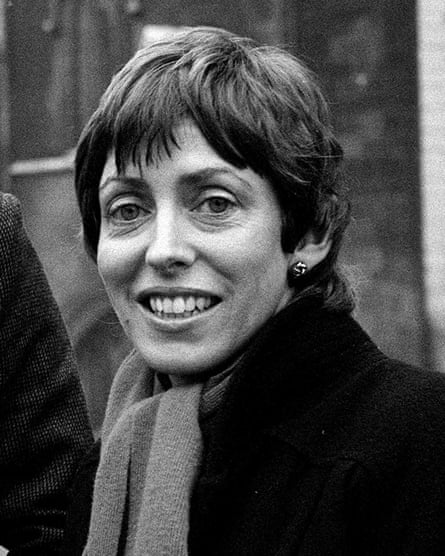
Hewitt belonged to a women’s consciousness-raising group as well, she told me. But unlike the leaderless WLM, the NCCL had a formal structure and affiliates. “So we were drawing on the energy of women’s liberation but also the energy of the trade unionists who had started the modern campaign for equal pay with the Ford Dagenham strike – the two threads came together at the Congress Hall.”
There were still tensions. Many trade unionists were late or reluctant converts to equal pay, while some employers were implacably opposed. Hewitt also recalls awkward relations between women who had lived through the war, overcoming barriers of sexism to reach positions of influence, and radical baby boomers like her and Harriet Harman, an NCCL colleague. “My emotional recollection of that period is that there was an older generation of women, of whom Barbara Castle and Shirley Williams were two of the standouts, but there were a lot of women who had been battling misogyny in politics for a very long time. And they were a bit ambivalent about this new generation of stroppy women making demands,” she recalled.
Feminists had reams of data thanks in part to a book by Audrey Hunt, A Survey of Women’s Employment. They put lists of examples on their leaflets and petitions: “Engineers and scientists: 7% women; trade union officials: only 25 women out of 1,400 paid officials; draughtsmen: only 1% are women (50% in Sweden).” Unwilling to wait for the law to change, one group launched a volunteer-run, prototype anti-discrimination board to gather evidence of unfair treatment. Women wrote in to report sexist pay structures in workplaces from advertising agencies to public swimming pools. One complaint came from a window-dresser at Harrods.
In March 1974, Women in Media wrote to the prime minister, Harold Wilson, to say that a sex discrimination bill “must, in justice, be considered an urgent priority in any socialist programme” (the vaguer-sounding name of anti-discrimination bill was dropped in 1973). But with just 23 female MPs, they had limited backing in parliament. Shirley Summerskill, a minister in the Home Office, was one key ally. But Castle was busy trying to reform women’s pensions and, as Patricia Hewitt explains: “Labour women in those days were very careful about women’s issues because of getting typecast – some of them strongly supported the act but there was no organised force within the party.”
In the summer of 1974, Women in Media decided to increase the pressure on Wilson by putting up its own candidate in the next election – expected to be soon as Labour did not have a majority. The woman chosen was Una Kroll, a 48-year-old deaconess and GP in south London, with a remarkable family history which included growing up partly in the Soviet Union where both her parents were spies. A campaigner for the ordination of women, she described herself as having been radicalised by a patient who had died from cervical cancer, aged 29, after doctors refused to take her symptoms seriously.
Since Women in Media was not a suitable name for a political party, the Women’s Rights Campaign was established on 6 September. In a bizarre coincidence – or what some feminists hoped was a panicked reaction to their bold move – the Home Office launched a white paper, Equality for Women, on the same day. Three days later it was announced that the election would be on 10 October. In the Guardian, Stott paid tribute to Kroll as a “top-class brain” and claimed that her candidacy in Sutton and Cheam was “the first time in this country that a woman has stood for parliament as a women’s rights candidate”.
This was wrong – Christabel Pankhurst had been the sole candidate for a Women’s party in 1918, and lost by 775 votes. But while this disappointing coda to the suffrage movement was forgotten, Kroll’s supporters decked themselves in the suffragette colours of purple, white and green, and celebrity supporters including the actor Glenda Jackson donned sashes for photos. The manifesto was a checklist of issues including contraception, childcare and pensions as well as pay.

In electoral terms, the Woman’s Rights Campaign was a flop. Kroll won just 298 votes. Records of the campaign in the Women’s Library suggest that its activists fell down on canvassing. Most volunteers worked full-time and evening door-knocking sessions turned into chaotic late nights. In obituaries of Kroll, who died in 2017, her candidacy is referred to only briefly.
But while the campaign did not succeed, it was an audacious stunt. It would be more than 40 years before the Women’s Equality party would try something similar on a larger scale. And in publicity terms, it had an effect. Newspapers reported on the Women’s Rights Campaign with interest and when Labour won a majority, it quickly announced that sex discrimination would be outlawed. The NCCL produced a draft bill and the details were argued over in and outside parliament.
Under the Conservatives, proposed exceptions to a ban on employment discrimination had included the clergy, prisons, police, armed forces and “foster-mothering”. Labour agreed with feminist lobby groups that this list should be shorter. Another issue was how far beyond the world of work the act would apply. Feminists wanted sex discrimination outlawed in one fell swoop. A motion from the WLM conference in Manchester in April 1975 was headed “WE ARE STILL ANGRY” and declared: “The movement severely condemns obvious fundamental omissions of discrimination such as pensions, taxation, social security, etc.” While education and services were included in Labour’s bill, with some exceptions, ministers resolved that financial matters would be dealt with separately.
One debate was about the powers of the new equality board. Feminists argued that inspectors ought to be able to check up on employers, and ensure that the law was being obeyed. If it was left to individual women to raise complaints, they feared that nothing would change.
Feminists did not win all the arguments. The equal opportunities commission (as the board was named) gained the power to investigate but only “with the agreement of the secretary of state”. Women in Media described the bill as “timid tinkering with a problem that needs all-out assault” and criticised the exemption for small employers and partnerships including solicitors: “We notice that the law, as usual, has protected its own bastions.” But the inclusion of indirect as well as direct discrimination was a victory. And members were happy enough that when the bill passed one of its stages in October, they threw a party.
The Sex Discrimination and Equal Pay Acts both came into force on 29 December 1975, on the same day that the equal opportunities commission (EOC) was established in Manchester. Early in 1976 its first chair, Betty Lockwood, sent out invitations to a meeting. Hewitt remembers that “Harriet [Harman] had a car that could face the distance so we all squashed in and drove up and were quite vociferous.”
With sex discrimination outlawed, it would now be up to the commission and judges to oversee enforcement. Hewitt and Harman were immediately on the lookout for women with complaints strong enough to take to tribunals – “test cases” that would set precedents. One soon emerged, when a woman called Belinda Price approached the commission about the civil service. Price had been barred from applying for a role in the Foreign Office on grounds of an age limit of 29 that she believed was indirect sex discrimination – since women were far more likely than men to have taken time off to have children, and therefore to miss out. When the commission declined to pursue Price’s complaint, the NCCL took it up instead, and won.
In 1977, Women in Media published a book about sexism in radio, television and so on, intended for use on the new women’s studies courses that were springing up in universities. Adbag had turned into Flag (the Feminist Legislation Action Group), signalling broader aims than “anti-discrimination”, and kept on lobbying. It wanted the EOC to develop proposals aimed at eliminating stereotypes. In the House of Commons and outside, Labour MPs including Maureen Colquhoun and Jo Richardson championed further feminist legislation. In 1983, the Equal Pay Act was amended to apply to “work of equal value”. Women in Media was absorbed by the Fawcett Society.
In 2006, New Labour legislated to dissolve the EOC. Its replacement, the Equality and Human Rights Commission, came into existence the following year, fulfilling the ambition first voiced in the 1970s for one body monitoring discrimination across different characteristics. In 2010, earlier anti-discrimination laws were combined in the Equality Act.
Feminists of the 1970s were later criticised for a too-narrow focus and demographic, and Women in Media could be seen as an exemplar. Mary Kenny remembers finding meetings “a bit bourgeois”. Conran surely had in mind the long-running comic strip The Four Marys, in the girls’ comic Bunty, when she recalled that the bill campaign included three Shirleys, all of whom had attended St Paul’s – herself, Shirley Williams and Shirley Summerskill (the adventures of the Four Marys took place at the fictional St Elmo’s).
But the movement is too easily caricatured. Many of those who lobbied for the sex discrimination bill were active in other campaigns, including one against the deportation of a group of Irish women who had been caught stealing. Their proposals included a clause updating nationality laws so that women would gain the same entitlement as men to bring foreign spouses to Britain – highly topical in the context of Idi Amin’s expulsion of Ugandan Asians. Concerns about whether working-class women in low-paid jobs would be able to afford to take employers to tribunal were raised repeatedly. There were also efforts to add sexual orientation to the bill, so that gay men and lesbians would also gain protection. One women’s group proposed a civil rights appeals board, in place of employment tribunals, to adjudicate in cases dealing with race as well as sex.
“These things are always a compromise,” says Patricia Hewitt. “By 1980 we were saying ‘there’s not enough in this act’, but I think in 1975 we felt we’d done pretty well.”
“What I remember most is the sense that we actually achieved something,” says Brayfield. “We were dealing with an enormous social injustice and an extremely resistant patriarchy or power structure that didn’t want to change. We really did set out to change our society and to make life better for our daughters but it’s a fight you have to keep winning. There’s never any sitting back and saying ‘we’ve won’ because you never have.”